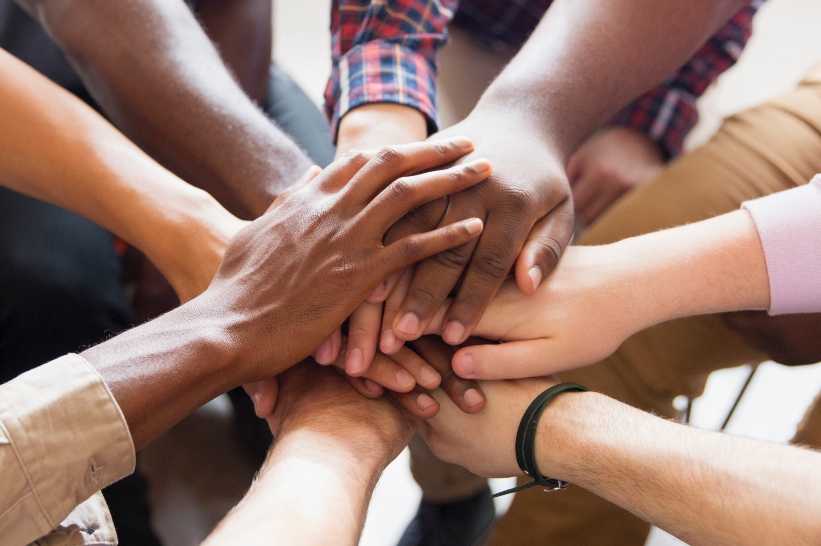
Photo by [CampaignLive]
Johannesburg – South Africa’s rich cultural diversity is a source of great pride and, simultaneously with its history, a potential cause of division. While this diversity undeniably strengthens the concept of the Rainbow Nation, it also presents distinctive challenges.
These challenges often originate from the legacy of Apartheid, which left behind significant social inequalities and economic disparities.
Although nearly three decades have passed since the end of Apartheid, the enduring effects of this oppressive era persist today. Many citizens still perceive each other through racial lenses, a perception reinforced by various social, economic, and political factors.
While it is undeniable that South Africa’s democracy has taken significant steps forward in addressing historical injustices, it is essential to recognise, for some, little has changed. Disadvantaged communities endure hardships, grappling with the same economic difficulties, disempowerment, and lack of access which characterised the Apartheid era.
Rather than working diligently to improve the lives of their constituents and fulfil their mandates and promises, some political leaders and parties exploit the collective struggle for their political gains. They often resort to fear-mongering and racial rhetoric to sow divisions among different groups, exemplified in the heightened hostility seen during riots, demonstrations and everyday interactions.
Laying the Foundation and Fostering Connections
While some of these challenges may be more daunting than others, Moulana Mohammed Tariq suggests, those at a civil level can be addressed straightforwardly.
His proposal revolves around resolving the volatile nature of diversity by fostering connections among various groups. This involves taking the time to come together and delve into a deeper understanding of one another.
This process entails engaging in discussions about our shared and unique cultural and historical backgrounds, our beliefs, and our day-to-day struggles. Doing so brings us closer to forging a more united and harmonious society.
“Peace, love and forgiveness are what builds actual social cohesion. When I say peace, love and forgiveness, I mean across every boundary [whether you’re] black, white, coloured or Indian. This peace, love and forgiveness should be instilled in our children, in our youth and our families.”
SMread| Marginal economic growth ‘makes a dent’, but unlikely to be sustained – economist
Building From the Ground Up
Nonetheless, achieving unity and solidarity among the people can only be realised if there is harmony among their leaders, a critical element currently lacking in today’s society.
As individuals, we have permitted past wounds to be reopened by political and religious leaders. We have allowed them to exploit our history and struggles, fostering division and further segregating us, thereby impeding our gradual progress.
As South Africans, our intrinsic inclination is to connect not based on race, beliefs, or affiliations but through our shared spirit. Our innate desire to regard those around us with kindness and compassion, irrespective of their backgrounds, unites us.
“I would say that every religion that you belong to is promoting social cohesion in the scriptures that they have. The Quran is speaking about it, and the life of the Prophet [Peace be upon him] is speaking about it. Even if you go to your religious institution of whichever denomination you are, they’re promoting brotherhood and the unity of each other. But we are not making it practical in our communities.”
It is these shared values and principles that Moulana Tariq encourages us to uphold. He advocates for a shift away from perceiving each other as fundamentally different. He urges us to concentrate on our shared goals, hopes, and aspirations.
SMread| Public Protector Busisiwe Mkhwebane faces uncertainty ahead of impeachment vote
To Building Bridges
The July Riots brought widespread devastation in Kwazulu Natal, affecting numerous communities. It was not just a matter of people engaging in looting. Tragically, lives were lost during this period. Additionally, it exacerbated racial tensions among different communities in the region, with threats of violence directed at one another.
Although remnants of this unfortunate time may still linger in society, Moulana Tariq remarked that various religious, political, and community leaders have formed a united front to assist communities in any way necessary.
“The Phoenix religious leaders have built bridges with the Inanda religious leaders community where we sit together, we speak together, we plan issues, and we look at the challenges together. We feel the pain of our [African] brothers and sisters in those areas. Whatever is happening in the Indian community, it is now about building social cohesion and working together.”
He emphasises the belief that actual change can only occur through unity. When people share common goals, values, and objectives, they are better equipped to address any obstacles which stand in their way.
