Hopes for an end to the 21-month genocide in Gaza have been rekindled as Israeli and Hamas delegations engage in a second day of indirect ceasefire talks in Doha, Qatar, on Monday. The negotiations, mediated by Qatar and Egypt, centre on a US-backed proposal for a 60-day truce, which includes the release of hostages and Palestinian prisoners.
The renewed diplomatic push comes as Israeli Prime Minister Benjamin Netanyahu travels to Washington D.C. for a crucial meeting with US President Donald Trump. On Sunday, Trump expressed optimism, telling reporters, “I think there’s a good chance we have a deal with Hamas during the week, during the coming week, pertaining to quite a few of the hostages.”
This sentiment follows Hamas’s “positive response” to the proposal last week, although the group has requested amendments. An official involved in the talks noted that these changes, while not publicly specified, are believed to focus on securing stronger guarantees for a permanent end to the war and ensuring humanitarian aid is managed by the United Nations, not the controversial US-backed Gaza Humanitarian Foundation (GHF).
However, Netanyahu’s office has described Hamas’s requested amendments as “unacceptable.” Before his departure for Washington, Netanyahu stated, “We are working to secure the deal that has been discussed – under the conditions we’ve agreed to. I’ve sent a negotiating team (to Doha) with clear instructions.”
This highlights the significant gap that negotiators are working to bridge. The potential for a **ceasefire** hinges on resolving these critical differences.
SMread: Wits University Faces Scrutiny for Complicity
Sticking Points and International Pressure
The core disagreement remains the long-term scope of the truce. Hamas insists on a permanent end to hostilities and a full withdrawal of Israeli forces to their positions before the renewed offensive in March. In contrast, Israel wants the complete disarmament of Hamas and the destruction of its military and governing capabilities, alongside the return of all hostages.
International pressure for a resolution is intensifying. On the sidelines of the BRICS summit in Brazil, Egyptian Prime Minister Mostafa Madbouly discussed Cairo’s “intensive contacts” to secure a truce with Uruguayan President Yamandú Orsi. The BRICS bloc itself issued a statement condemning the war in Gaza.
The current proposal reportedly outlines a phased release of hostages over the 60-day period. The plan reportedly involves the release of 10 living and 18 deceased Israeli hostages. In return, Israel will release an unspecified number of Palestinian prisoners and withdraw its forces from designated areas in northern Gaza. Critically, the deal includes a provision for immediate negotiations on a permanent ceasefire to begin once the initial truce is in effect.
The conflict, which has been ongoing for 21 months, has seen over 57 000 Palestinians killed, according to the Gazan health ministry. Previous ceasefires have been short-lived, with the last major truce collapsing in March after Israel resumed its offensive, stating it was necessary to pressure Hamas.
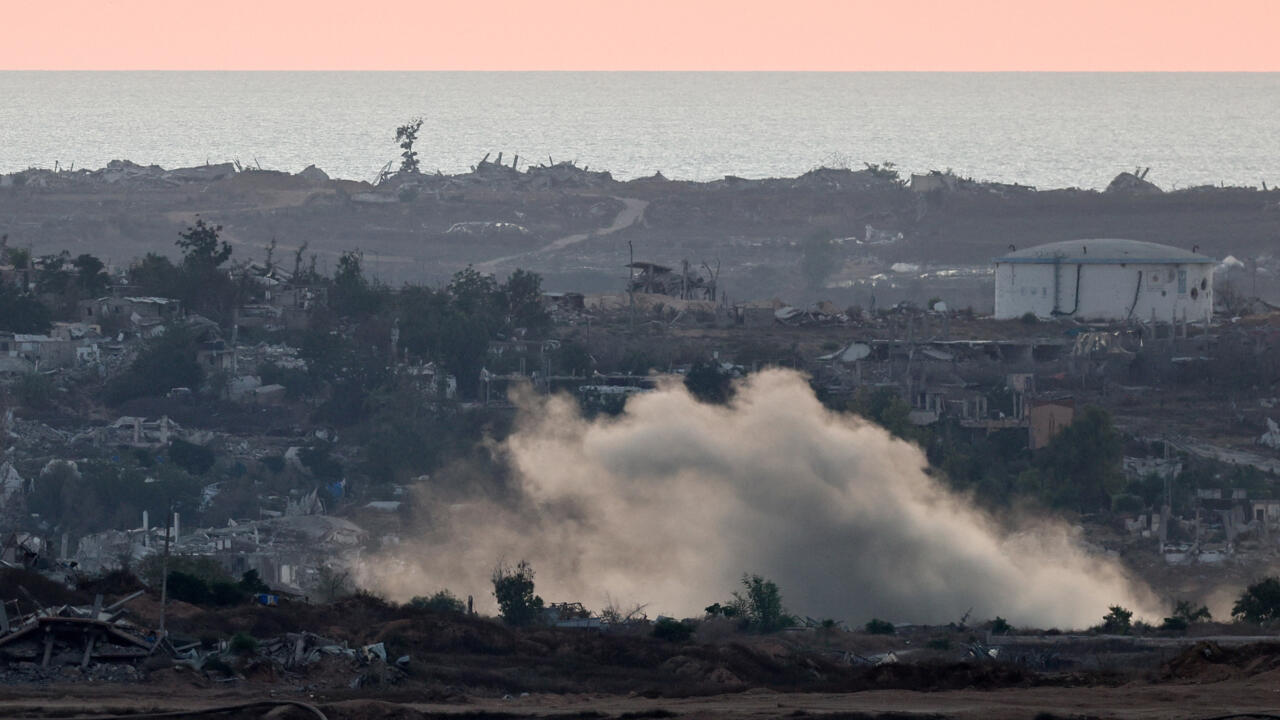
Image: Smoke rises in Gaza, as seen from the Israeli side of the border on July 5, 2025. [Amir Cohen, Reuters]
