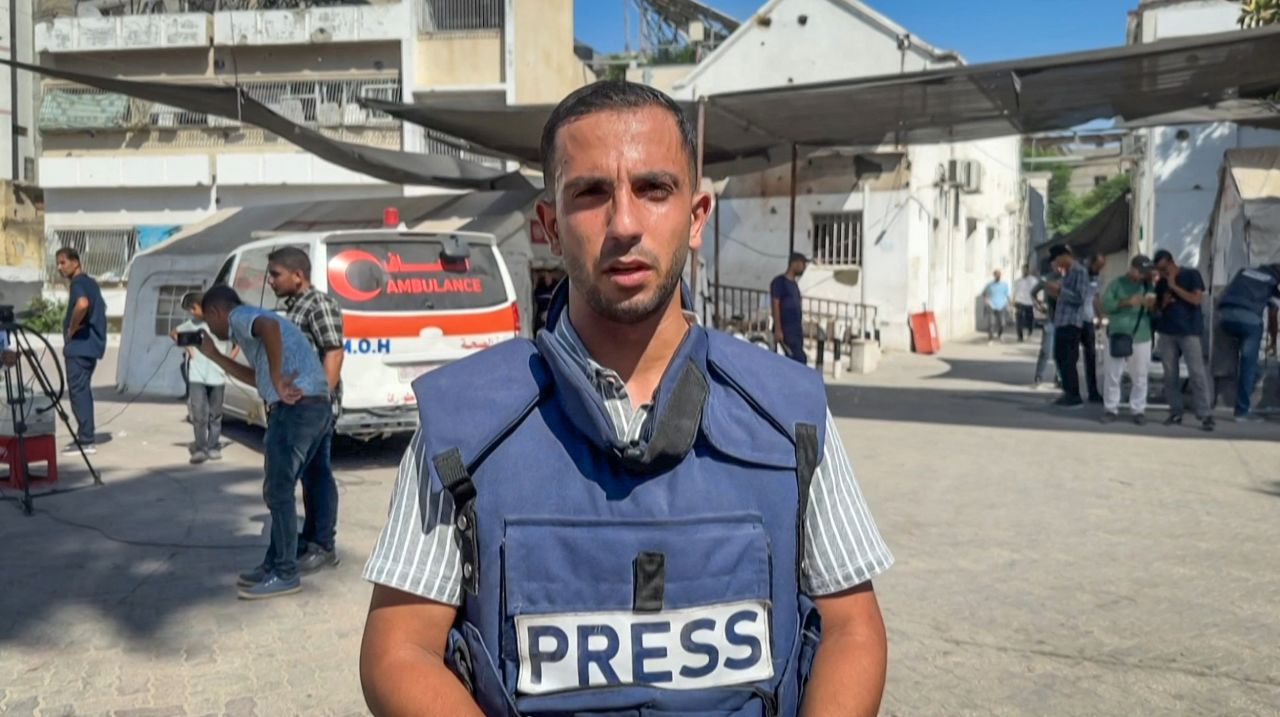
An Israeli airstrike that killed prominent Al Jazeera correspondent Anas al-Sharif and several of his colleagues outside Gaza’s al-Shifa Hospital on Sunday is being widely condemned as a targeted assassination aimed at silencing one of the last remaining media voices in the besieged city.
The attack comes as Israeli forces intensify their bombardment ahead of a planned large-scale ground invasion, raising fears that the killings are a prelude to a media blackout.
The Israel Defense Forces (IDF) confirmed it targeted the 28-year-old al-Sharif, claiming he was the head of a Hamas “terrorist cell”. However, Al Jazeera, along with press freedom organisations and United Nations experts, has vehemently rejected this assertion, stating that Israel has provided no credible evidence.
They maintain that this was a deliberate attack on the press. This killing of journalists is part of a wider, devastating pattern. The government media office in Gaza reports that over 238 media workers have been killed since the genocide began in October 2023.
In an interview with Salaamedia, Press TV correspondent Hassen Seria described the attack as a “targeted assassination”. He pointed to a preceding social media campaign by an Israeli military spokesperson that singled out al-Sharif.
Seria stated that al-Sharif and his team were the “last eyes and ears that the world had on the ground in that particular part of the Gaza Strip.” He argued the assassination’s timing is “essentially to silence this massacre and this unfolding genocide that has been happening.”
SMread: Netanyahu gets the nod for full occupation of Gaza City
A pattern of targeting and impunity
The attack on Sunday killed a total of seven people, including five Al Jazeera staff members: correspondents Anas al-Sharif and Mohammed Qreiqeh, and camera operators Ibrahim Zaher, Mohammed Noufal, and Moamen Aliwa. A sixth journalist, freelance reporter Mohammed al-Khaldi, also died in the strike on the tent housing the media team.
Press freedom groups had already voiced grave concerns for al-Sharif’s safety. The Committee to Protect Journalists (CPJ) issued a call for his protection three weeks prior to his death, citing online attacks by Israeli forces that “indicated that they had him in the crosshairs.”
Following the strike, the CPJ stated that “Israel’s pattern of labelling journalists as militants without providing credible evidence raises serious questions about its intent and respect for press freedom.”
The UN human rights office condemned the attack as a “grave breach of international humanitarian law,” while global leaders, including UK Prime Minister Keir Starmer and French President Emmanuel Macron, expressed grave concern over the repeated targeting of media workers.
This recent killing of journalists follows numerous other deadly attacks on Al Jazeera staff and their families, including the high-profile killing of veteran journalist Shireen Abu Akleh in 2022.
Seria highlighted a perceived failure of the international community, and specifically Qatar, to hold Israel accountable, which he believes has emboldened such attacks.
“Because of the failure of the governments around the world to uphold the Geneva Convention… this only emboldened Israel and allowed it to understand that it may act with impunity,” he said.
He pointed out that despite Al Jazeera being a state asset of Qatar, the Qatari government has not taken significant action to stop the “massacres against journalists.” This inaction, he argues, provides “cover for Israel to continue with this type of action.”
The systematic killing of journalists is seen by many as a strategic effort to control the narrative coming out of Gaza. With international journalists barred from entering the strip independently, the world has relied on local reporters like al-Sharif to document the reality on the ground. His death, and that of his colleagues, leaves a significant void as Israel prepares to expand its offensive, threatening to plunge Gaza City into an information darkness at a critical time.
Image via CNN.
