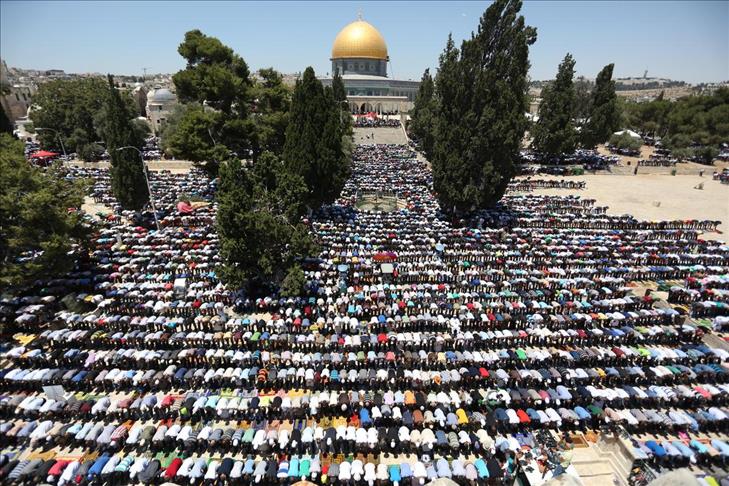
Image Source: WAFA
Occupied Palestine – According to Archaeologist at the Al-Aqsa Mosque, Abeer Zayyad, Israeli authorities will be limiting 10,000 Palestinian worshippers from the West Bank with permits and age restrictions during the holy month of Ramadan, a move she describes as part of a long-standing effort to reduce Muslim presence at one of Islam’s most sacred sites.
Zayyad explained that restrictions on worshippers are not new but have intensified significantly in recent years. With millions of West Bank Muslims barred from entry, she stressed that the permitted number falls far short of what is needed.
“10,000 is nothing about the number of Muslims that are supposed to come. But not only this, even those who have the permission to come and to pray are also not allowed to stay.”
Iftar gatherings inside the mosque have also been prohibited, with even mosque workers denied entry to break the fast.
Restrictions Extend Beyond Entry
Younger Muslims have faced systematic rejection at the gates since the first day of Ramadan, while those who do receive permission face further constraints on how long they may remain.
“They try to make the number of Muslims less than what it’s supposed to be. Of course, it’s not like what they want because they want the mosque empty.”
She warned that these restrictions carry broader consequences beyond worship, affecting Jerusalem’s economy and applying pressure on its residents to leave entirely.
“The goal of Israel is to make all the economic drop in Jerusalem and to push the people to leave Jerusalem, and this is the main goal for them, and in this way they can take over the masjid and take over the city.”
Al-Aqsa Mosque holds deep religious and cultural significance for Muslims worldwide, recognised as the third-holiest mosque in Islam.
For Palestinians, the mosque is a living symbol of identity, with its Dome of the Rock standing as the oldest Islamic building constructed by a Muslim state.
Zayyad urged Muslims who can visit to fill the mosque and resist intimidation, describing physical presence as the most powerful means of protecting Al-Aqsa’s future.
