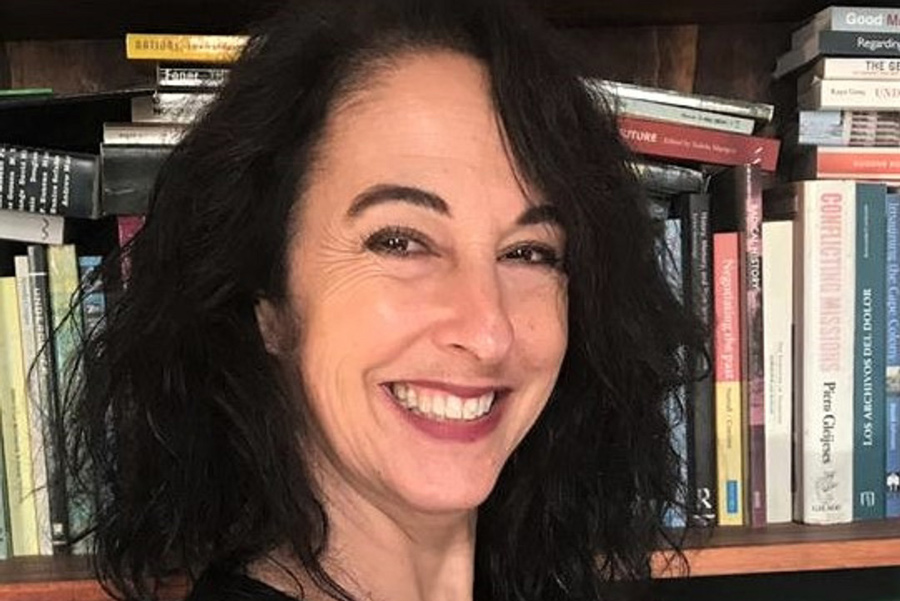
Heidi Grunebaum is a South African academic based at the Centre for Humanities Research at the University of the Western Cape. She is also an active member of South African Jews for a Free Palestine.
But those titles only explain where she works. Not why she matters.
Her significance lies in what she represents: a Jewish South African voice that has moved from a Zionist upbringing into committed anti-Zionist scholarship and activism, grounded in both lived experience and historical analysis.
SMread: Al-Aqsa barred to worshippers on Eid
A journey shaped by history, not just belief
Grunebaum’s early identity was shaped inside apartheid South Africa, where Jewish communities were often encouraged to align with Zionism and the Israeli state. That alignment existed within a broader system that normalised racial hierarchy and separation.
Her mind did not change overnight. It began in the late 1990s, during South Africa’s transition out of apartheid, when she worked alongside former liberation movement combatants. Through those encounters, the Palestinian struggle stopped being abstract. It became tangible.
SMread: Palestinians shut out of Al-Aqsa this Ramadan
When one system helps you recognise another
For Grunebaum, the parallels between apartheid South Africa and Israeli policies are very structural.
Different contexts. Same logic. Control framed as security. Separation framed as necessity. Violence framed as defence.
What connects them is not just policy, but the underlying belief that one group’s safety requires another’s dispossession.
The role of fear in shaping loyalty
Fear, in her analysis, is foundational. Communities are taught to see themselves as permanently under threat. That fear becomes inherited, shaping how people interpret history, identity, and morality.
In apartheid South Africa, fear of Black South Africans sustained the system. In Zionist narratives, she argues, fear of existential threat plays a similar role. And once fear becomes identity, questioning it feels like betrayal.
Grunebaum draws attention to what is missing from dominant narratives. Palestinian society, once diverse and layered, is often reduced to a single, flattened story. Muslims, Christians, Jews, and others who coexisted historically are written out in favour of a narrative that justifies exclusivity.
Erasure is not just about the past. It shapes what people believe is possible in the present.
SMread: FIFA faces its most political world cup yet
Solidarity that did not begin today
South African solidarity with Palestine is rooted in its own liberation history.
A defining moment came during the 2001 Durban Conference against Racism, where tens of thousands gathered and Palestinian rights became part of a global justice conversation. From there, organised solidarity movements began to take clearer shape.
SMread: Ramadan in Malaysia is not just observed. It is shared.
Jewish voices that refuse the single story
Grunebaum’s work also challenges the idea that Jewish identity and Zionism are interchangeable. Through South African Jews for a Free Palestine, she highlights a history of Jewish anti-Zionist activism in South Africa that is often overlooked.
Especially after 2008, as violence in Gaza intensified, more Jewish voices began publicly rejecting the conflation of identity with state ideology.
Not in spite of their identity, but because of it.
If you’d like to hear more about this conversation, follow the link below:
Image via Centre for Humanities Research.
