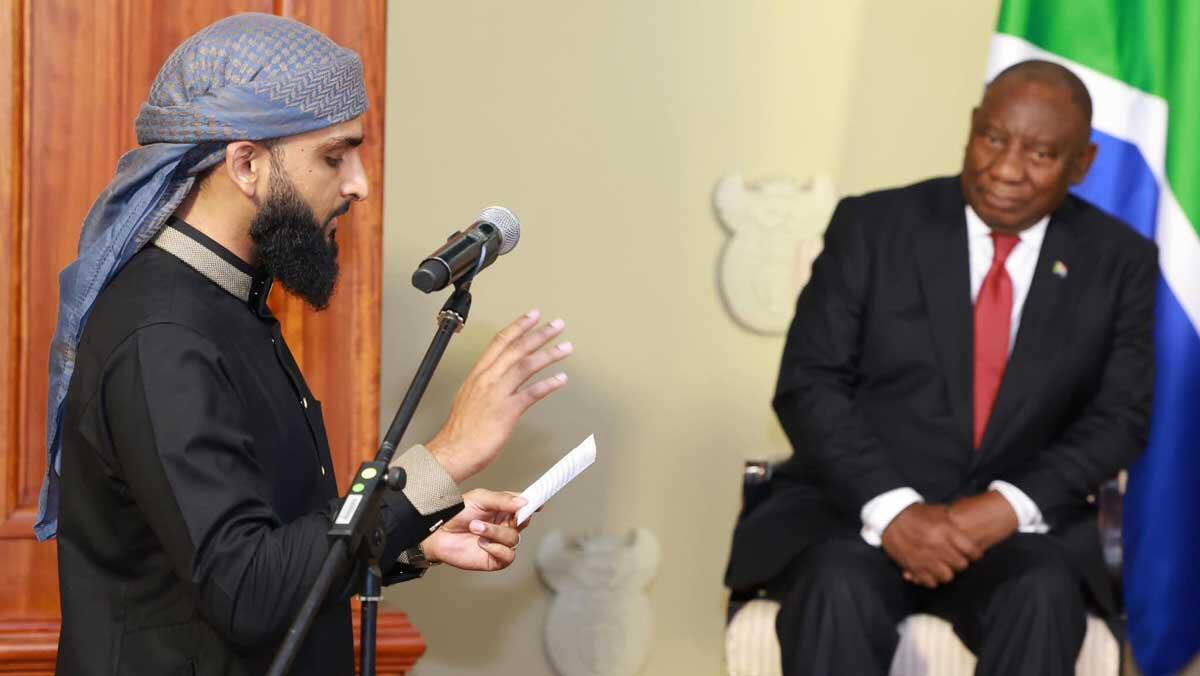
Image Source: Instagram
Local – Yusuf Cassim’s appointment as the new Deputy Minister of Higher Education and Training has been met with a wave of criticism, some of it bordering on Islamophobia, with social media commentary targeting his faith and appearance.
Despite this, rather than letting it affect him, Cassim said he hoped to unite South Africans around confronting the nation’s challenges rather than division based on prejudice and tribal, ethnic and racial lines.
The Democratic Alliance politician was brought into the portfolio in President Ramaphosa’s latest cabinet reshuffle and said he had read all of the commentary since his appointment but would not allow it to define him.
“I am a proud and patriotic South African, born and bred, just like my parents are, just like my grandparents are,” he said.
Unity Over Division
South Africans of coloured, Indian and Malay heritage have played a central role in the liberation struggle and in the building of the democratic state. Cassim said this legacy was central to how he viewed his own role.
He hoped to be an example to the nation of the beauty of a faith rooted in service and contribution, and to have his work in office reflect the values his community had carried through generations.
“It is important that we are able to unite South Africans around confronting the issues that we face as a nation rather than dividing South Africans based on prejudice and tribal and ethnic and racist divisions,” he said.
NSFAS Reform Tops The Agenda
The Department of Higher Education and Training is dealing with several important issues, including instability at NSFAS, which has been placed under administration amid board resignations and litigation, concerns over TVET colleges and stubbornly high graduate unemployment.
Cassim said reform of the sector was urgent and that funding must reach young South Africans directly, so that success in higher education is determined by hard work and talent rather than privilege.
“We believe, for example, that the National Student Financial Aid Scheme is not the correct model in its current entity to be able to deliver effectively to our people, that we must fund students directly and closer to them rather than centralising. We must decentralise,” he said.
