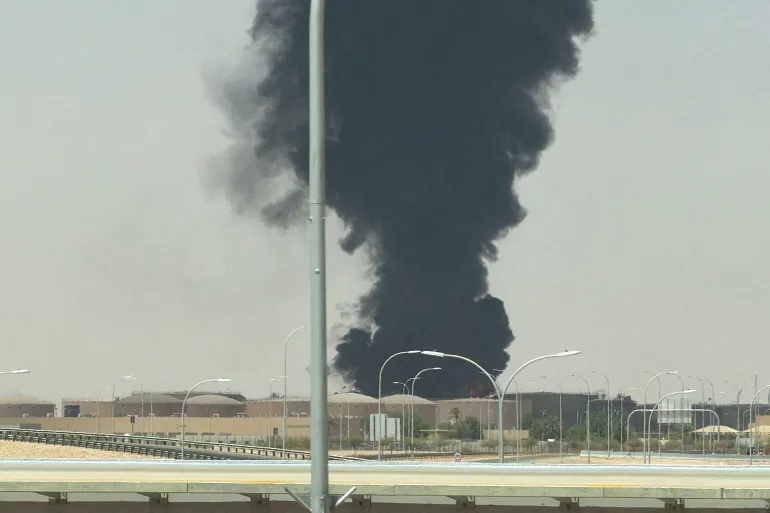
Image: Al Jazeera
World – According to Senior Researcher at the Mapungubwe Institute for Strategic Reflection (MISTRA), Na’eem Jeenah, Yemen’s Houthis have their own agenda and should not be viewed as an Iranian proxy, despite a sharp escalation in their attacks on Saudi Arabia. The group’s strikes on Riyadh’s main airport are the deadliest assault on Saudi soil in more than a decade.
The violence marks the collapse of a relative calm that began with a UN-brokered ceasefire in 2022. That calm broke down in July, when the Houthis resumed attacks after accusing Saudi Arabia of firing on Sanaa airport as a plane from Iran attempted to land.
Jeenah said that while Iran had backed the group for more than a decade, and most of its missiles were Iranian or based on Iranian weaponry, this did not make it beholden to Tehran.
“They’re not a proxy of Iran. They don’t do Iran’s bidding. Their objectives are very local… they want dominance in Yemen,” he said.
Riyadh Airport Struck Repeatedly
The main target has been Riyadh’s international airport, which has been hit several times in the past week. According to reports, Saturday’s strike killed at least 12 people and wounded 309, while an attack on Sunday killed one person and injured 11.
Jeenah said the Houthis saw the strikes as like-for-like retaliation for attacks by Saudi-backed forces on the airports in Sanaa and Hodeidah, the two main international airports in Houthi-held territory. He said the group was determined to prevent a repeat of the siege on Hodeidah port, which deepened Yemen’s humanitarian crisis after Saudi Arabia launched its war in 2015.
“You keep bombing us, we’ll bomb your civilian infrastructure, too. We’ll make your oil more expensive… we’ll ensure that there’s no… air traffic above your skies,” he said.
Pressure Mounts on Washington
The attacks have raised fears of a wider conflict that could draw in the United States. An American citizen was among those killed at the Riyadh airport, and when asked whether the US would join strikes on the Houthis, President Donald Trump said it may.
So far, Washington has not backed air strikes, instead sending more than 100 military advisers to provide intelligence under a newly formed joint command.
Jeenah said pressure on the US was mounting as rising fuel prices, particularly diesel, drew domestic complaints against the Trump administration. However, he said Washington was unlikely to intervene directly, with elections approaching and its Patriot interceptor stocks for Saudi air defences running low.
“I don’t think that they want to open up a new front militarily… they have a war going on at the moment with Iran. So I don’t think that they want to increase that,” he said.
Saudi Arabia has vowed to retaliate firmly, and the Saudi-led coalition said earlier this month that it had destroyed 82 Houthi military sites across Saada, Hodeidah, Jawf and Marib. Jeenah said Saudi Arabia was already fully committed militarily and that only a political solution involving Riyadh, the government it backs, and the Houthis could end the war.
