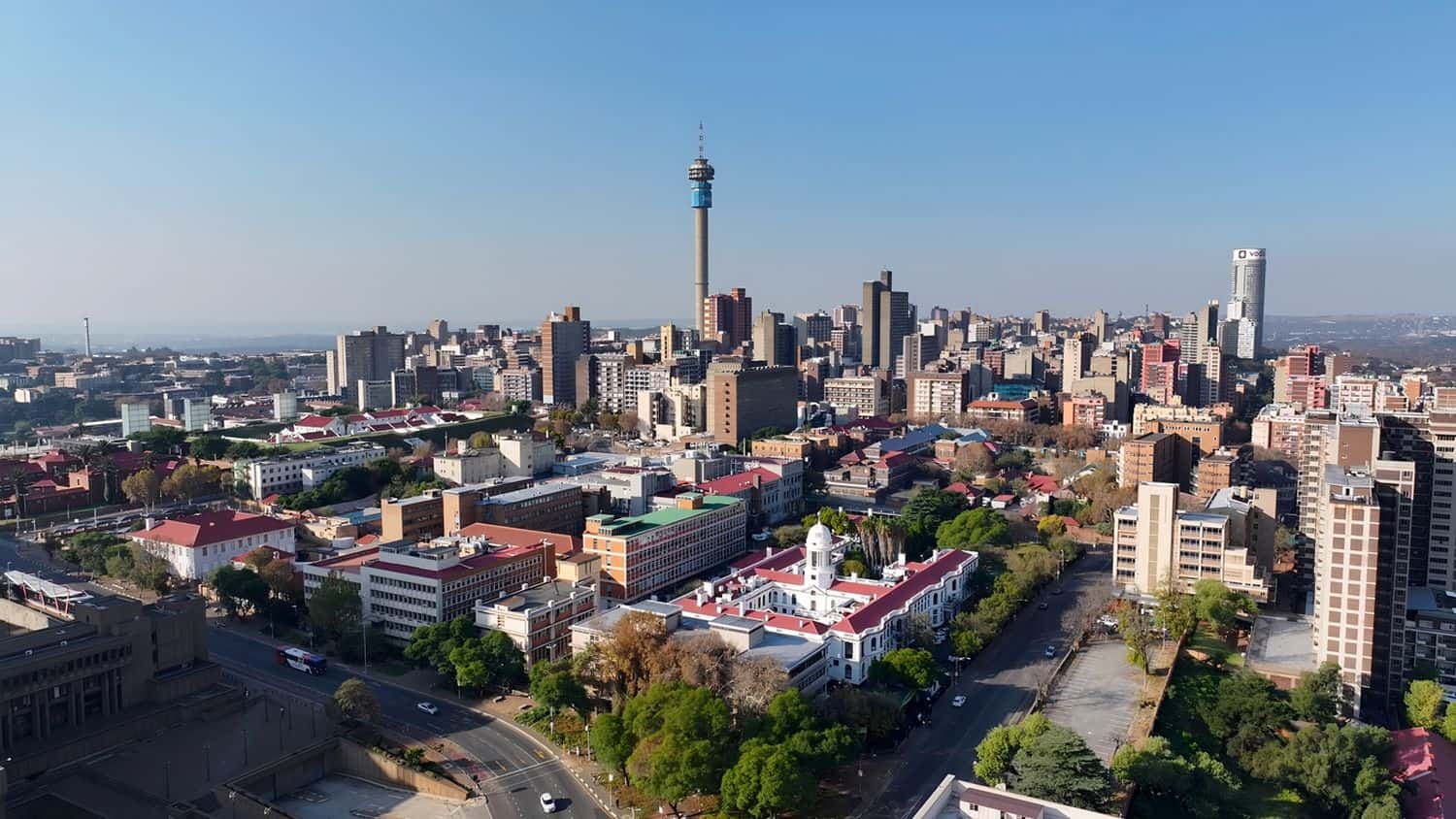
Image Source: The Citizen
Local – The City of Johannesburg has been placed on review for a possible credit downgrade by Moody’s Investor Service, citing persistent governance failures, rising debt pressure, and ongoing service delivery breakdowns. The warning has raised alarm about the long-term fiscal health of Africa’s wealthiest city and its ability to meet its financial obligations.
The review signals that Johannesburg could lose access to institutional investors, including pension funds, whose internal mandates restrict investment to investment-grade assets. Should a downgrade materialise, the city faces not only higher borrowing costs but a potential liquidity crisis stemming from a widening gap between what it spends on bulk services and what it collects from residents.
Professor Alex van den Heever from the Wits School of Governance said the situation was the result of the city’s own management failures rather than external pressure, arguing that Johannesburg had effectively lost control of both revenue collection and expenditure.
“It’s not that Moody’s is doing this to Johannesburg. Johannesburg Metro is doing it to itself. It has appeared to have lost control of its revenue base and also its expenditure side. If it were a private company, it would be moving toward liquidation at this point.”
City Power Shortfall Exposes Deeper Fiscal Concealment
The structural problem is particularly visible at City Power. Van den Heever said the entity had collected significantly less than its original revenue budget last year, before quietly adjusting that figure downward to bring it closer to actual collections.
This year, it set an even higher revenue target despite no apparent improvement in collection capacity. Van den Heever said the city was “not being truly honest” about its financials and was “trying to disguise the extent of the hole.”
Governance failures extended beyond accounting irregularities into a broader pattern of corruption and impunity. Irregular procurement contracts, unbilled electricity consumption at hijacked buildings, and unresolved meter faults were all part of the same dysfunction.
“These are accounting officers. These are people who, in terms of municipal finance management, actually go to jail if there is irregular expenditure. Nothing happens to them. So there is a cycle of a lack of accountability all the way through the system, which is being tolerated, and that is generating the failure.”
Leadership Failure Threatens Long-Term Economic Standing
Van den Heever warned that without new leadership and a restoration of financial transparency, Johannesburg risked driving away the ratepayers and businesses that underpinned its economy. He noted that Cape Town was financing billions in infrastructure entirely from its own revenue, with capital expenditure budgeted at three to nearly four times Johannesburg’s over the next three years.
The stakes extended beyond the city’s borders, with knock-on effects for national bulk service providers, industrial investment, and South Africa’s broader economic growth.
“Johannesburg is a rich city, but it won’t be rich in the medium to long term if this continues, because it’ll drive investment away. It will drive the reliable rate payers away. They will move to the cities that are reliable, that are more able to actually provide services. We can’t afford to have this city continue to go into decline.”
