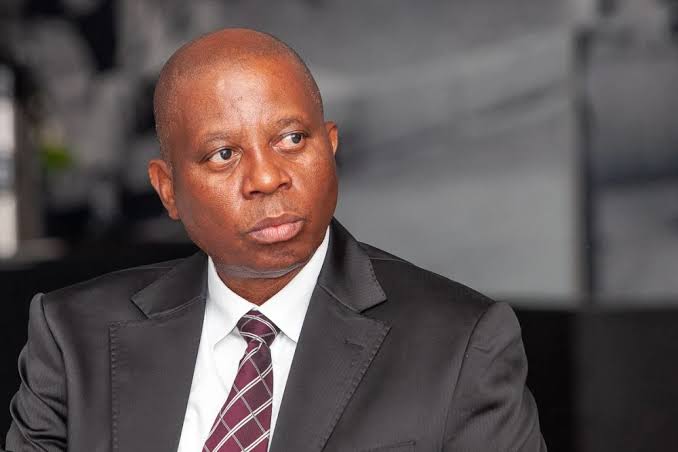
National Treasury’s decision to withhold funding from the City of Johannesburg should concern every South African, not only those who live in the city.
This is not merely an administrative dispute between Treasury and a municipality. It is an unmistakable warning that South Africa’s economic engine has been brought to the brink through years of political instability, weak governance, and financial mismanagement.
When the country’s largest metropolitan municipality loses the confidence of National Treasury, because it has failed to meet its obligations under the Municipal Finance Management Act, we should all recognise the veracity of the moment.
Johannesburg is not just another municipality. It is Africa’s leading metropolitan economy, contributing a significant share of South Africa’s GDP, roughly 16%. It is an international destination of investment, the headquarters of the business sector, and home to millions of citizens. Their livelihoods depend on a municipality that is capable of delivering reliable services and maintaining critical infrastructure.
When Joburg fails, South Africa fails. The consequences extend far beyond its municipal boundaries. What we are witnessing today did not happen overnight. This financial crisis is one I refer to as a predictable outcome of years of neglect, characterised by politics of self-interest taking precedence over basic governance competencies. Instead of protecting institutions, strengthening financial management and ensuring continuity in administration, political parties have too often prioritised tactical victories over the long-term interests of residents.
The ANC must take responsibility for Johannesburg’s current condition. Years of poor financial management, deteriorating oversight, cadre deployment, and the erosion of administrative capacity have left many municipalities across South Africa struggling to meet even their most basic obligations. Johannesburg has not been immune from these broader governance failures.
Residents experience the consequences every day through crumbling roads, broken traffic signals, unreliable electricity supply, water disruptions, deteriorating public spaces, and declining confidence in the City’s ability to perform its most fundamental functions.
But the ANC is not the only party that must answer difficult questions.
The Democratic Alliance cannot simply present itself as an innocent bystander while ignoring the role it played in contributing to Johannesburg’s political instability. Stable governments are built through consistency, principled leadership and a commitment to institutional continuity. When coalition governments become disposable instruments of political strategy, governance inevitably suffers.
The collapse of the administration I led in 2019 did not occur because Johannesburg’s finances had collapsed. On the contrary, my administration implemented strict financial controls, strengthened revenue collection, reduced wasteful expenditure and worked to restore confidence in the City’s finances.
These reforms were documented in the End of Term Report released when I left office.
The political instability that followed reversed much of that progress. Similarly, the collapse of Dr Mpho Phalatse’s administration in 2022 further entrenched uncertainty at a time where Johannesburg required stability and focused leadership. This collapse was orchestrated by Helen Zille, under the auspices of leading the DA.
Political parties will always argue that their decisions were justified. But history judges governments by outcomes. The outcome before us today is a city facing one of the most serious financial crises in its democratic history.
The greatest victims are not politicians. They are ordinary residents who spend hours without water, businesses forced to absorb the cost of unreliable infrastructure, commuters navigating dangerous roads, entrepreneurs discouraged from investing, and young people watching employment opportunities disappear.
Good governance determines whether water flows, traffic lights work, infrastructure is maintained and investment is attracted. Every Rand lost through wasteful expenditure, corruption or administrative incompetence is money that cannot improve the lives of residents.
The intervention by National Treasury should become a moment of national reflection. Professional public administration must replace political patronage. Financial discipline must replace reckless expenditure. Long-term planning must replace perpetual instability. Public accountability must replace excuses.
Johannesburg’s decline is not inevitable. It is the product of political choices, and different choices can produce different outcomes. This state of affairs is sponsored by the by so-called leaders of the ANC and its questionable coalition partners.
The upcoming local government elections offer residents a defining choice for their futures. They can continue with parties whose political battles will continue to take precedence over governance, or they can choose leadership committed to financial discipline, institutional stability and measurable delivery.
Cities are not rescued by rhetoric. They are rebuilt through competent governance, fiscal responsibility and leaders who understand that public office is a public trust.
Johannesburg once demonstrated that meaningful reform is possible under my leadership. It can do so again. The question is whether we have the political courage to put governance before politics.
Herman Mashaba is president of ActionSA. The views, thoughts, and opinions expressed in this article belong solely to the author and do not necessarily reflect those of Salaamedia, its management, or its associated entities and partners.
Read next: The marriage that wasn’t supposed to last
Image credit: Speakers Inc
