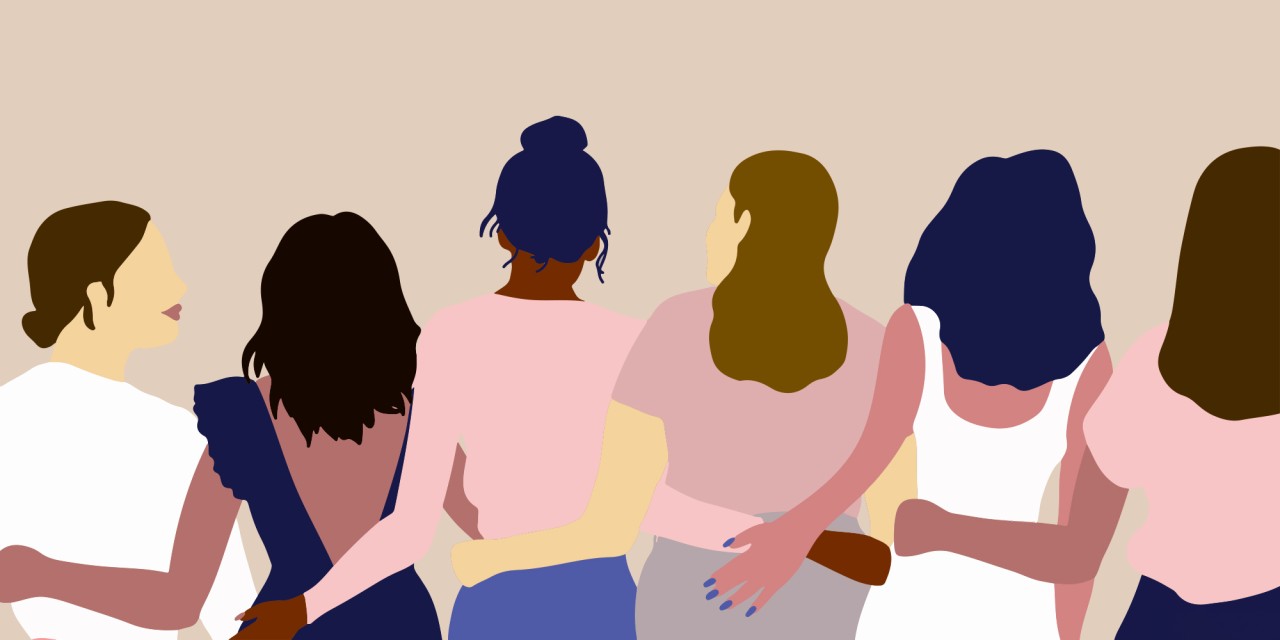
During Women’s Month, Jameela Molekwa, a SANZAF community support and administration professional, is drawing attention to the often unseen work women do for their families and communities.
Through her work with beneficiaries and her involvement in women’s programmes in South Africa, she has seen how financial hardship and unemployment, alongside limited opportunities and family responsibilities, can leave women carrying more than they can sustain. Her response is not simply to offer assistance, but to create spaces where women can feel valued, supported and reminded of their own capacity.
For Molekwa, recognising women means looking beyond the familiar language of strength and resilience.
“Women’s Month is more than just simply celebrating women. It’s actually seeing women for what they contribute, for what they carry, and also for what they give,” she says.
The expectation that women should always be strong, however, can obscure a more difficult question: why are they expected to carry so much in the first place?
Molekwa believes support must begin by acknowledging that burden. Through her work with families and individuals from different backgrounds, she has learned to look at situations from the perspective of the people she assists.
“It gives me an opportunity to see things the way they do,” she says. “It makes me understand where they are coming from and where they are heading to.”
For her, assistance is therefore about more than providing material support. It is also about restoring a person’s sense of dignity.
“I always make sure that every time they walk out the door, they always feel valued and important,” she says.
A person may require financial or practical assistance, but their circumstances are not a measure of their worth. In a society where hardship can become an identity imposed on people by others, being reminded that there is more to one’s life than the immediate crisis can itself become a form of support.
SMread: AfriForum and March on March alliance raises eyebrows
The need for somewhere to land
South African women face challenges that are both visible and less easily measured. Financial hardship and unemployment can place significant pressure on women, especially those already responsible for the wellbeing of others.
But Molekwa identifies another challenge that is easier to overlook: the absence of spaces where women can simply stop carrying.
“I feel like the biggest challenge of them all is a safe place for women to land,” she says.
The metaphor is telling. Much of the language surrounding women focuses on what they are expected to hold together, from households and families to workplaces and communities. Less attention is given to where they can put that weight down.
Molekwa has sought to create some of those spaces through her WhatsApp group, Means of the Soul, as well as monthly dawah programmes. The aim is not to demand more from women, but to offer an environment where they can reconnect with themselves.
“They don’t have to be too much. They don’t have to do anything. They can just show up gently,” she says.
The response from women attending these programmes, she says, has reinforced the importance of creating spaces where people can feel seen and understood.
SMread: 14 years on, Marikana still battles poverty
Empowerment is more than independence
Empowerment is often reduced to financial independence. While access to income, education and economic opportunity remains important, Molekwa argues that empowerment also involves something less tangible: the ability to recognise the value of one’s own voice.
“Empowerment is having a voice and knowing that your voice matters,” she says. “It’s dignity.”
That understanding also challenges the idea that an empowered woman must prove that she needs nobody.
“Sometimes we make empowerment about proving women don’t need anybody,” Molekwa says. “But we do need community. We thrive so well when we are united.”
Her view places community at the centre of empowerment rather than treating independence and interdependence as opposing ideas.
Women who attend her programmes often share their businesses and services with one another, creating informal networks of support. A woman might introduce herself as a small business owner and then encourage others to connect with her. In these exchanges, empowerment becomes practical. It can be expressed through connections, referrals and opportunities that might otherwise remain out of reach.
“We are always supporting each other, just creating connections for each other, because we all want to thrive,” Molekwa says.
SMread: Why is South Africa offering to bring home an IDF soldier while pursuing Israel at the ICJ?
Women do not have to pour from an empty cup
There is also another dimension to community care: the need for women to care for themselves.
The pressure to continually provide for others can make rest feel like an indulgence rather than a necessity. But the consequences of sustained exhaustion are difficult to ignore. When caregiving becomes constant and recovery becomes optional, support can eventually become unsustainable.
For Molekwa, creating spaces for women to pause is therefore part of empowerment itself.
Her message is not that women should stop caring for others. Rather, they should not have to disappear into that responsibility.
That distinction is especially important in communities where women’s contributions often take place behind closed doors. Much of the labour that sustains families is rarely recognised publicly, despite its importance.
SMread: Al Jama-ah blasts Adam Habib’s endorsement of Helen Zille
A reminder that women are already enough
Molekwa’s message for Women’s Month ultimately returns to recognition.
“I know that sometimes we contribute so much and we don’t feel like we are doing enough,” she says. “We always think that we need to do big things in order for us to be accepted, in order for us to be seen and appreciated and loved.”
She points to the work women do away from public attention, reminding them that not every contribution receives an audience or applause.
“Allah SWT, He sees you. He sees the efforts that you are putting in, the intention behind that,” she says.
Her message is grounded in faith, but its implication is one of human dignity: a woman’s value cannot be measured only by what other people can see.
“You are a gift. Your existence has purpose. You are valued and loved by Allah subhanahu wa ta’ala,” she says.
She draws inspiration from the story of Maryam (A.S), whose life represents, in her telling, the possibility of finding strength and purpose even when circumstances appear impossible.
“Allah subhanahu wa ta’ala can make the impossible possible,” Molekwa says. “There is absolutely nothing that we can’t accomplish because Allah subhanahu wa ta’ala is there and Allah subhanahu wa ta’ala, He can fund our dreams.”
SMread: “Poverty buries potential” — Fight with Insight founder on unlocking youth talent
Stronger communities begin with supported women
The question of women’s empowerment ultimately extends beyond individual women. When women have access to support and opportunity, the effects can reach families and wider society.
Molekwa describes women as plants: when they are watered, they grow into trees and eventually bear fruit that others can benefit from. The metaphor captures the central idea behind her work. Empowerment is not simply about what a woman can achieve for herself. It is also about what becomes possible around her when she has the conditions to flourish.
The work of strengthening communities therefore cannot depend on women continually sacrificing themselves for those communities. It requires recognising their labour, supporting their wellbeing and creating spaces where they can replenish what they give.
For Molekwa, that support can begin with something deceptively simple: allowing women to be seen.
Women deserve to be recognised as more than what they provide or endure. They deserve to be valued for who they are.
To hear more about her initiatives, watch the full video:
Image credit: Lior Ben Zaken / LinkedIn
