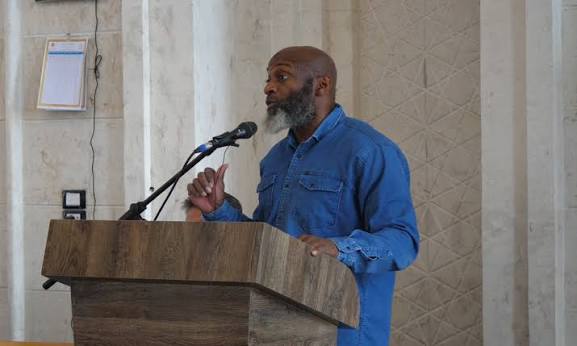
US journalist Bilal Abdul Kareem has been detained in Syria since 22 December 2025 without, according to his supporters, a formal charge, trial or access to legal representation. His case has prompted a campaign calling for his release or, at minimum, his right to due process, while questions are being raised about the treatment of detainees and journalists under Syria’s new government.
The campaign, #JusticeForBilalAbdulKareem, is being supported by human rights advocates and volunteers who say the case deserves greater attention from governments, international organisations and civil society.
Among those supporting the campaign are UK-based human rights advocate and spokesperson Umm Jaabir and activist and campaign volunteer Umm Fatimah.
A journalist without a court hearing
According to Umm Jaabir, Abdul Kareem has not been brought before a judge and has not been given access to a lawyer.
She said the journalist had recently been visited by his wives and had expressed his desire for a trial and for detainees in Syrian prisons to have access to legal representation and fair hearings.
Abdul Kareem is known for his reporting from Syria during the conflict and for his advocacy on behalf of prisoners. He is also the founder of the Justice Covenant.
His supporters say his detention has particular significance because he spent years reporting on people affected by the Syrian conflict and giving attention to those whose experiences were otherwise difficult to document.
“He was a voice for the voiceless. And now he’s lost his voice,” Umm Jaabir said.
The campaign says Abdul Kareem’s family has also been affected by his detention. He has more than 10 children and four wives, according to the campaign, leaving his family without the person who supported them financially.
SMread: Lesufi’s GBV plan looks perfect on paper, says Dr Shaheda Omar
Questions over due process
The case comes against the backdrop of a major political transition in Syria and growing international engagement with the country’s new authorities.
For Abdul Kareem’s supporters, however, diplomatic recognition and engagement should not come at the expense of scrutiny over human rights.
Umm Jaabir said the journalist had not received what she described as basic rights, including access to a lawyer and due process. She also raised concerns about reports of torture in Syrian prisons.
The campaign’s position is that Abdul Kareem’s political views or the views of people he has interviewed should not determine whether he is entitled to fundamental legal protections.
“No one’s expecting everybody to agree with everything Bilal has ever said. But surely we can all agree that he deserves his basic human rights,” she said.
The campaign also says it has seen little public support from sections of the activist community, despite Abdul Kareem’s years of reporting from Syria.
An interview at the centre of the claims
There is no publicly confirmed formal charge against Abdul Kareem identifying the reason for his detention, according to the campaign.
Umm Jaabir said Abdul Kareem had nevertheless communicated that he personally believed his detention could be connected to an interview he conducted with Dr Sheikh Hani Sabai.
The interview is lengthy and includes views expressed by the guest rather than Abdul Kareem himself. The campaign argues that, as a journalist, Abdul Kareem was acting in the role of interviewer and should not automatically be held responsible for the views expressed by someone he interviewed.
The campaign has said it intends to share the interview so that people can assess its contents and context themselves.
That difference says that journalists should not be treated as responsible for every position expressed by their interviewees, particularly where no formal charge has been publicly provided.
SMread: Ramaphosa’s GBV plan too soft, says March and March leader
Taking the case beyond Syria
The campaign has established a petition calling for justice for Abdul Kareem and says efforts have also been made to raise the matter internationally.
Umm Jaabir said the petition is available through Change.org under the name Justice for Bilal Abdul Kareem. She also said journalist Yvonne Ridley had submitted information concerning the case to the United Nations, with the campaign awaiting further developments.
The campaign is also looking towards diplomatic and governmental channels, although Umm Jaabir said it was not aware of any direct communication between the UK Foreign Office and the Syrian government concerning Abdul Kareem at the time of the discussion.
For Umm Fatimah, raising public awareness is another important part of the campaign.
She said she became involved after seeing what she considered a lack of attention being given to Abdul Kareem’s detention, particularly given his history as a journalist reporting from Syria.
“He had been a vital resource to allow us to understand what was happening on the ground,” she said.
Umm Fatimah said public advocacy could help create pressure even where formal government channels were already being pursued.
SMread: ANC MP lodges complaint at Equality Court over Norwood incident
A wider question about Syria
The case has also become part of a broader debate about what human rights protections should look like in Syria following the fall of the previous government.
The campaign argues that international engagement with Syria should be accompanied by continued scrutiny of how detainees are treated and whether basic legal protections are being upheld.
For Umm Fatimah, the issue extends beyond international politics.
She argued that Muslims should consider the case through both international human rights principles and Islamic teachings on justice. Her position was that support for Syria and its people should not prevent people from speaking out when an individual is believed to be facing injustice.
“We do not want the same oppression and tyranny to exist for any person, even if it’s just one person,” she said.
The argument places Abdul Kareem’s case within a wider question: whether political change is meaningful if people continue to face detention without access to the legal protections expected under international human rights standards.
SMread: Small businesses now prime targets for cybercriminals, warns security expert
A family waiting for answers
While the campaign continues to seek attention for Abdul Kareem’s legal situation, his family is dealing with the practical consequences of his detention.
Umm Jaabir said Abdul Kareem’s family had lost its breadwinner and that a fundraising initiative had been established through Iqra Charity to assist them.
She also referred to a video featuring one of Abdul Kareem’s daughters, Sham, and encouraged people to learn more about the family’s circumstances through the campaign’s social media platforms.
More than nine months after his detention, the campaign says the uncertainty remains one of the family’s greatest difficulties.
There is still no publicly confirmed formal charge, trial date or indication that Abdul Kareem has been given access to a lawyer.
For his supporters, the demand is therefore straightforward: that he be given the legal process he is entitled to, regardless of his political views, his journalism or the views expressed by people he has interviewed.
The campaign is also urging supporters to speak about the cases of other detainees who, it argues, have been forgotten.
The case raises a question that extends beyond one journalist or one country: what happens to human rights protections when political circumstances change, but the systems of detention remain?
Image: Bilal Abdul Kareem/ X
