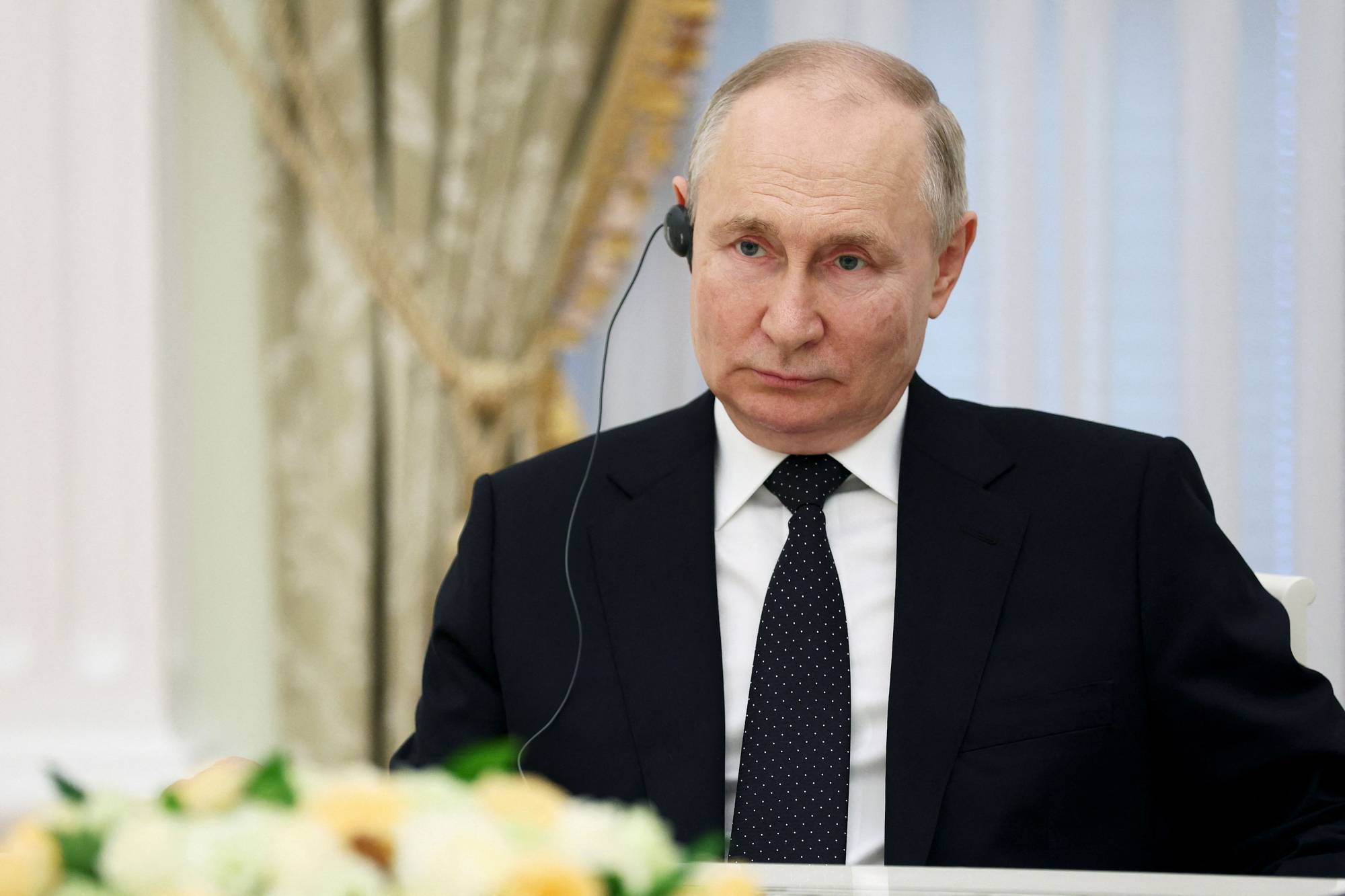
Russian president Vladimir Putin will not attend a BRICS nations summit in South Africa Photo Japan Times
South Africa – Russian President, Vladimir Putin, recently announced that he will not be attending the upcoming BRICS Summit in South Africa. The decision not to attend physically was officially communicated by the Russian presidency, and it comes with implications and considerations for both South Africa and the global community.
The news of Putin’s decision not to attend the BRICS Summit is met with a sense of relief for South Africa. Hosting the Russian President amid the backdrop of ongoing geopolitical tensions would have placed the South African government in a precarious position, explained Priyal Singh, Senior Researcher, Africa in the World, Institute for Strategic Studies.
“We have quite a clear, unambiguous legal framework in which South Africa has to fulfil its domestic and international legal obligations under the International Criminal Court (ICC). On the other hand, practically, to arrest the Russian president during an incredibly charged geopolitical moment, such as this, would certainly have been seen as a statement of war. It was quite an impossible situation for South Africa.”
South Africa’s position on international obligations
South Africa’s position as a responsible and committed international stakeholder has been under scrutiny. Last year, the ANC’s resolution to rescind its proposal to withdraw from the ICC was a step towards reaffirming its commitment to international legal obligations.
“This was justified based on the fact that the ANC viewed that the ICC had reformed and had changed enough that the ANC and South Africa was therefore comfortable with rescinding that proposal. In December last year, South Africa essentially recommitted itself back to the ICC. It recommitted itself to its existing legal obligations and then just a few months after that, we see this arrest warrant being issued for the Russian president. For South Africa to then backtrack again, I don’t think would have been seen very positively or favourably by many international partners.”
What one should keep in mind is the ICC’s selective treatment of certain global figures. This has been a subject of concern, with perceived double standards and political influences undermining its credibility. Many powerful countries, especially in the global North, are not signatories to the ICC, creating an unequal playing field. South Africa must engage in broader debates on the functioning of multilateral institutions while pushing for a more equitable global order, said Singh. The country must walk this middle ground.
SMread: Emerging Powers Unite: Unravelling the Significance of the BRICS Summit
The BRICS summit
The BRICS Summit remains a significant event for South Africa and the participating nations. The Summit provides a platform to discuss issues such as expanding the BRICS grouping and facilitating Africa’s development interests on the global stage. The absence of Putin allows the conversations and real issues to be centre stage instead of the political drama that would have taken place.
“We’re going to be focusing on issues looking at the expansion of the BRICS grouping, looking at issues surrounding how the BRICS grouping can better interact and facilitate Africa’s broader collective developmental interests and aspirations on the world stage. It’s also important for us to remember that next week we have the Russia Africa Summits that will be taking place in Saint Petersburg. South Africa has a very packed diplomatic schedule this calendar year.”
Russia will be represented by its Foreign Minister, Sergei Lavrov and there are talks that Putin will join remotely. The BRICS Summit is the perfect time for South Africa to assert itself as a responsible global stakeholder and promote a more equitable international order. The challenges posed by the ICC’s selective actions call for collective efforts to address perceptions of double standards and hypocrisy. Moving forward, the BRICS grouping must work towards greater formalisation and internal cohesion to truly challenge the dominance of the global North and shape a more balanced world order.
