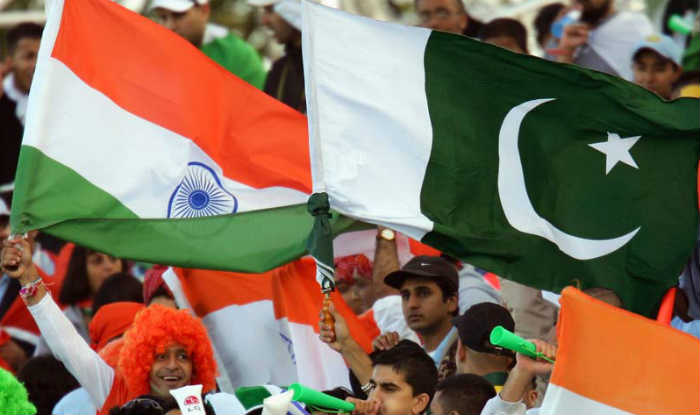
Cricket’s marquee rivalry was never just a game. For decades, India versus Pakistan has been the most watched, most anticipated, and most commercially powerful fixture in international cricket. It is a rivalry shaped by history and sustained by emotion, memory, and money. This World Cup, however, may mark a turning point. Not because of an upset on the field, but because the match itself may never be played.
Pakistan’s decision to participate in the tournament while boycotting its scheduled game against India exposes a growing contradiction at the heart of global sport. A World Cup that proceeds without its defining contest begins to feel incomplete, even if the schedule insists otherwise.
A tournament that continues without its centrepiece
Pakistan’s stance follows months of political tension involving India and Bangladesh. Bangladesh had earlier refused to participate in matches hosted in India, citing political and security concerns.
Bangladesh has now been removed from the World Cup entirely, with Scotland stepping in to take their place. What began as a political position ultimately cost Bangladesh its seat at the tournament, reshaping group compositions and competitive expectations.
Pakistan has now entered the dispute in open protest, aligning itself with Bangladesh’s earlier stance. The boycott is framed as a political statement, but its consequences are unmistakably sporting. By refusing to play India, Pakistan effectively concedes points before the tournament begins, weakening its own campaign and reshaping the competitive balance of the group.
And in a tournament designed to measure the best against the best, absence speaks loudly.
SMread: What the new Nusuk system means for pilgrims
The match that funds the game
Few sporting events generate revenue at the scale of an India Pakistan clash. Broadcast rights spike. Advertising slots sell at premiums. Viewership numbers stretch across continents. Betting markets surge.
Remove it, and the financial impact is immediate. Broadcasters lose guaranteed audiences. Sponsors lose visibility. Tournament valuations take a hit. Cricket, more than most global sports, depends heavily on South Asian viewership. Undermining that pillar places strain not only on this World Cup, but on the economic model that sustains the game internationally.
When the most lucrative match disappears, the cost is shared by everyone, not just the two teams involved.
Form on the field, consequences off it
Pakistan enters the tournament in strong form, having recently beaten Australia 3–0 in a series, a result that under normal circumstances would have heightened expectations for a competitive World Cup run. But by conceding two points before the tournament even begins, Pakistan now faces an uphill path to qualification, underscoring how political manoeuvring can undercut on-field ambitions.
This is where politics collides directly with performance. Players prepare for years for World Cups. Careers are defined by them. Yet decisions taken far from the dressing room now shape outcomes on the points table. Cricket becomes collateral.
Sportsmanship in an age of selective participation
International sport has long claimed to offer a neutral space, a place where competition can exist without hostility. Cricket, especially in South Asia, has often been held up as proof that rivalry does not have to mean refusal.
But repeated boycotts test that idea. If teams choose which matches to honor based on political context, the concept of fair competition begins to erode. A World Cup built on selective participation is no longer just about cricketing excellence. It becomes a negotiation.
Over time, this shifts fan trust. It reframes tournaments not as shared global events, but as stages for unresolved disputes.
The larger question now facing cricket is not whether this match will be played, but what precedent its absence sets. If every World Cup brings new political agendas to the table, the sport risks becoming fragmented by the very forces it once claimed to rise above.
A World Cup without its fiercest rivalry may still crown a champion. But in this World Cup, at least, the pitch may be as contested as any border.
Image via Catch News
