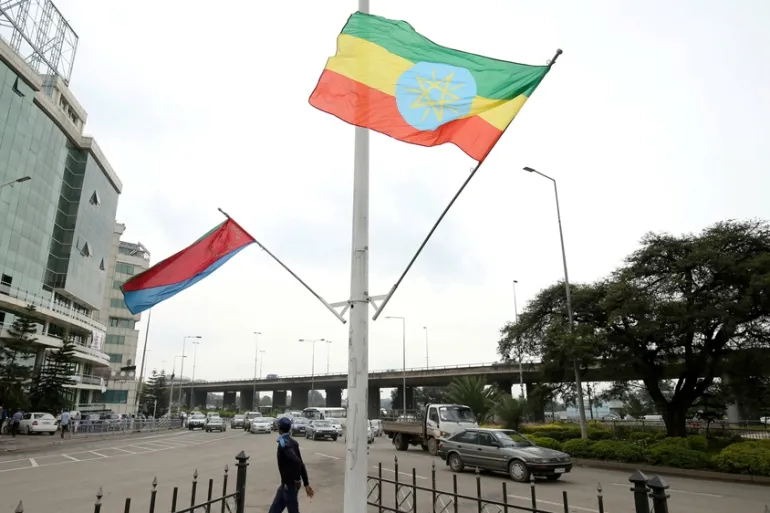
The Ethiopian Ministry of Foreign Affairs sent an official letter to Asmara on Saturday, 7 February 2026, accusing Eritrea of “outright aggression” along their shared northern borders.
It alleged that Eritrean soldiers are conducting joint manoeuvres with local rebels. Ethiopia claims these actions violate its national sovereignty and threaten the fragile stability of the Horn of Africa.
The Ethiopian government stated that Eritrea is supplying weapons to insurgents in the north-western border regions. Foreign Minister Gedion Timothewos noted that recent developments show Eritrea has chosen a path of further escalation.
Ethiopia has offered to open negotiations regarding access to the Port of Assab if troops are withdrawn. This maritime access is a critical economic priority for landlocked Ethiopia.
Eritrea has dismissed these accusations as “patently false” and “deplorable” fabrications. The Eritrean information ministry stated it has no desire to engage in meaningless acrimony. Asmara maintains that it acts only in self-defence against what it terms Ethiopian expansionism.
International monitors have not yet independently verified the reported troop movements or the alleged joint military exercises.
SMread: South Africa pulls SANDF troops from DRC mission
Historical context of the Horn of Africa dispute
The two nations previously fought a devastating border war between 1998 and 2000. That conflict resulted in the deaths of over 100,000 people. Although a peace deal was signed in 2018, relations have soured significantly since the recent Tigray civil war. Prime Minister Abiy Ahmed recently accused Eritrean forces of committing atrocities during that internal conflict.
Regional experts warn that a new confrontation could disrupt vital trade corridors. Ethiopia currently relies heavily on Djibouti for maritime trade, costing billions in annual fees. The potential for conflict has already led to the cancellation of flights in northern Ethiopia. Both nations face significant economic pressure to maintain peace, yet military posturing continues to intensify.
