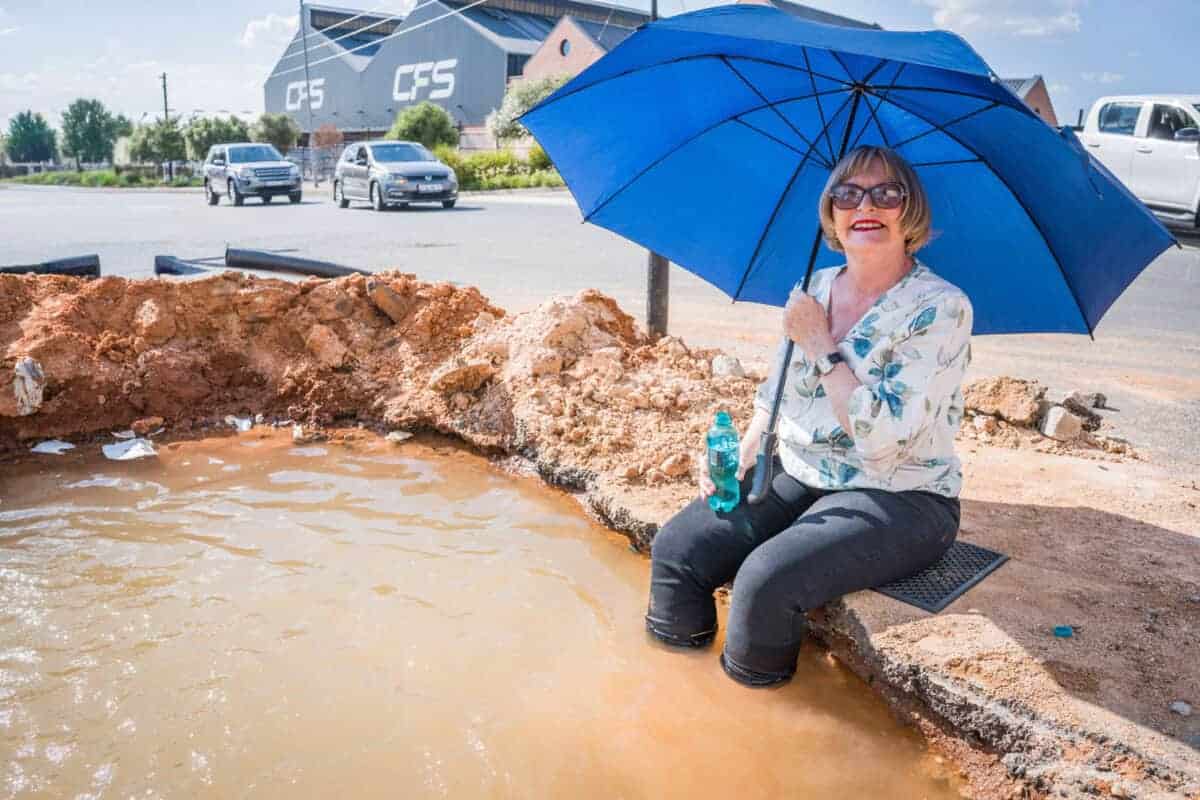
While most officials seem to have washed their hands of Johannesburg’s water woes, Helen Zille wants a chance to fix them.
Last week, residents in several suburbs, including Emmarentia, Melville, Crown Gardens and Ormonde protested over water outages. In some instances, taps were dry for weeks. What frustrated residents most was the lack of communication from officials.
“It took about three weeks of some people not having water before we saw any action,” lamented Dr Ferrial Adam, executive director of WaterCAN. “Even with that, we never got any honest responses. The communication was very cut-and-paste. It told us nothing. It seemed as if they had no idea.”
Water outages are frequent occurrences in South Africa’s financial capital. Located more than 100 km away from the Vaal Dam, it is one of few cities in the world sitting at a distance from its water source. This means water has to be pumped in from more than an hour away. Before reaching resident’s taps, around 45% of it slips through cracks in the pipelines. Decades of neglect, funding shortages and a scorching summer have converged to leave residents without water.
Filthy and frustrated, residents took to the streets with empty water bottles. Their pleas for the water to be restored were loud and clear, but the response from their elected representatives was barely louder than a whisper.
Early on in her bid for mayor, Helen Zille identified the water crisis as a key issue and prioritised it in her campaign. While incumbent officials have either blamed entities like Rand Water or residents themselves, the former Cape Town mayor and 2008 winner of the World Mayor award, makes sure to be seen standing with residents in their demonstrations.
“The whole system is in crisis,” she told journalists at the Democratic Alliance’s (DA) headquarters in Bruma recently. It’s a crisis incumbent officials have been reluctant to talk about, much less do anything to fix.
Residents felt the crisis long before politicians had to find hotels to shower in. As administration after administration focused on expanding access to the city’s burgeoning population, infrastructure maintenance took a backseat. There is now a maintenance backlog worth billions of Rand — R27 billion if you speak to incumbent mayor Dada Morero, or R200 billion if you speak to Zille.
It’s a crisis that has caught even the president’s attention, albeit quite late in the day. In his State of the Nation Address (SONA) on Thursday, President Cyril Ramaphosa announced that he would establish a water crisis committee chaired by himself. Its mandate would be to streamline efforts under a single body and deploy experts on the ground. And another dam is on the way.
For the DA’s mayoral candidate, fancy new projects simply won’t do. Johannesburg residents need water, and they need it now. To deliver this basic service, once elected, she intends to rescue the most critical systems first: Hursthill, South Hills, Berea and Alexander, and Midrand.
“If we get into office,” she stated gravely, “we’re going to have to do a triage system like they do in hospitals. If you come in with a knife in your head, you get treated first even though there are people in front of you because you are on death’s door. When we get in, we’re going to look at the systems that are on death’s door and try to rescue them.”
For his part, Morero is stretched. When he’s not fighting his recent defeat in an internal ANC contest, he makes time to show up at reservoirs for photo opportunities and face disgruntled residents. He is convinced more reservoirs will fix the problem, even when the pipes meant to transport water from reservoirs to homes are broken.
“Politics caused it,” says Zille, “and if people want it to be fixed, politics has to be the solution.” Her bid for mayor has roused interest among previously uninterested residents. Momentum is on her side, if the results of recent polls putting support for the DA at close to 40% are anything to go by.
With the tide in her favour, Zille may soon wear the mayoral chains. Even if her party doesn’t get an outright majority, there’s a chance it’ll be in a position to lead a coalition of smaller parties after the municipal elections. She’s under no illusions about the task ahead of her.
“We have to go back to 2000 and start fixing what hasn’t been fixed for all these years, let alone invest in new capital infrastructure to make provision for the expansion of the city.” It’s a task that sometimes has her “staggering backwards,” she admits.
Image credit: DA
