The country’s health crisis is not a sudden outbreak but a long negotiation with inequality. For three decades, progress and stagnation have existed side by side. Social grants expanded. Child support reached millions. Antiretroviral treatment became one of the largest public health achievements in the world. And yet, beneath these gains, something more stubborn persisted: hunger.
Russell Rensburg, director of the Rural Health Advocacy Project and project lead for the TB Accountability Consortium, describes the situation not as a singular crisis, but as a perpetual one. Tuberculosis is only its most visible symptom. The deeper disease is structural inequality.
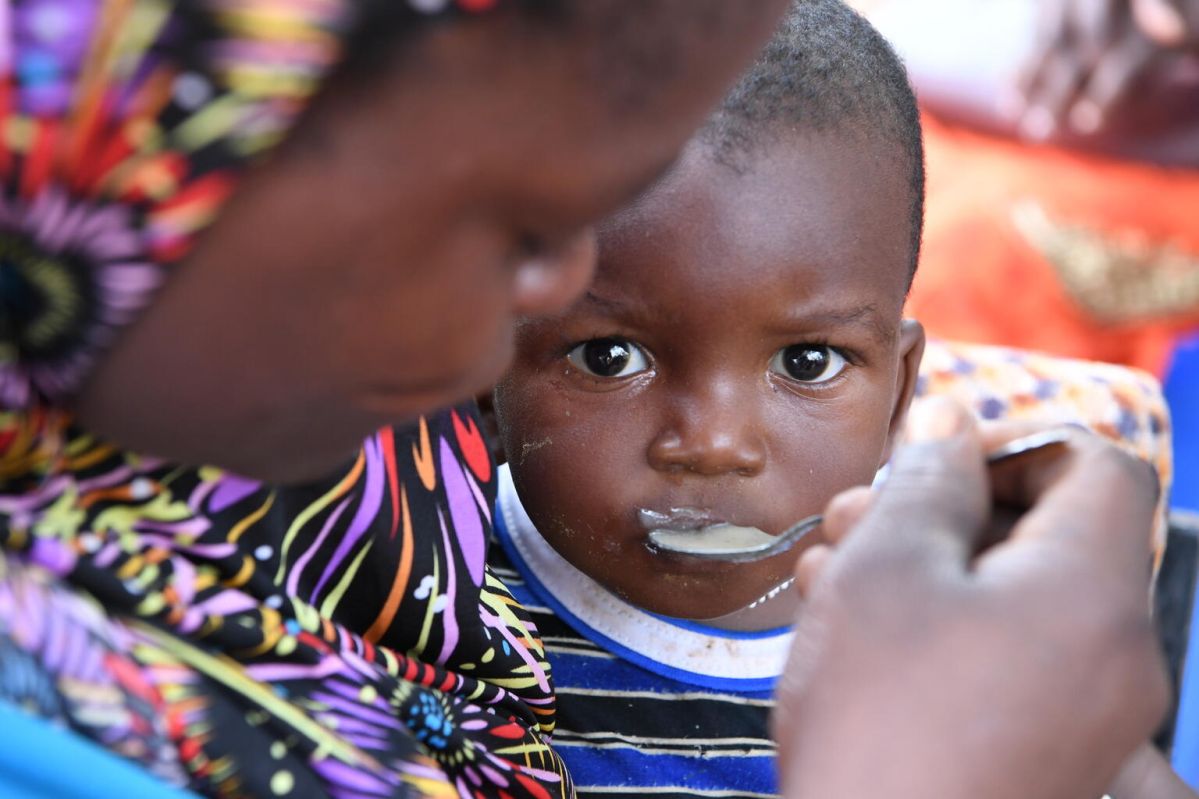
More than one million children are born into South Africa’s public health system every year. The first thousand days of life determine brain development, immune resilience, physical growth. Malnutrition during this period does not simply produce smaller bodies. It produces smaller futures.
Stunting is not only about height, it’s about cognition, economic participation decades later and whether a child becomes a contributor to national productivity or remains excluded from it.
Global estimates suggest that every 17 rand invested in nutrition returns 391 rand in economic value. That figure sounds almost too efficient. But the logic is simple. A nourished child becomes a healthier adult. A healthier adult becomes a worker. A worker becomes a taxpayer. A taxpayer strengthens the state.
Yet South Africa continues to lose over 56,000 people each year to tuberculosis. TB is a curable disease. Its persistence signals not medical failure alone, but social neglect. The disease thrives where nutrition is scarce and immune systems are compromised. Rapid weight loss is not incidental to TB. It is part of its cruelty.
Section 27 of the Constitution guarantees access to health care, food, and social assistance. On paper, the country has already declared what matters. In practice, implementation fractures along provincial lines, budget ceilings, and administrative weakness.
SMread: Helen Zille’s plan to get Jo’burg taps running again
The one-meal nation
South Africa operates one of the most expansive school feeding schemes in the world. Rooted in Section 28 of the Constitution, it provides at least one meal per day to learners in government schools.
One meal.
What happens during weekends? During school holidays? What happens to children in early childhood development centres below Grade R, where coverage is uneven and funding uncertain?
Nearly 80 percent of eligible children receive the child support grant. Yet the grant value falls below the basic food poverty line. It protects, but it does not fully nourish. Expansion requires funding. Funding requires political trade-offs.
One proposal gaining traction is the expansion of health taxes on alcohol, tobacco, and sugar-sweetened beverages. South Africa spends between 417 million and 1 billion rand per day on alcohol alone, particularly during festive seasons. The health consequences are measurable in trauma wards, in gender-based violence statistics, in chronic disease burdens.
Taxation on harmful consumption is not merely punitive. It is corrective. It reduces usage and generates revenue. It shifts the cost of public harm back toward its source.
Aid, autonomy, and the question of will
For two decades, foreign aid, particularly from the United States, played a central role in supporting South Africa’s HIV response. Recent funding reductions signal a new era. One less dependent on donor generosity. One more dependent on domestic capacity.
South Africa is not a poor country in absolute terms. It is a deeply unequal one. The fiscal space to fund nutrition, early childhood development, and integrated health systems exists. What remains contested is prioritization.
The current multi-party government presents both risk and opportunity. Coalition politics can fragment accountability. But it can also create checks and balances previously absent under one-party dominance.
SMread: SANDF joins gang violence fight
Corruption as a health determinant
Teenage pregnancy rates are rising. School completion remains fragile in rural and former homeland areas. Youth unemployment remains structurally high. These are often framed as social issues. They are also health issues.
And threading through them is corruption.
Procurement loopholes allow contracts under 500,000 rand to be fast-tracked with minimal scrutiny. Multiply that threshold across departments, across provinces, across years, and the scale of leakage becomes apparent.
The proposed Public Service Amendment Bill seeks to reduce political interference in public sector appointments by introducing clearer, merit-based procedures. Procurement reforms aim to close tendering loopholes that enable fragmentation of contracts to avoid oversight.
Legislation can tighten systems. It cannot alone transform culture. Corruption is not only a legal failure. It is a moral one. It flourishes where civic engagement is weak and public scrutiny intermittent. South Africa’s constitutional framework allows for participation. The question is whether citizens, civil society, and oversight institutions are resourced enough to use it effectively.
Early childhood as a national strategy
If there is a beginning point, it is early childhood. Universalizing school meals rather than means-testing them would remove stigma and simplify administration. Expanding early childhood development below Grade R would address inequality before it calcifies. Nutrition education could confront not only undernutrition, but the quieter epidemic of hidden hunger and childhood obesity.
Omega-3, iron, protein. These sound like clinical details. They are developmental infrastructure. South Africa has approximately six million people on chronic care, largely for HIV. Yet comorbidities often go untreated. A reactive system treats illness once visible. A preventative system strengthens resilience before a crisis.
TB rates are declining. That is real progress. It demonstrates that coordinated effort works. But decline is not disappearance. And a country cannot treat its way out of structural hunger.
SMread: South Africa at a crossroads
A reform window
Thirty years into democracy, South Africa stands at an inflection point. The tools are constitutional. The fiscal mechanisms are available. The epidemiological data is clear.
The constraint is intentionality. Reducing inequality is not rhetorical, it’s administrative, budgetary, procedural, and cultural. Nutrition is not charity, it’s economic policy. Tuberculosis is not only a pathogen, it’s a mirror. And corruption is not just theft, it’s the redistribution of survival from the vulnerable to the powerful.
The country has already written the rights into law. The next chapter will depend on whether it is prepared to fund them.
For more on this conversation, watch the video below:
Image credit: UNICEF
