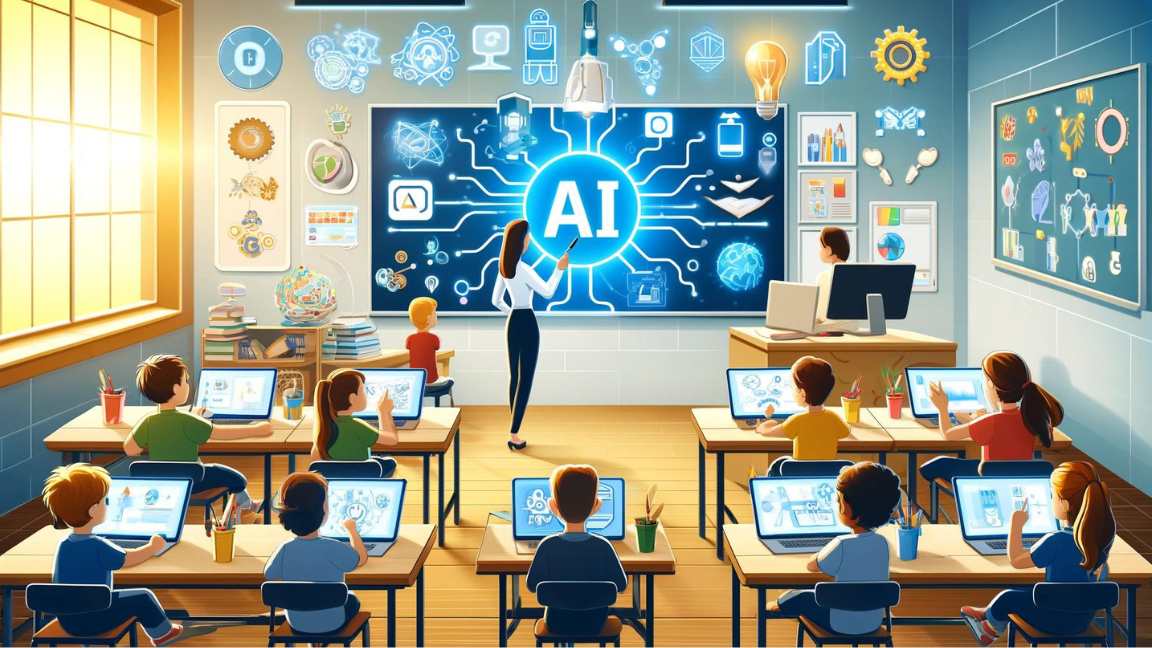
UCT researcher Mariam Jacobs Basadien is exploring how universities can embrace generative AI without compromising ethics, critical thinking or academic integrity.
When generative AI tools like OpenAI’s ChatGPT exploded into public use in late 2022, universities were forced into unfamiliar territory almost overnight. Students were experimenting with AI for assignments, lecturers were trying to understand what it meant for teaching, and institutions were left scrambling to define what ethical use actually looked like.
For Mariam Jacobs Basadien, that uncertainty became the focus of her research.
Currently a PhD candidate and NGAP lecturer at the University of Cape Town, Basadien is researching the ethical use of generative AI in higher education and how institutions can adapt to technology that is moving faster than policy frameworks can keep up with.
SMread: Abbas loyalists win Palestinian municipal elections
A non-linear academic journey that led to AI research.
Basadien’s academic path did not begin with a clear roadmap. She started with a BCom general degree, studying a broad mix of subjects including accounting, economics, management, industrial psychology and information systems. Over time, one field stood out.
Information systems offered something many disciplines could not: a practical understanding of how people and technology interact to solve real-world problems.
That interest led her to complete her honours degree with distinction, followed by a master’s degree and now a PhD focused on one of education’s biggest modern disruptions.
Why generative AI needs ethical boundaries
Basadien believes AI can be incredibly useful in education when used correctly. Students can use it to unpack difficult concepts, improve their writing and brainstorm ideas. Lecturers can use it to support lesson planning and create more personalised learning experiences.
But convenience comes with risk.
One of the biggest concerns is how quickly students may begin outsourcing critical thinking to machines. There are also growing concerns around plagiarism, privacy, misinformation and algorithmic bias.
She believes that AI should support learning, not replace it.
Students still need to verify outputs, challenge information and engage with their coursework rather than accepting AI-generated answers at face value.
Universities are rewriting the rules
Higher education institutions are now being pushed to rethink long-standing academic structures. By early 2025, roughly 12 African universities had introduced ethical AI policies or guidelines to help manage AI use in academic spaces. These policies generally do not ban AI tools outright. Instead, they focus on transparency.
Students may be required to disclose how AI was used in assignments and, in some cases, provide prompts or evidence of AI-assisted work. This change is also forcing universities to redesign assessments and rethink what meaningful learning looks like in an AI-driven environment.
SMread: Cape flats army deployment a costly parade, says activist
The fear that AI will replace jobs.
Job displacement remains one of the biggest anxieties surrounding artificial intelligence, particularly in developing economies such as South Africa.
Basadien acknowledges those fears but encourages students to think beyond panic.
She advises that we understand how industries are evolving and pursue qualifications that create flexibility.
She points to information systems as an example of a degree that opens multiple career pathways, including roles such as business analyst, systems analyst and project manager.
AI may change jobs, but adaptability remains one of the most valuable skills students can develop.
SMread: Assad’s cousin faces trial
Technology is moving faster than institutions
One of the biggest challenges universities face is the speed of AI development. Within just two years, the world has moved from early generative AI models to significantly more advanced systems, making it difficult for institutions to keep policies, curriculum and ethical guidelines current.
Universities are now being asked to balance innovation with accountability, while ensuring students are not left behind. That challenge becomes even more complex in South Africa, where digital inequality remains a major concern. Not every student has equal access to devices, stable internet connectivity or paid AI tools.
SMread: Human rights on the decline, Amnesty International warns
Why representation in AI matters
Basadien also hopes to see more young women entering AI and STEM-related spaces. Representation matters in shaping the future of technology, particularly when ethical decisions impact communities differently.
Her own work continues to gain international recognition. She was recently selected for the European Conference on Information Systems Doctoral Consortium 2026 and has published research analysing AI policies across 26 African universities.
It is a reminder that conversations about AI are no longer happening somewhere else. They are happening here, in South African classrooms, lecture halls and policy meetings. And the decisions made now will shape how future generations learn.
Image via Atlantic International University.
