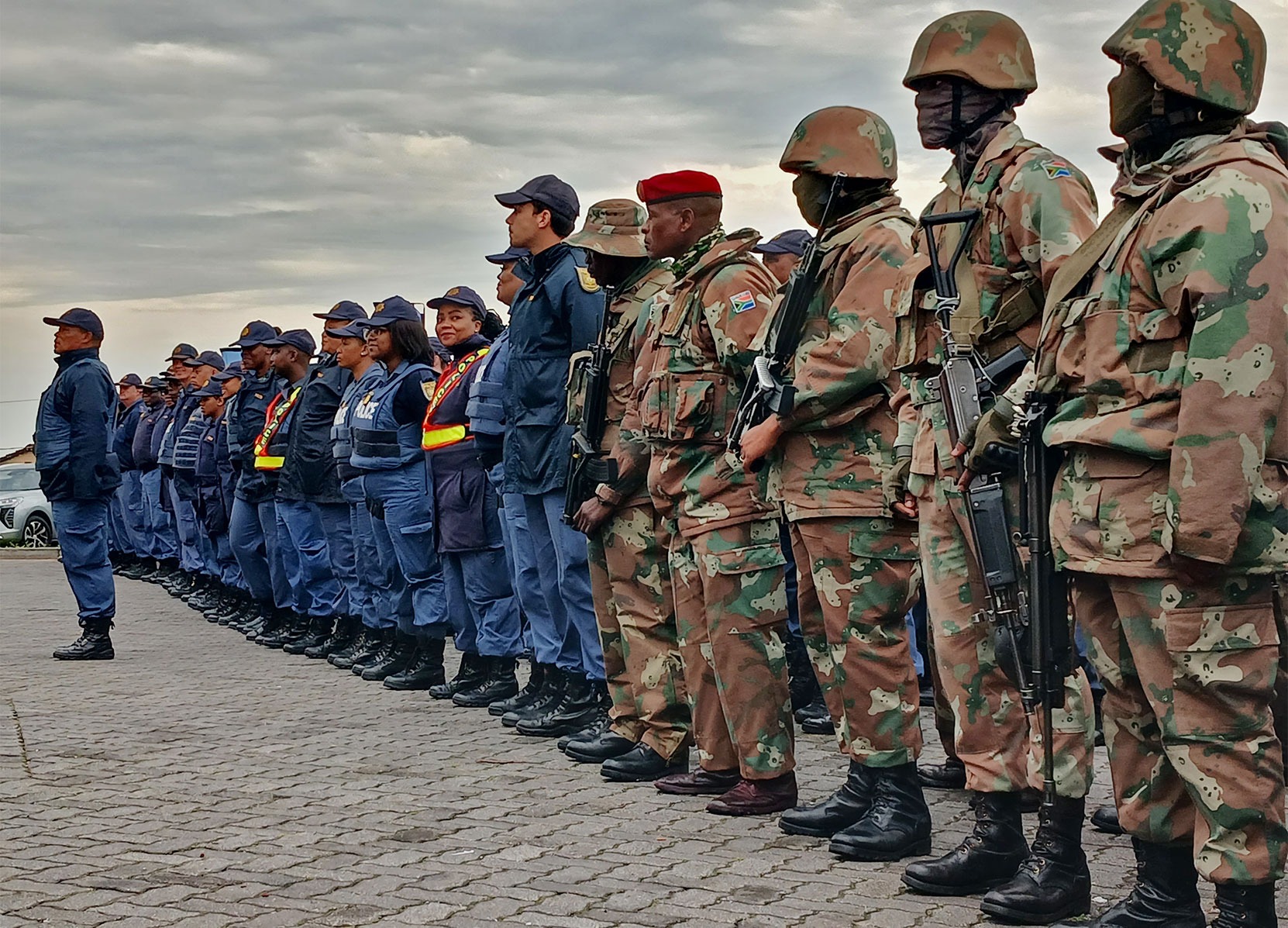
Image Source: Daily Maverick
Local – Despite mounting expectations and anxiety around the looming June 30th deadline and lingering memories of the July 2021 riots, Defence Analyst Ricardo Teixeira believes the country is in a much better position to respond this time around, citing advance warning and the involvement of private security as key advantages heading into the planned shutdown.
Teixeira said that, unlike the unrest of 2021, authorities this time have had the benefit of a publicised date to prepare for, allowing government, police and the military to plan ahead.
He pointed to the decision to bring private security companies into the response as a significant resource multiplier, given the scale of personnel they can contribute.
“I do think it was a good move on the acting police minister’s part to bring in the private security industry. Just from a human resource standpoint, that’s about 600,000 security guards that you can then bring into this, which are not only a deterrent but also eyes and ears.”
Police and Defence Force Under Strain
However, the additional manpower the government is counting on may be undercut by capacity strains already weighing on the security cluster. Teixeira addressed the strain on the police and defence force, noting that reservist numbers have fallen sharply in recent years.
He said the SANDF is already stretched across multiple operations, from border duty to anti-mining operations, limiting how much additional manpower can realistically be deployed for the upcoming marches.
“In my opinion, the defence forces are already overextended and stretched thin. They can’t really call up reservists and send them all over the country because they’re already at the border, in the Cape Flats, fighting illegal mining. They’re all around the country already.”
Concerns Over Civilian Vigilantism
Teixeira warned against civilians arming themselves in the way some communities did in KwaZulu-Natal during the 2021 unrest, drawing a clear line between lawful, coordinated structures and unsanctioned armed action. He said the latter amounts to vigilantism and could add to the volatility of an already tense situation.
“If they’re part of a neighbourhood watch and they’re working with a community policing forum and they’re also police reservists, then there is no problem, because they’re going to be part of the network that is trying to contain and prepare for any eventuality. But when people go out on their own and form their own groups and use their weapons in a private capacity without coordination with the police, that’s vigilantism. That violates the law.”
He urged civilians to avoid taking up arms unless facing a direct and imminent threat, hoping that the country would not see a repeat of the fatalities recorded during the 2021 riots.
“I would hope, and I would encourage civilians not to pick up firearms and to rather just stay home. And if there is a need to do it, then it should only be as a last resort, if the police are not in the area and you are under direct threat.”
