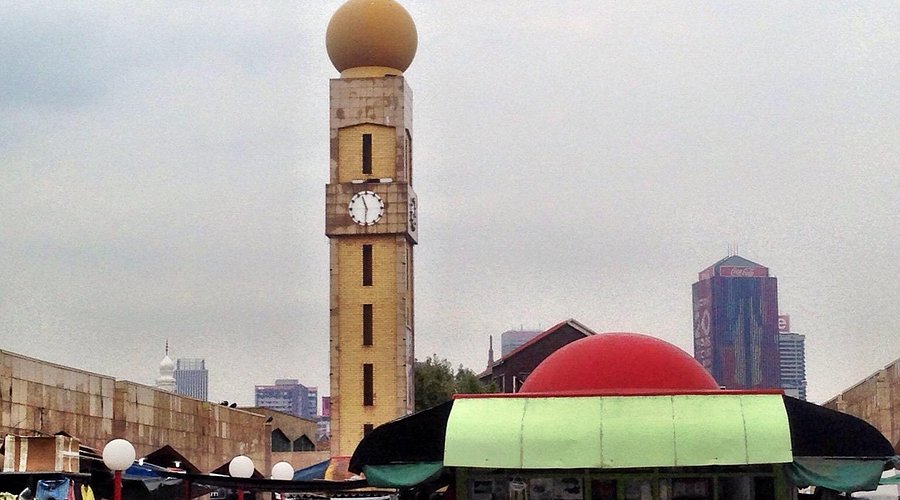
For a lot of South Africans, Oriental Plaza is a landmark woven into Johannesburg’s story. Generations have walked its corridors in search of fabrics, spices, wedding outfits, household goods and familiar faces. It is a place where memories were made, businesses were built and communities found a sense of belonging.
But today, as concerns around urban decay, crime and deteriorating infrastructure continue to dominate conversations about Johannesburg’s inner city, questions are being asked about the future of this iconic institution.
Can Oriental Plaza withstand the challenges facing Fordsburg, or is it destined to become another casualty of a changing city?
A legacy emerging from displacement
To understand Oriental Plaza, one must first understand Fietas. According to Rehana Moosajee, Founder and Owner of The Barefoot Facilitator, the Plaza’s story cannot be separated from the forced removals of apartheid. Before Oriental Plaza existed, many traders and families lived and worked in Fietas, a vibrant mixed-use community where homes and businesses stood side by side.
When the apartheid government declared this arrangement unacceptable, residents and traders were forcibly removed, fundamentally altering the social and economic landscape of the area.
The Oriental Plaza emerged from this painful chapter. And yet despite its origins, it became a symbol of rebirth. Families built their livelihoods from scratch, businesses flourished and a new community identity was formed.
SMread: Teixeira: SA in better position than 2021 ahead of June 30 deadline
The ownership model of Oriental Plaza
One of Oriental Plaza’s most distinctive features lies in its ownership model. Unlike many modern malls owned by large property developers, Oriental Plaza operates through sectional title ownership. Many shop owners own their premises, creating a unique sense of investment and connection that stretches across generations.
This model has helped cultivate a strong emotional attachment between traders and the Plaza itself. For many families, these businesses represent decades of hard work and sacrifice.
And in doing so, the space feels less like a commercial centre and more like a living archive of Johannesburg’s entrepreneurial history.
The challenges facing Fordsburg
Despite its rich heritage, Oriental Plaza can’t be isolated from the realities surrounding it. Concerns about safety, cleanliness, traffic congestion and deteriorating public infrastructure have increasingly shaped public perceptions of Fordsburg.
Double parking, neglected public spaces and reports of crime have discouraged many visitors from returning.
“Most people kind of assume that if you’re going to Fordsburg, you’re not going to feel safe,” says Moosajee.
Incidents of crime and safety concerns have affected shopping centres across Johannesburg, including affluent commercial districts. So, the matter of safety isn’t limited to just Oriental Plaza, and cannot be viewed as such.
SMread: Energy drinks and young children: a growing health concern
Challenging narratives about inner-city spaces
Moosajee also highlights the social narratives that influence how people engage with inner-city communities. As migration patterns shift and immigrant-owned businesses become more prominent, some South Africans have come to view certain areas as inaccessible or unsafe.
These perceptions usually overlook the economic vibrancy and entrepreneurial energy that continue to exist within these communities.
Oriental Plaza’s location near a major cross-border transport hub has positioned it as an important destination for traders from across Southern Africa. Rather than seeing this as a weakness, Moosajee believes it should be recognised as one of the area’s greatest strengths.
South Africans are urged to look beyond immediate problems and recognise the long-term opportunities in the location.
Reimagining Oriental Plaza
While many discussions focus on preserving the Plaza’s past, Moosajee believes the conversation should also focus on its future. “The Oriental Plaza has the possibility to actually become the anchor for reimagining Fordsburg and what’s possible.”
For her, regeneration is not about turning the area into another generic shopping precinct. Instead, it is about building on what already makes the Plaza unique.
That could mean cleaner public spaces, improved safety initiatives, stronger collaboration between businesses and local stakeholders, and even exploring mixed-use developments that include affordable housing and community facilities.
The goal is not to erase history but to allow it to evolve.
SMread: Acting police commissioner vows no repeat of July 2021 unrest
Lessons from a different kind of entrepreneurship
Moosajee’s connection to Oriental Plaza is very personal.
Growing up around her father’s grocery store, she witnessed first-hand how business could serve a community rather than simply extract profit from it. She recalls lessons in customer service, generosity and human connection that continue to shape her understanding of entrepreneurship today.
Her father would open his shop early to assist workers from neighbouring businesses and often extend credit to those who needed support before payday.
These small acts of kindness created something larger than commercial success. They built trust.
One memory remains especially vivid:
A car guard spent months saving coins to buy a dress for his daughter for Christmas. It was a simple transaction, yet one that reflected the humanity that has long existed within the Plaza’s walls.
“Those moments touch you in ways that stay with you for life.”
The importance of intergenerational conversation
As conversations about the future of Oriental Plaza continue, Moosajee believes young people must be part of shaping what comes next.
“Intergenerational conversation is critical, but not with a view to romanticising the past.”
She argues that preserving history should not mean becoming trapped by it. Instead, older generations, traders, urban planners, activists and young people should work together to imagine new possibilities for the Plaza and the wider Fordsburg area.
The stories of those who built Oriental Plaza matter. Equally important are the ideas of those who will inherit it.
A future worth building
Oriental Plaza has survived forced removals, political upheaval and decades of economic change. Its future will depend not only on addressing immediate challenges but also on embracing a broader vision for what the space can become.
This is about more than a shopping centre. It is about heritage, entrepreneurship, belonging and the power of communities to reinvent themselves.
For many Johannesburg residents, Oriental Plaza is a place filled with memories. The question now is whether those memories can become the foundation for a new chapter.
If the community can balance history with innovation, and nostalgia with action, Oriental Plaza may yet prove that its greatest contribution to Johannesburg still lies ahead.
Image via Tripadvisor.
