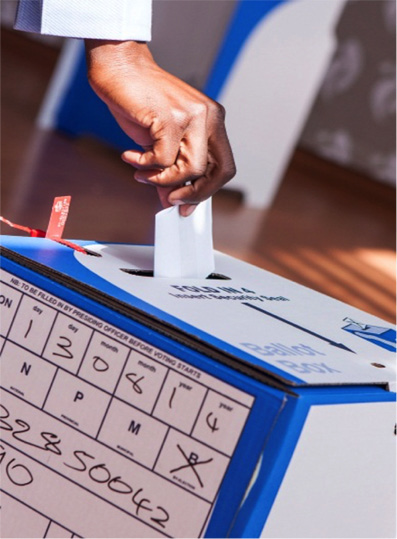
Image Source: IEC
Local – There’s a belief amongst many South Africans, particularly in townships and far-flung villages, that their single vote carries no weight and they don’t need to vote because ultimately the outcome won’t change anything.
However, Regional Outreach Officer at the Independent Electoral Commission, Diana Mola, said this thinking undermines the foundation of the country’s democracy.
With the 2026 local government elections drawing closer, the IEC is intensifying its voter education campaign to ensure South Africans are informed, prepared, and ready to cast their ballots. Mola said every vote honours the struggles of the past and strengthens the democratic journey the country began in 1994.
“Voting is a reminder for us as it relates to the hard-earned right to self-determination and equality. And as we vote as South Africans, we honour the struggle of our past, and we take the responsibility of having to make sure that we make our future better”
A Vote is a Contract with Those Who Govern
Voting is often seen as a single act at the ballot box, but the choice a citizen makes creates a relationship with their representative that lasts well beyond election day.
Mola explained that casting a ballot is not simply a routine act but a binding relationship between the voter and the elected representative. Voters, she said, keep the power to hold that representative accountable long after the ballot has been counted.
“When you participate in elections, you are basically coming into a contract with the person that you’ve voted for because you are saying to this person, ‘ Go and speak for me, go and represent me and you will therefore have to hold that person accountable”
Educating Citizens to Vote
Knowing why to vote is one part of the picture. Knowing where, when and how to cast a ballot, and how to avoid spoiling it, matters just as much for a free and fair election.
Mola said voter education is a legislative responsibility the Commission carries out both inside and outside election years, reaching communities through several platforms. The work covers a wide range of groups and stakeholders.
“We go to schools, we go to universities, we go to churches, we interact with NGO’s, non-government organisations, we engage with faith-based organisations, we engage with institutions for people with disabilities”
