As we gallop towards 30 June, whispers of concern are growing into sirens of alarm. From dinner tables to newspaper columns, panic resounds throughout the public sphere. The big question: will citizens be safe on Tuesday?
Tuesday is the deadline for undocumented immigrants to leave the country. The appointed hour was determined not by the democratically elected government, but a band of self-anointed sentinels of South Africa’s sovereignty led by March and March. Demonstrations are expected to bring activities in major cities like Johannesburg and Durban to a halt.
The government has allocated R600 million to ensure public safety on the day. But with the spectre of angry mobs marching through the streets, many doubt they will be safe. Businesses have closed their doors to avoid becoming targets. Even Parliament has instructed staff to work from home.
This dread is well-founded. During the 2008 xenophobic attacks and the 2021 July riots, law enforcement left individuals and communities to fend for themselves as mobs charged in their direction. Having witnessed those deadly events, the public naturally fears that history is about to repeat itself.
Soon after the July 2021 riots, the South African Human Rights Commission (SAHRC) lambasted law enforcement agencies for an “ineffective response to the crisis”. Capacity constraints, communication breakdowns and a lack of planning were identified as some of the snags that slowed the police.
Five years later, the South African Police Service (SAPS) remains a hollow entity. Nearly half (42%) of all posts in the force are vacant. Among the few in the ranks, less than half (45%) are ready to roll when duty calls. Moreover, their ability to respond to crises is hampered because 7,500 police vehicles are out of service. It’s no wonder so many South Africans won’t put their stock in ministerial assurances that Tuesday will be a “normal” day.
An absence of strategic direction, costly restructuring mistakes and financial shortages have left a crippled police force. The challenges that beset the police force may undermine its response to large-scale demonstrations such as those planned for tomorrow.
They do, however, seem to be in a slightly better position than before. The number of public order policing personnel has swelled from around 6,000 in 2021 to approximately 10,000. Already, the police have answered incendiary xenophobic calls with 164 arrests.
With over half a billion rand spent just to keep the peace at tomorrow’s demonstrations, it remains to be seen whether such a massive price tag is justified.
Read next: Teixeira: SA in better position than 2021 ahead of June 30 deadline
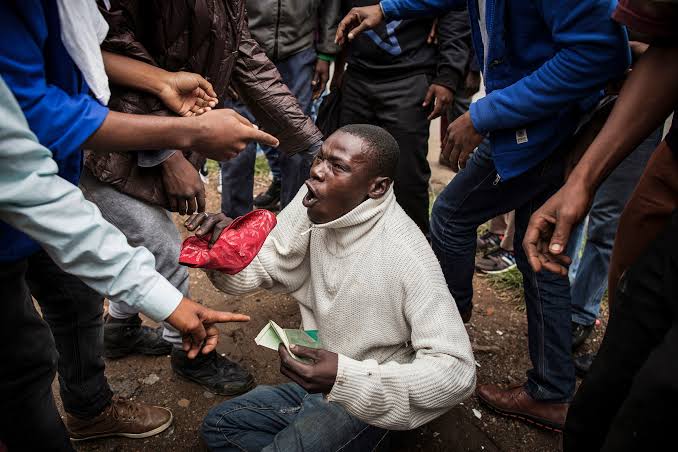
Image: A man produces his South African identity document after being attacked by a group of men. Credit: James Oatway
