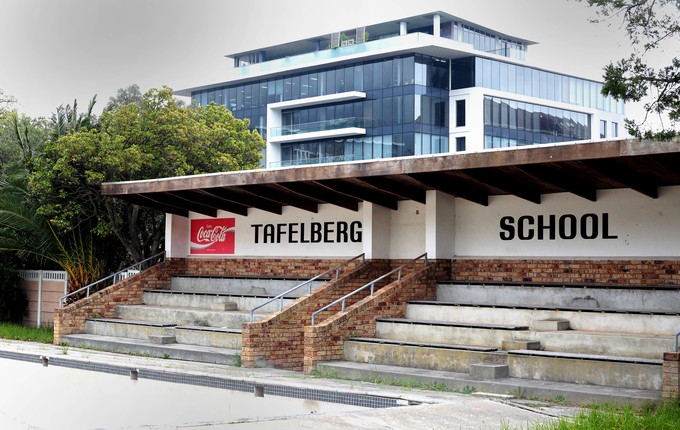
A landmark ruling by the Constitutional Court has reshaped the conversation around public land and affordable housing in South Africa, placing the future of the Tafelberg site in Sea Point at the centre of more important questions about urban inclusion.
The judgment found that the government cannot simply dispose of publicly owned land without properly considering its public value, especially during a growing housing crisis.
Head of political organisation at Ndifuna Ukwazi (NU), Buhle Booi, argues the decision is an important step towards ensuring that public land serves communities rather than commercial interests.
A ruling beyond one site
For years, the Tafelberg property has symbolised the tension between commercial development and the demand for affordable housing in well-located urban areas.
The Western Cape provincial government declared the site surplus and sought to sell it to a private buyer, leading to housing activists taking legal action.
Booi says the Constitutional Court’s judgment will echo beyond the Tafelberg issue.
According to him, the ruling recognises that well-located land has an important public purpose, especially since millions of South Africans don’t have adequate housing. He describes the outcome as a victory for working-class communities that continue to be excluded from economic centres despite contributing to their growth.
SMread: Tony Leon dismisses ‘state capture’ accusations
Housing shortages remain severe
South Africa’s housing backlog continues to grow, with demand increasing every year. Seeing that, Booi argues that selling publicly owned land is a missed opportunity.
He says land is a finite resource that cannot easily be replaced once transferred into private ownership.
Publicly owned sites, such as those close to jobs, schools and transport, could instead support affordable and social housing developments that reduce the distance between where people live and where they work.
He argues that this is not only about buildings but about how cities are structured and who is able to live within them.
SMread: Inside the Megan Choritz legal battle
Building more inclusive cities
Booi believes many South African cities continue to reflect patterns established during apartheid, where lower-income communities remain concentrated on the urban periphery while economic opportunities are located elsewhere.
He says affordable housing in well-located neighbourhoods offers one way of addressing those longstanding spatial inequalities.
Rather than expecting housing to be provided free of charge, he says many working-class households are seeking accommodation that reflects what they can realistically afford.
Social housing, which serves households within specific income brackets, is designed around this principle by linking rental costs to income.
SMread: Malawi High Commission blasted over treatment of stranded citizens
Balancing development and heritage
Earlier feasibility studies suggested that the Tafelberg site could accommodate around 270 social housing units through a mixed-use development, with market-rate housing helping subsidise affordable units.
However, heritage-related restrictions limiting building height have reduced the number of units that can be constructed.
Booi says those limitations remain a concern because they reduce the overall viability of the project and the number of families who could benefit from living closer to employment opportunities.
SMread: Cassim brushes off Islamophobic backlash and pledges to serve all South Africans
A precedent for government accountability
Booi says the Constitutional Court has made it clear that government departments cannot independently declare land surplus without considering whether another sphere of government could use it for the public good.
Instead, greater coordination is required before valuable public land is sold.
He also notes differences in how public land has been managed across different levels of government in the Western Cape, arguing that progress in releasing land must ultimately translate into completed housing developments rather than remaining at planning stage.
From promises to delivery
The court has also directed authorities to report on how they intend to address housing projects that have remained in planning pipelines without producing completed homes.
For Booi, this reflects an important shift from symbolic commitments towards measurable delivery.
He argues that public confidence will ultimately depend not on announcements or land releases alone, but on whether affordable homes are built for the communities they are intended to serve.
The Tafelberg judgment may have centred on a single property, but its implications extend across South Africa.
As governments confront rising housing demand, the ruling establishes a clearer expectation that public land must first be assessed for its social value before being treated as an asset for disposal. Whether that principle translates into more affordable housing will depend on how consistently it is applied in the years ahead.
For more on this conversation, watch the video below:
Image: The site of the former Tafelberg School in Sea Point will be used for social housing as a result of a decade-long campaign by housing activists. Credit: Ashraf Hendricks / GroundUp
