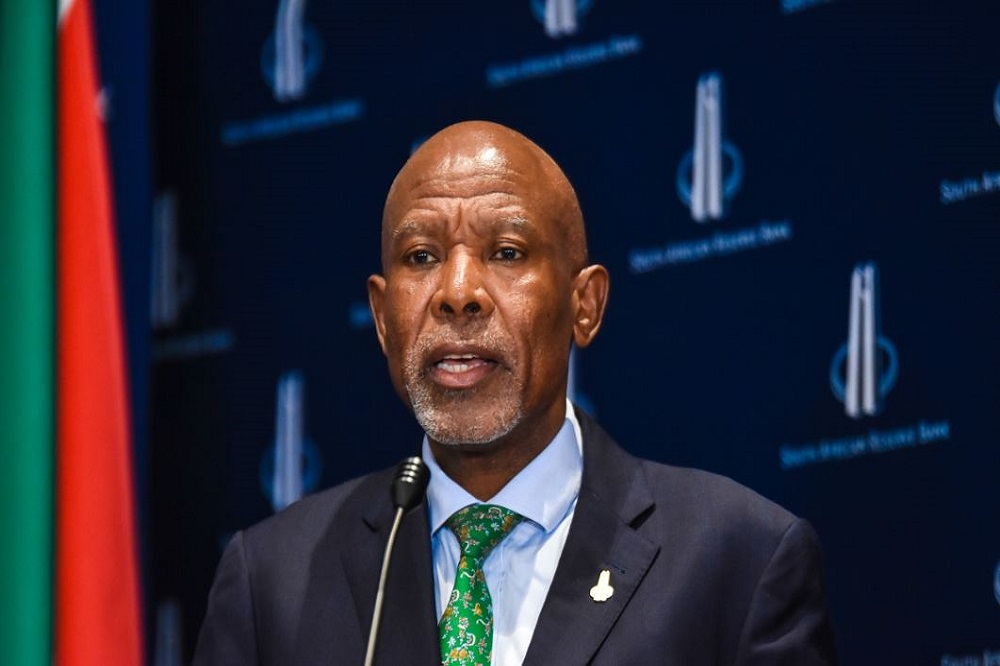
Image Source: SABC News
Local – The repo rate has remained unchanged at 7%, with the South African Reserve Bank’s Monetary Policy Committee holding rates steady during ongoing volatility linked to the Middle East conflict. The prime lending rate will also stay at 10.50%, Reserve Bank Governor Lesetja Kganyago announced on Thursday.
Four members of the committee preferred a hold, while two favoured a 25-basis point increase. Kganyago said the decision reflected continued uncertainty in both domestic and global conditions.
“The committee agreed that the outlook is uncertain, and with the rate increase at our previous meeting, the policy stance is appropriate for now, with rates somewhat restrictive,” Kganyago said.
Growth Expected to Slow
Kganyago said first-quarter growth had come in stronger than expected, but the committee expected a slowdown over the following two quarters. He pointed to weaker sentiment and the effects of the Middle East conflict on business activity, along with deeper structural problems in the economy.
“Consumer confidence has fallen sharply, and business confidence has also weakened. Sectoral data show generally lower activity, since the start of the war,” he said.
Kganyago added that municipal dysfunction had become “a binding constraint on growth.” He said domestic reforms could still support a recovery in the second half of the year.
Fuel Costs Keep Inflation High
Kganyago said Statistics South Africa had recorded a reading of 5% in June, the highest since June 2024, driven largely by higher fuel costs linked to the Middle East war. Fuel prices remained the key swing factor, he said, even as other pressures stayed contained.
“Petrol and diesel prices eased this month, but global prices have now risen again. We expect headline inflation to stay above 4% until early next year,” Kganyago said.
He said food inflation had slowed on the back of good harvests and fading effects from the foot-and-mouth disease outbreak, though he flagged El Niño as a possible risk to food supply next year.
Kganyago said the inflation outlook had improved slightly, but inflation remained too high against weak growth.
“We are setting policy to achieve 3% inflation over time, ensuring the current supply shock does not de-anchor inflation expectations,” he said. Sustained growth, he added, would depend largely on structural reforms to local government and network industries such as transport and energy.
