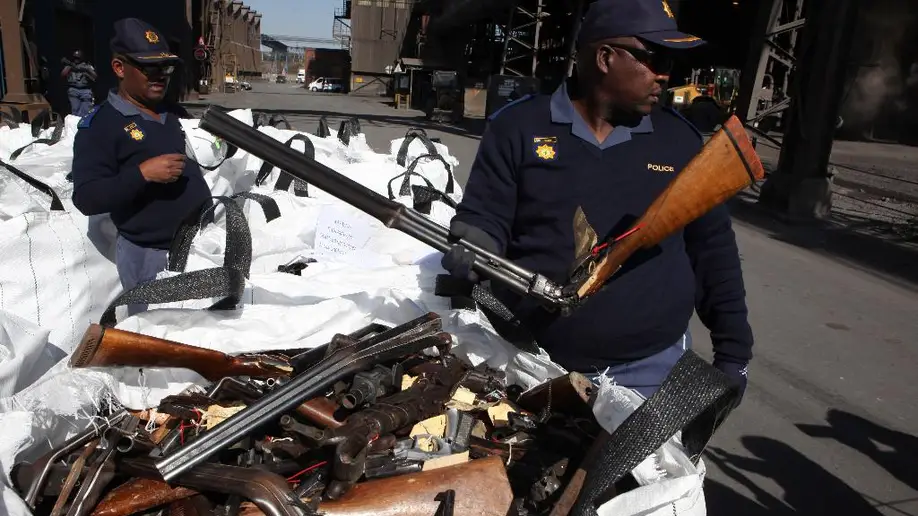
Image Source: DA
Local – Despite the staggering murders from firearms recorded across South Africa, the country’s gun violence crisis continues to raise urgent questions. A claim that 99% of firearm murders are committed using illegal weapons has placed fresh scrutiny on where these guns come from and whether enough is being done to keep them off the streets.
Executive Director of Gun Free SA, Dr Stanley Maphosa, said the statistic reflected concerns his organisation has raised for over 30 years, pointing to a lack of political will to address the crisis. He said the country lost an average of 30 people to gun violence every day.
“It confirms what Gun Free South Africa has been saying for over 30 years, that we have a gun violence crisis in this country. And this gun violence crisis in this country, there are very few people that have got the appetite to solve it.”
Sources Of Illegal Firearms
Illegal weapons circulating in the country are traced back mainly to loss and theft rather than cross-border smuggling. Civilians and police officers were identified as significant contributors to the pool of unaccounted firearms feeding the illegal market.
Maphosa said illegal firearms enter the illicit market largely through loss and theft, with both civilians and police losing weapons at an alarming rate daily.
“The civilians, which is the first group, lose 22 firearms every day. And the police lose two firearms every day. And the question is where are those firearms going? They are going to that particular pool of illicit.”
Role Of Communities
Ordinary citizens and community structures have an important part to play in curbing the spread of illegal weapons across the country. Local action, including the designation of firearm-free spaces, was highlighted as one-way communities could push back against gun violence.
Maphosa said community members often know who owns illegal firearms and who is applying for gun licences, giving them a direct role in preventing weapons from reaching unsuitable owners.
“Communities can declare certain spaces around themselves as communities to say this is a gun-free zones. This school is a gun-free zone. This church is a gun-free zone.”
Maphosa said government needs to prioritise intelligence-driven policing operations and strengthen the central firearms registry so that weapons can be properly traced. He warned that gaps in record-keeping make it difficult even to establish how many legal firearms exist in the country at any given time.
