Image: CNBC Africa
Local – South Africa’s official unemployment rate rose to 33.7% in the third quarter of 2026, up from 33.6% in the previous quarter. The latest Quarterly Labour Force Survey shows the number of unemployed people increased by 97,000 to 8.6 million, despite 101,000 more people finding work.
Acting DDG Responsible for Population and Social Statistics at Stats SA, Solly Molayi, said the working-age population was growing faster than the economy could absorb it. He said the absorption rate, the share of working-age people who have jobs, was the figure that should concern South Africans most.
“I think the most important indicator is the absorption we have below 40% in terms of absorption. What does it mean? It means that in a working-age population, only 40% of that population is actually working,” said Molayi.
Households Feeling the Pinch
The formal sector recorded job gains in the quarter, while the informal sector and private households shed jobs. The Western Cape added the most jobs of any province, at about 48,000, largely in finance, while the Free State and Mpumalanga recorded losses.
Molayi said private households lost about 68,000 jobs, suggesting rising living costs were forcing families to let go of domestic workers. He said the losses were especially concerning in economic hubs such as the Western Cape, where many people from rural areas go to look for work.
“It’s already clear from these numbers that we’re starting to see that private households are even struggling to keep the domestic workers who are helping in the household,” said Molayi.
Youth Bear The Brunt
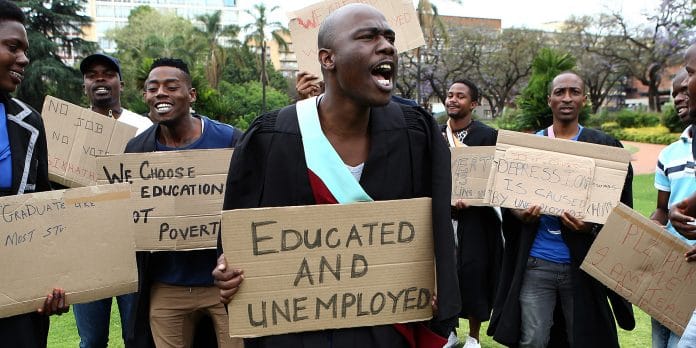
Youth unemployment remains the biggest concern, with about 5 million people aged 15 to 34 out of work and the youth unemployment rate at 47.3%. Graduates are also feeling the pressure, with their unemployment rate rising from below 10% a decade ago to 11.9%.
Molayi said the National Development Plan aims to bring unemployment down to 6% by 2030, leaving just over four years to close the gap. He said progress would depend on much stronger economic growth.
“We really need to increase our economy. The economy is currently growing by less than 1%, and for an economy like South Africa, it has to grow at a much higher percentage so that you can able to absorb more,” said Molayi.
