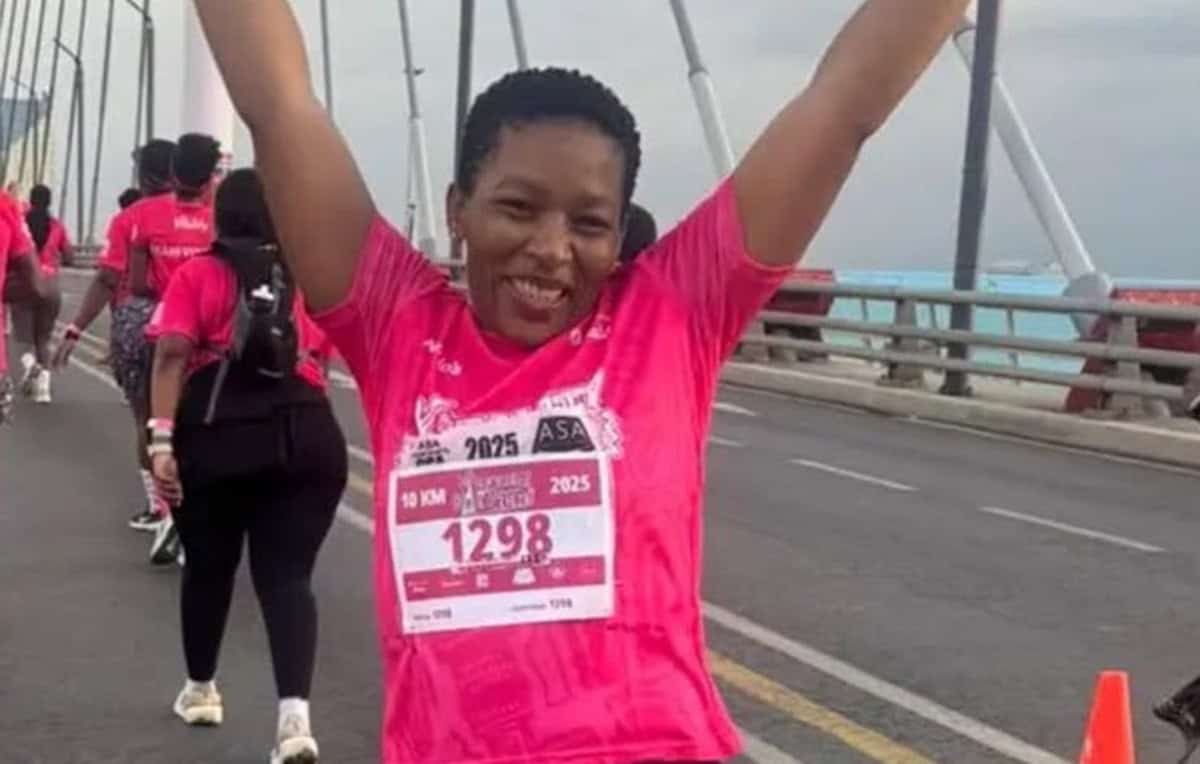
On 9 September 2026, Elizabeth “Tsontso” Moselakgomo sprinted off for a run. Three days later, police found her bruised body near the Southern Sun OR Tambo Airport Hotel.
The discovery of Moselakgomo’s remains, along with those of seven other female victims in the Ekurhuleni area since July, has sparked national outrage. It has revived a conversation about women’s safety in a society where 5,427 people were murdered between April and June alone.
Keamo Sefularo, a fellow runner, said the threat of violence made women fearful of leaving their homes. “It’s sad to know that every woman in South Africa… can’t just go outside,” she told the BBC. “You can’t just go to the shop and buy flowers… because you are always in danger.”
Firoz Cachalia, acting minister of police, vowed to increase police visibility and dangled a R400,000 reward for information that puts the perpetrator in handcuffs.
But critics are doubtful. “What is the purpose of having a protective service like the police if we have to make sure… we are [protecting] ourselves,” asked Merlize Jogiat, activist at Women for Change.
With elections around the corner, voters may be interested in political parties’ perspectives on, and solutions for, gender-based violence. This is because local officials can take steps to secure their communities, even if policing ultimately falls within the national government’s scope.
SMread: Eight women, one question: who is responsible for the deaths around Kempton Park?
African National Congress
The African National Congress (ANC) leads the governing coalition in the City of Ekurhuleni, the aerotropolis where the eight gruesome discoveries were made. It is likely to remain a major figure, despite declining support.
Its manifesto addresses GBV under Action Three: Safe, clean, healthy and resilient Communities. “Levels of violent crime and GBVF remain unacceptably high,” it admits. “While progress has been recorded, more needs to be done to make everyone feel safe.”
The document outlines several measures to address crime. To deal with GBV in particular, it speaks about improving access to support facilities like Thuthuzela Care Centres. It also wants prevention programmes targeted at youth.
SMread: Sibanda: SA government “an active participant” in unrest
Democratic Alliance
The Democratic Alliance (DA) led a coalition government in Ekurhuleni from 2021 until 2023, when a motion of no-confidence removed mayor Tania Campbell.
The DA manifesto does not address GBV directly. Instead, its fourth promise — “Working together for safer communities” — addresses crime in general terms. It reads: “Crime is a symptom of broader social ills, such as unemployment, poverty and the breakdown of families”.
Their solution centres on the devolution of policing powers. “By devolving policing powers, alongside an adequate budget, to competent local governments, we can reduce the pressure on the SAPS and bring law enforcement closer to the communities they serve.” Specifically, it pushes for the devolution of investigative and intelligence-gathering powers.
SMread: MSF warns DRC Ebola outbreak could be the country’s worst yet
Economic Freedom Fighters
The Economic Freedom Fighters (EFF) is the third-biggest party in the Ekurhuleni council. It walked away from the ANC’s coalition in February.
The party’s manifesto touches on GBV under its seventh batch of commitments: “gender equality, safety and social development”.
While it does not offer a diagnosis of the issue, it proposes solutions. It states that EFF municipalities will establish safe channels for reporting GBV, sexual harassment and abuse. Moreover, they will provide shelters and counselling services. Individuals and businesses linked to GBV, it promises, will be barred from doing business with local governments where the EFF is in charge.
The municipal elections are scheduled to take place on Wednesday, 4 November. Registered voters in all 257 municipalities across the country will queue to pick new local administrations for the next five years.
Image via The Citizen.
