Image: Sowetan
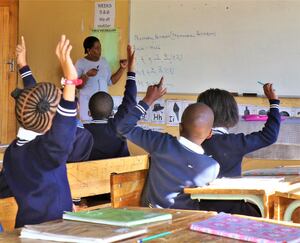
Local – For years, South Africans have asked why learners aren’t taught in their mother tongue, as they are in countries across Europe, Asia, and elsewhere. As the school year draws to a close, the South African Democratic Teachers’ Union (SADTU) is calling for home language to become the norm in classrooms, arguing it could improve academic performance.
SADTU spokesperson Nomusa Cembi said learners were taught in their mother tongue from grades one to three, but then had to switch to English or Afrikaans in grade four. According to Cembi, assessment data showed that learners who made this switch performed worse than those who were already English- or Afrikaans-speaking and continued in that language.
“[These] languages should be developed … so that learners do not have this problem of having to learn new concepts in a language that they have not fully grasped.”
Competing On The World Stage
One of the most common concerns about mother tongue-based education is that it would end English and leave South African learners behind their international peers. Cembi dismissed this, saying a child with a strong grasp of their home language finds it easier to understand new concepts and learn other languages.
She said learners in countries such as China, Japan, Germany and France were taught in their own language, yet still learnt other languages and interacted with people from all over the world.
“They are going to be competitive internationally … A French person was taught in French from … grade up until varsity and yet they still interact with the world. They learn another language.”
Programme In The Making Since 2010
The mother tongue-based education programme comes from the Department of Basic Education, and Cembi said it aligns with SADTU’s long-standing call to use indigenous languages for teaching. The programme has been in the making since 2010, with a pilot project in the Eastern Cape in 2012, and government now intends to roll it out from grade four, the start of the intermediate phase.
Cembi acknowledged, however, that the country was not yet fully prepared. She said SADTU had begun training teachers as a union and called on tertiary institutions to start training teachers to teach this way.
“We do not have enough resources, and we are … urging the department to really … create resources.”
