Concerns have been raised over a lack of youth representation in South Africa’s planned National Dialogue, with anti-apartheid activist Seth Mazibuko warning that the process mirrors the exclusive nature of past negotiations and risks “brewing people’s anger to extremes” if all groups are not consulted.
President Cyril Ramaphosa announced on Tuesday the formation of a 31-member Eminent Persons Group to champion a national conversation aimed at tackling the country’s most pressing issues, including poverty, inequality, and unemployment. The first National Convention is scheduled for 15 August 2025. The panel includes high-profile figures such as Springbok captain Siya Kolisi, business leaders, religious figures, and artists.
However, speaking in an interview with Salaamedia on Thursday, Mazibuko, a key figure in the 1976 Soweto Uprising, drew sharp parallels between the upcoming dialogue and the Convention for a Democratic South Africa (CODESA) negotiations of the early 1990s.
“We are going to another CODESA,” Mazibuko stated. “When we started CODESA, De Klerk and Botha called for a referendum to find out if people are agreeing to him calling a CODESA. We were not consulted. We were just told there are people coming from wherever, they are going to be sitting in Kempton Park and speaking about you. We are committing the same.”
SMread: SA Slams US Sanctions on ICC Judges
Exclusion of Key Activists
Mazibuko lamented the absence of crucial voices from more recent protest movements, pointing out that those who have been on the front lines of contemporary struggles for social and economic justice have been overlooked. He argued that the dialogue is dominated by individuals who have already benefited from the post-apartheid system, while the poor remain marginalised. It is a critical point, as many feel the people who need to be heard were not properly consulted.
“Now, none of the Fees Must Fall people, none of the June 16 leaders is willing to talk and negotiate about the future of this country. None,” he said. “Instead, it’s people who gained a lot from the tree of liberation. We called them exponents of social cohesion and at the end of the day we are still the poor.”
The activist warned that failing to include these essential community voices could have severe consequences for the nation’s stability. He stressed that the current approach is fostering resentment among those who feel their struggles are being ignored by the establishment.
“This is brewing people’s anger to extremes,” Mazibuko warned. “If we don’t correct it, we will end up with serious problems in this country, undermining those that we think we’re talking for.”
The government has described the National Dialogue as a “people-led, society-wide process” intended to forge a new social compact. However, Mazibuko’s critique suggests that without ensuring that all relevant stakeholders, especially from marginalised communities and youth movements, are adequately consulted, the initiative may fail to achieve its goal of unifying the nation and addressing its deep-seated challenges. The question remains whether the process will be broadened to include the voices Mazibuko feels have been ignored, ensuring all parties are truly consulted.
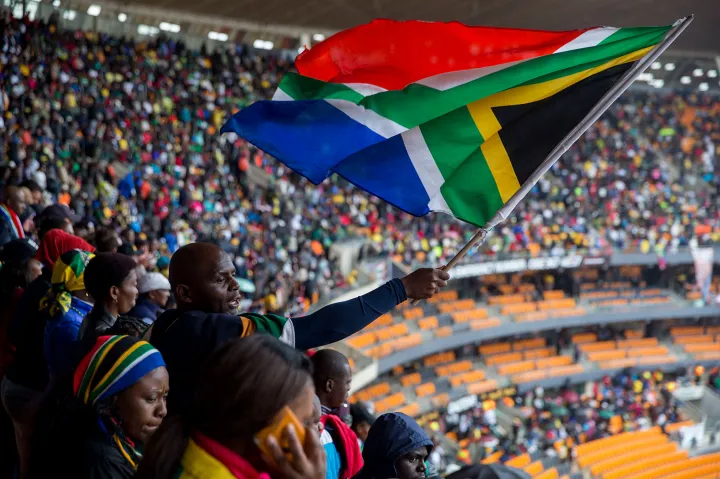
Image: Man waves South Africa’s flag at the official memorial service for former President Nelson Mandela at FNB Stadium 10 December 2013 in Johannesburg. Credit: TIME
