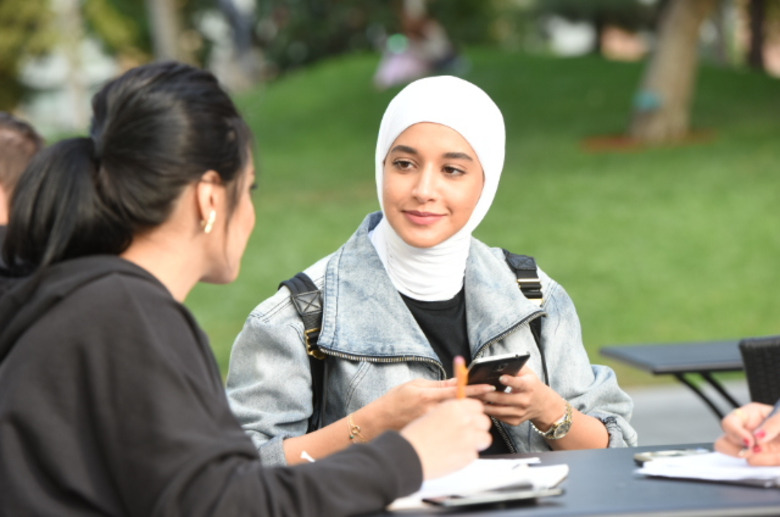
University is often described as a place of expansion. Ideas widen. Identities stretch. Certainties are tested. For many Muslim students, however, it is also the first time their faith is hanging by a thread.
Moulana Ismail Moosa, Comparative Religion Educator at the Islamic Propagation Centre International (IPCI), has spent years speaking about the academic and interfaith topic. Recently, his focus has shifted inward, toward Muslim students themselves. His concern is not hostility toward Islam on campus, but the reshaping of belief through worldview.
The worldview beneath the Curriculum
The one-day intensive course titled Islamic Worldviews emerged from a parent’s anxiety. A father worried that his son’s university education was gradually unsettling his faith. Not through explicit rejection of Islam, but through immersion in intellectual frameworks where Allah is absent from the equation.
No one, Moosa explains, stands before a lecture hall and declares that God does not exist. Instead, history, science, and philosophy are often taught in ways that assume divine absence. The methodological naturalism of modern academia, while presented as neutrality, can function as an unspoken metaphysical claim.
Research must be “objective.” Objectivity means bracketed belief. Bracketed belief becomes compartmentalized faith.
For some students, Islam shifts from religion to culture.
SMread: At the edge of the world, the Saints remained
Seeing through colored glass
Moosa describes a worldview simply: it is the lens through which one sees reality. Like tinted glasses, it shapes perception before one is aware of it. A person wearing yellow lenses sees a yellow world. The distortion feels natural because it is constant.
An Islamic worldview, he argues, is not one lens among many, but the clear one. It affirms Allah as ultimate reality. It affirms that knowledge comes not only through empirical observation, but through revelation and sound reasoning. It affirms that human beings possess a soul, not merely biological composition.
These foundational differences are not abstract. They shape ethics.
If a human being is only atoms and molecules, morality becomes negotiation. If a human being carries a soul, morality becomes accountability.
The ethical crossroads
The university environment introduces students to dominant intellectual currents: skepticism, scientism, strands of feminism, and contemporary debates around gender and identity.
Skepticism, in its academic form, often trains students to treat religious belief as bias rather than knowledge. Scientism, when taken beyond its proper scope, reduces truth to what can be measured in a laboratory. Revelation becomes inadmissible evidence.
Over time, faith may remain outwardly intact while inwardly diluted. Students may still identify as Muslim. They may fast in Ramadan and attend Eid. But the metaphysical confidence that Islam speaks to reality, not merely ritual, can weaken.
The ethical implications are significant. When morality is detached from transcendence, it becomes contingent on consensus. When revelation is sidelined, ethics is negotiated within shifting cultural frameworks.
The course does not seek to isolate students from these ideas. Rather, it seeks to equip them to recognize the assumptions beneath them.
SMread: Johannesburg’s water crisis worsens daily
Apathy and the modern Muslim
Ironically, while parents and teachers have shown strong interest in the course, student attendance has been modest. Around fifteen to twenty participants attended the inaugural session.
Faith education often becomes reactive. A crisis prompts concern. A doubt triggers inquiry. Rarely is worldview formation approached proactively.
Weekend fatigue competes with theological formation. And yet, the sessions themselves proved deeply interactive. Students asked questions they might not raise at home. They expressed relief at discovering that Islam does not oppose science, but situates it. Truth, as Moosa remarks, does not fear scrutiny.
The home as your first institution
The ethical behavior of students begins long before university. Moosa emphasizes balance: granting children freedom while maintaining non-negotiable commitments such as salah. Encouraging engagement with Islamic scholarship alongside academic study. Limiting excessive immersion in social media, which often amplifies ideological currents without depth.
Most importantly, cultivating an environment where Islam is lived rather than inherited.
Without a meaningful connection to the Qur’an, Prophetic tradition, and Islamic intellectual heritage, young Muslims will inevitably adopt alternative narratives. If one does not know their own heroes, they will borrow others.
IPCI’s anonymous helpline exists precisely because many students hesitate to ask difficult questions within their immediate circles. Intellectual safety fosters ethical clarity.
Ethics as identity
The discussion is not about defending Islam from university life. It is about understanding identity as rooted in epistemology and ontology before it manifests in ethics.
How we know shapes what we believe.
What we believe shapes how we live.
For students unable to attend the course, Moosa offers some advice: Islam is true and comprehensive. If it is true, it has answers. If it has answers, they must be sought.
Faith cannot remain a label. It must become literacy. University will always challenge inherited assumptions. That is its function. But for the Muslim student, the challenge is not whether ideas will confront belief. It is whether belief has been developed deeply enough to meet them.
The lens must be chosen before the lecture begins. For more on the course and discussion, watch the video below:
Image via Chapman University.
