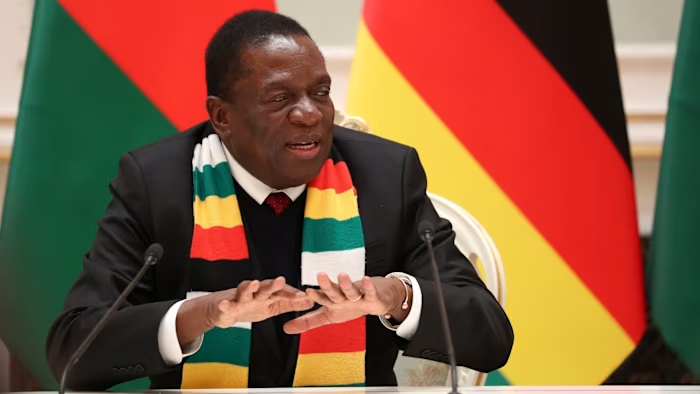
The Zimbabwe cabinet approved the Constitutional Amendment No. 3 Bill of 2026 in Harare on Tuesday.
This draft legislation seeks to extend the presidential and parliamentary terms from five years to seven years. It also proposes that Members of Parliament elect the president instead of a direct public vote.
These changes would allow President Emmerson Mnangagwa to remain in office until at least 2030.
The ruling Zanu-PF party currently holds a two-thirds majority in the lower house of parliament. This dominance allows the party to pass constitutional amendments with relative ease.
Justice Minister Ziyambi Ziyambi stated that public consultations would occur before the bill reaches parliament. The government argues these reforms will enhance political stability and allow for the completion of long-term national projects.
SMread: Burkina Faso parliament approves ban on political parties
Opposition labels move a constitutional coup
Opposition figures have responded with sharp criticism, describing the move as a constitutional coup by the incumbent leader.
Politician Job Sikhala accused the president of using dictatorial tendencies to railroad himself into another two years of rule.
Critics argue that any changes to term limits must be put to a national referendum. They also note that constitutional amendments should not benefit a sitting president under current legal frameworks.
Jameson Timba of the Citizens Coalition for Change stated that the process lacks the direct consent of the people.
Legal experts are expected to challenge the bill in court if it proceeds without a public vote.
President Mnangagwa, aged 83, first took power in 2017 following a military-backed transition. His current final term is set to expire in 2028.
Image via Financial Times.
