There was a time when South Africa was on the road to a bright future. Then it turned down the dark path of load shedding, looting and malaise. Today, the country is at a crossroads.
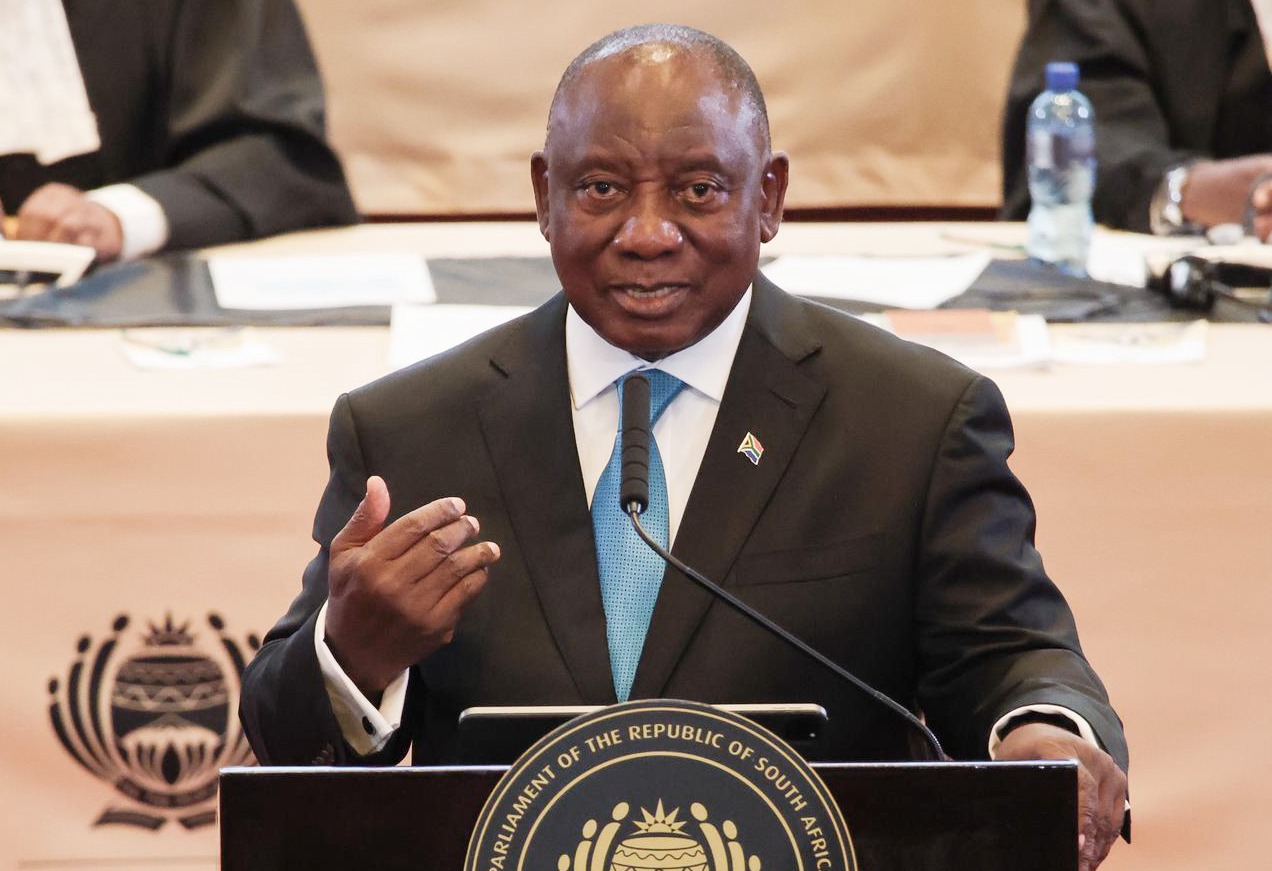
In his State of the Nation Address (SONA) on Thursday, a triumphant President Cyril Ramaphosa declared that the country was “stronger today than we were a year ago”. He pointed at economic growth and a maturing democracy, among other finer details, as indicators of a country that had “turned a corner”.
In many ways, this is true. The economy is growing and jobs are being created. PRASA’s trains are back on the tracks and Eskom’s managing to keep the lights on. The Government of National Unity (GNU), a coalition formed between Ramaphosa’s African National Congress (ANC) and former foes in 2024, has outlived the cynics’ expectations. There is reason to be hopeful for the future.
Time to pour cold water over the newfound optimism. A reality check reveals that economic growth is sluggish and inadequate. The 1.4% growth forecast for the year ahead is hardly better than the meagre 1.1% registered in the year that passed. Only 40% of the major rail corridors in Gauteng, the economic hub of the country, are operational. The energy availability factor is hovering at around 70%. The GNU is simply implementing more of the old ANC policies, including land expropriation and a national health insurance scheme; input from coalition partners is rare. It’s all a blip for now — like it was under Thabo Mbeki’s government.
Under the Mandela and Mbeki administrations, the Rainbow Nation could see a prosperous future on the horizon. Fast-paced economic growth (especially between 2000 and 2008, when it averaged 4.2% per year), unlocking jobs for many who had until then struggled to find work. More than 1 000 clinics and healthcare facilities were built. More than two million houses were built. Clean water became a reality for more than nine million people. Then came the Global Financial Crisis and South Africa entered a recession in 2009, and the country entered its darkest days since apartheid.
If the first 15 years delivered a better life for many, the next 15 years delivered a worse life for most. Annual economic growth slowed to an average of 1.1% between 2009 and 2024, brought down by the financial crisis, state capture and the Covid-19 pandemic. Load-shedding, which emerged in 2007, worsened during this period, totalling at 6 947 hours in 2023. Water issues escalated, with many areas going without water for weeks at a time. While the unemployment rate stood at 23.52% in 2009, by 2024 it had risen to 33.17%. It is therefore unsurprising that marginal improvements have sparked optimism in recent months.
The Mbeki administration, for all the criticism levelled against it, showed what could be achieved when favourable conditions and pragmatic policies were in place. The global commodities boom, the democratic dividend and general goodwill for a young democracy gave the impetus for growth. What mattered were the right policies, which were packaged in Growth, Employment And Redistribution (GEAR). Today, the GNU and favourable global conditions have reignited hope. What we need are the policies that can move the country from its present state of merely surviving to thriving.
A recent report by the Institute of Race Relations (IRR) outlines how Ramaphosa and his coalition partners can seize the moment. In the latest ‘Blueprint For Growth‘ paper, Dr John Endres outlines four steps to achieve the kind of growth that will “expand the economy, get people working, and empower them to rise out of poverty”. First, attract foreign direct investment. Second, build and maintain economic and social infrastructure. The government’s current attempts to get companies like Suzuki and BYD to set up manufacturing plants here will go nowhere if they cannot be guaranteed a consistent supply of electricity, reliable transport infrastructure, a safe business environment and skilled workforce. Next, increased employment must materialise out of economic growth. Finally, disadvantaged individuals must be given a ladder out of poverty with social protection.
“While ANC leaders have paid lip service to the importance of economic growth, this has not been matched by action,” Endres laments. “They appear content to aim for low growth rates, which are to be achieved through limited and slow-moving reforms in infrastructure especially. There is no turning away from the party’s fundamental precepts which are inspired by notions of redistribution, centralisation, state intervention in the economy and clientelist politics.”
Clearly, economic growth is a policy choice. The new government can choose to keep South Africa on a path of low growth, or switch tracks and pursue a prosperous future for all. It will have to abandon extractive policies, like Black Economic Empowerment (BEE), land expropriation, and National Health Insurance (NHI), in favour of inclusive policies that promote competition and encourage innovation.
South Africa today stands at a crossroads. One path leads to prosperity, the other leads to poverty. One improves the lives of its citizens, the other kicks them to the ground and stamps the life out of them. Without structural changes, any improvements observed in the past year will remain precarious and risk being reversed.
Image: President Cyril Ramaphosa delivers the 2026 State of the Nation Address on 12 February 2036. (Photo: Jairus Mmutle / GCIS
