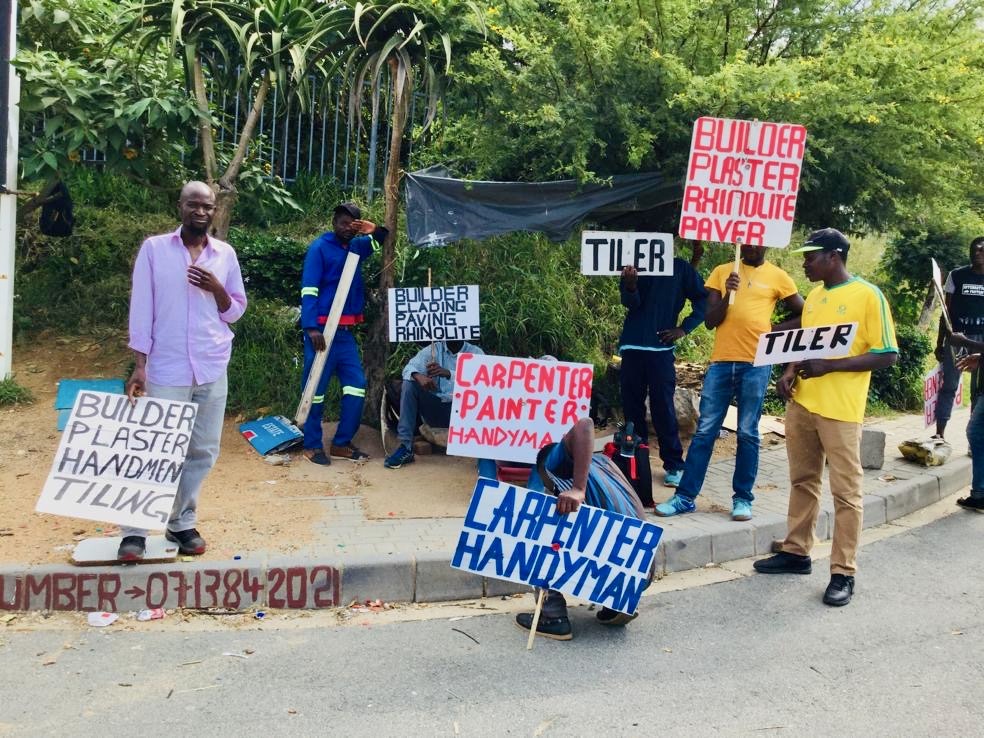
Men waiting for temporary employment outside Northriding‘s Builders Warehouse. [Picture: Kimberly Mutandiro]
By Solomon Musonza
On May 29, 2024, South Africa will hold its general election to choose a new National Assembly and provincial legislatures. This election, the eighth since the end of apartheid in 1994, holds particular significance for South Africans, especially those grappling with unemployment and seeking change.
For nearly three decades, the African National Congress (ANC) has governed South Africa without interruption. However, this year’s election may mark a turning point as the ANC faces the possibility of losing its majority for the first time.
The party is currently beset with numerous challenges, including persistent power outages, allegations of corruption, high unemployment, and economic difficulties. These longstanding issues have provoked widespread dissatisfaction and have led to violent protests in recent years.
SMread: Controversial BELA Bill awaits presidential nod
Unemployment
Unemployment, in particular, has had a devastating impact on South African citizens, especially the youth. Despite their educational qualifications, many young people remain jobless, leading to desperate scenes on the streets of Johannesburg, where job seekers gather in hopes of finding employment.
Speaking to Salamedia, one job hunter expressed his hope that the newly elected government would implement job creation programs to employ the nation’s youth. He highlighted the difficulties of life without a job, noting the inability to afford basic necessities such as food and rent. This sentiment underscores the urgent desire among young people for the new government to address unemployment and poverty.
Another job seeker criticized the Social Relief of Distress (SRD) grant, arguing that the R350 stipend is insufficient to cover basic expenses. “I need a job, not just an R350 grant as it doesn’t help me with anything. We are always here on the streets looking for jobs in the hot blazing sun, but we still can’t get anything,” he said.
This dissatisfaction reflects the broader discontent with the current government’s service delivery, with many citizens placing their hopes on the incoming administration to bring about meaningful change.
Additionally, unemployment exacerbates other social issues such as gender-based violence, divorce, and crime, highlighting the urgent need for effective solutions to this pressing problem. As South Africans prepare to vote, the nation’s job hunters are particularly hopeful that the new government will prioritize job creation and economic stability, addressing the root causes of the social challenges they face.
With the potential for the ANC to lose its longstanding majority, the hopes of millions, particularly the unemployed youth, rest on the promise of a new administration that will tackle the deep-seated issues of unemployment and poverty head-on.
