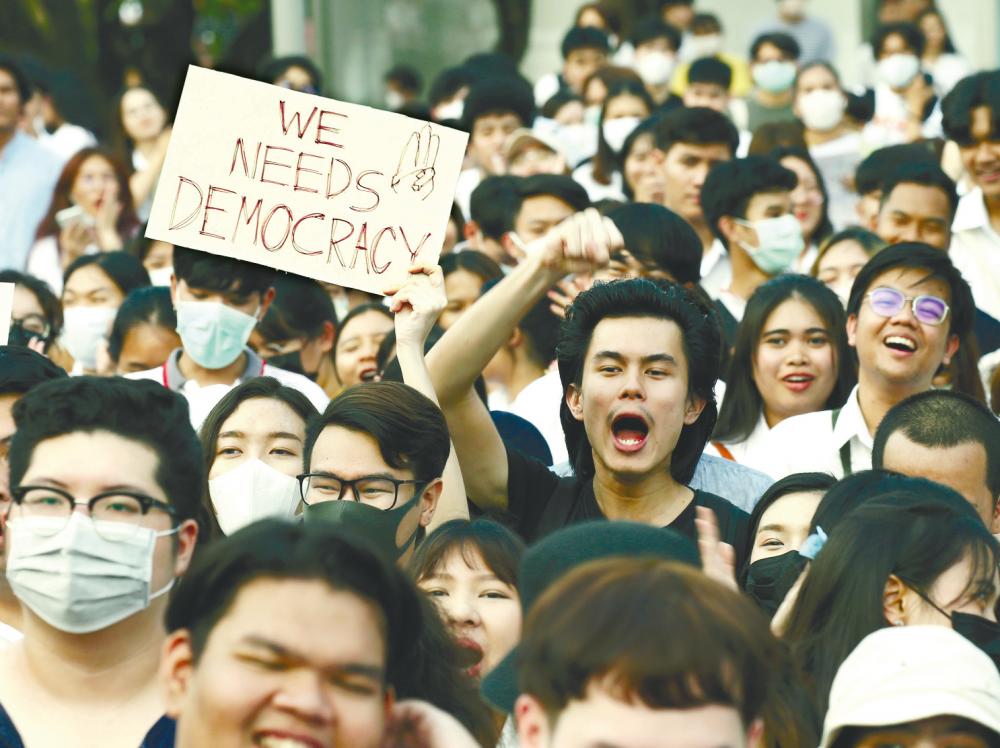
Democracy is facing its most significant crisis in decades, with fundamental principles such as free elections, press freedom, and the rule of law under sustained attack worldwide. This was the consensus during a recent panel discussion hosted by Salaamedia, which dissected the growing challenges to democratic governance in 2025.
The discussion, titled “Can Democracy Survive?”, featured Washington-based host El-Hajj Mauri’ Saalakhan in conversation with award-winning journalists and photojournalists Phil and Elaine Pasquini. The panellists analysed a landscape where, according to research from organisations like Freedom House and International IDEA, democratic values are in retreat.
A 2023 report from International IDEA noted that 2022 was the sixth consecutive year where countries experiencing democratic declines outnumbered those making gains, marking the longest backslide since record-keeping began in 1975. This trend of a world where democracy is under threat has been exacerbated by a crisis of confidence in democratic institutions, both internally and externally.
SMread: Youth Day Police Brutality Echoes 1976
Erosion of Foundational Pillars of Democracy
A key theme emerging from the discussion and supporting research is the weakening of the formal “checks and balances” essential for a functioning democracy. According to a report by International IDEA, institutions like parliaments, courts, and credible elections are struggling to hold political leaders accountable.
This institutional decay is not confined to nascent democracies; established ones in Europe and North America are also showing signs of strain. Freedom House similarly reported in 2018 that democracy faced its most serious crisis in decades, with 71 countries suffering net declines in political rights and civil liberties that year alone.
Phil Pasquini highlighted a growing concern over executive overreach and the weaponisation of political issues, which erodes constitutional norms. “Presidents who violate the Constitution and take on responsibilities that are not presidential never give them up when their predecessor comes into office,” Pasquini warned, referencing insights from a think tank in Washington.
He stressed the danger of this trend, stating, “as we become less sensitised to our constitutional rights… they will somehow be overwritten by this new law and Congress will lose the power that it has.” This sentiment is echoed by academic analysis on the Verfassungsblog platform, which points to systematic attacks on key democratic pillars like universities, courts, and the press in the United States.
The conversation underscored that this is not just an abstract political issue but one with tangible consequences. The FrameWorks Institute notes that the erosion of the rule of law creates widespread feelings of uncertainty and powerlessness among citizens, who feel they are living at the whim of those in power. Pasquini observed this firsthand during large-scale protests in San Francisco, where citizens were “very emotional, very set on saving our democracy from this massive wave of impudence towards the Constitution and personal rights.”
Despite the grim outlook, the panellists expressed a degree of optimism. Elaine Pasquini believes that public action can be a powerful corrective. “The more people that come out, our representatives are eventually going to, I think, do the right thing. Or they will get voted out,” she stated. This view is supported by data from International IDEA, which shows that while formal institutions are weakening, citizen participation has strengthened in many countries.
This surge in civic engagement, coupled with the work of anti-corruption agencies and rights institutions, offers a glimmer of hope in a world where democracy is under threat. Ultimately, the survival of democratic systems, as Phil Pasquini noted, will require elected representatives “to do what’s best for the country and not themselves.”
Image credit: The Sun
