Image Source: BBC
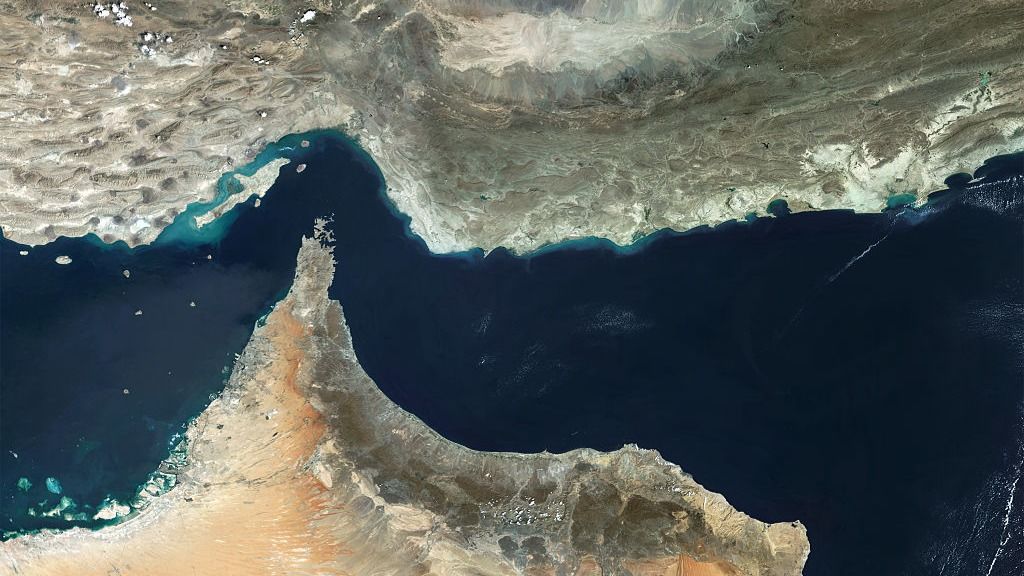
World – The Strait of Hormuz, one of the world’s most strategically critical waterways, remains at the centre of an escalating standoff between the United States and Iran. The narrow passage controls access to the Persian Gulf and serves as a vital corridor for global energy supply, with analysts warning that any prolonged disruption would have devastating consequences for the global economy.
Chairman of the South African Kashmir Action Group (SAKAG), Salman Khan, said the stakes were far higher than most reporting suggested. He argued that contrary to widely cited figures, the strait accounted for a far greater share of the world’s energy supply than is commonly acknowledged.
“It is not the 20% of the oil petroleum and gas power — it is over 50% to 60% of the oil, because if you look at the rim of the bottleneck of the Strait of Hormuz, you see all the top 80% of the oil-producing countries are in that rim and from there, the most, you know, the world energy resources passes through.”
A Century of Oil Politics
Khan traced American strategic interest in the region back four decades, arguing that Washington’s foreign policy had consistently been shaped by the need to control global oil supply. He pointed to the Soviet invasion of Afghanistan as an early indicator of this broader energy competition, with multiple powers manoeuvring to dominate critical supply routes.
Despite 40 days of American military engagement, Khan said the campaign failed to achieve its objectives, and Iran remained capable of defending its territory. He placed responsibility for the current crisis squarely on Washington.
“Iran is definitely protecting the Shatt al-Arab or its own territory. Iran is not invading any maritime territories or anything else. They are not the aggressor.”
