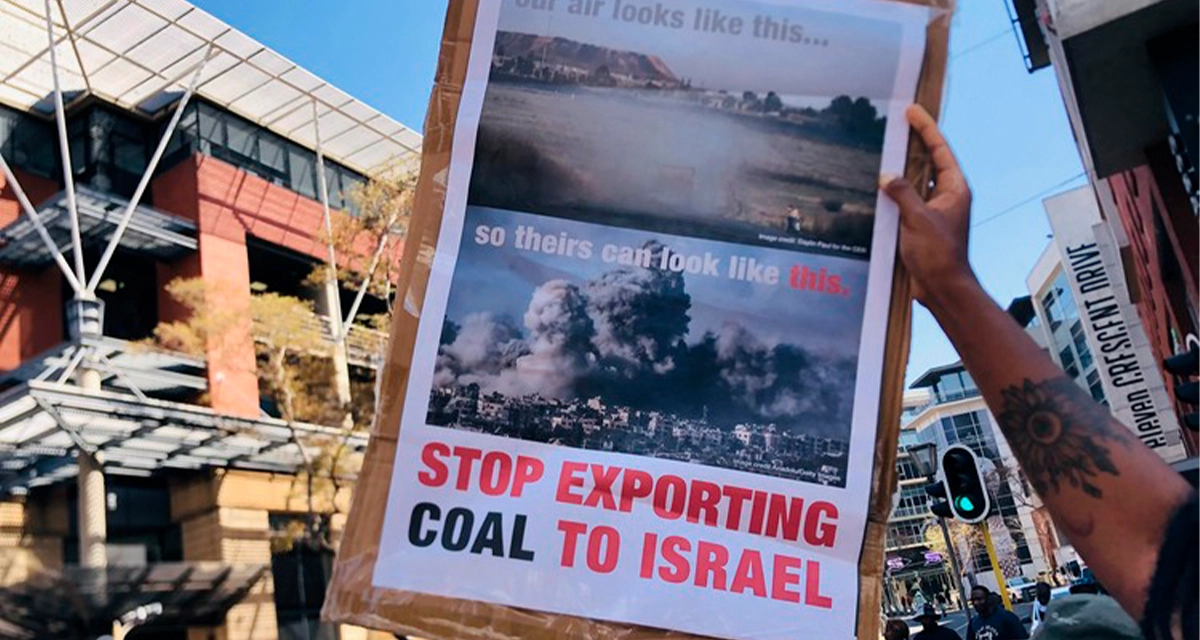
Image Source: Muslim Views
World – Despite mounting pressure from Palestinian activists to halt coal exports to Israel, the South African government has held its position by continuing to sell coal to a country it is simultaneously prosecuting for genocide at the International Court of Justice.
Mineral and Petroleum Resources Minister Gwede Mantashe defended the continued trade, arguing that the government does not control commercial transactions and that companies sell into international markets on their own terms. That position has since been challenged on both factual and legal grounds.
Khan and his colleagues submitted a comprehensive report to Mantashe’s department detailing exactly how South African coal fuels the ongoing genocide in Gaza and oppression of the Palestinian people. Khan said the minister’s argument ignored a critical detail about who is actually receiving the coal, the buyer is a state-owned entity, which means the government’s claim that it sells to companies rather than countries does not hold.
“He failed to mention that the company that is buying the coal is the Israeli National Coal Supply Corporation, which is a state-owned company. So essentially those customers are the Israeli government.”
Khan said the scale of South Africa’s role has grown dramatically since Colombia introduced its full coal embargo. South Africa now accounts for the vast majority of Israel’s coal imports, a sharp increase from where things stood at the start of the genocide.
Legal Grounds Exist to Act
The government has pointed to international trade obligations as a constraint on its ability to halt exports. Khan said that the position had already been addressed and provided to the relevant ministers, noting that both the WTO framework and the Vienna Convention contain provisions that override trade agreements in cases of violations of peremptory norms.
“Those agreements result in violations of peremptory norms like the prohibition against genocide, those agreements are void, and this information has been provided to the government.”
Khan also dismissed the argument that halting exports would damage the South African economy. Coal exports to Israel make up only 0.75% of the country’s total production, a figure Khan said was too small to justify continued trade, but large enough to meaningfully impact Israel’s energy security. Stopping the exports would deal a significant blow to Israel while leaving South Africa’s coal industry and its workers effectively unaffected.
