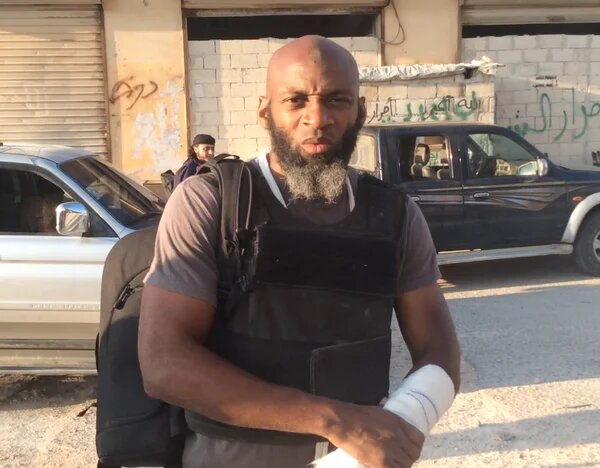
Nearly 200 days have passed since American journalist Bilal Abdul Kareem was detained in Syria.
In that time, there have been no formal charges, no public trial and no adequate answers. For supporters, fellow journalists and human rights advocates, the silence surrounding his detention has become extremely difficult to ignore.
The case has drawn concern from observers across the world, including Dr. Yvonne Ridley, the British journalist, author and public speaker who argues that the detention raises questions that extend far beyond one individual.
At stake, she suggests, is the future direction of a country that emerged from revolution promising justice and freedom from the very abuses that defined the Assad era.
SMread: SA failing its children, warns Save The Children
The uncomfortable question facing Syria
Revolutions are often judged by what they remove, but the more difficult test is what comes afterwards. For years, Syrians and their supporters condemned arbitrary arrests, political imprisonment and the absence of due process under Bashar al-Assad’s government. These grievances became central to the revolution itself.
Today, critics argue that Bilal Abdul Kareem’s detention risks reopening those same wounds. Regardless of political affiliation, many observers maintain that detention without charge undermines the principles that inspired demands for change in the first place.
As Dr. Yvonne Ridley bluntly puts it: “The Syrian revolution was fought to tear down a police state, but all they’ve done is replace it.”
Whether that assessment is fair remains a matter of debate. What is harder to dispute is that prolonged detention without transparency invites scrutiny, particularly from those who supported the revolution’s original aims.
SMread: Entire village burned as Cabo Delgado violence continues
The role of journalism after a revolution
Bilal Abdul Kareem became one of the most recognisable independent journalists reporting from opposition-held Syria during the conflict. Through his platform, he documented developments on the ground and often gave voice to perspectives that were absent from mainstream international coverage.
Supporters saw his work as an example of independent journalism operating in an environment where information was often tightly controlled.
However, journalism becomes most important when it is willing to question those in power, even when those in power are viewed favourably. A free press does not exist simply to criticise opponents. Its role is to ask difficult questions regardless of who occupies positions of authority. But that kind of responsibility can create tension in post-revolutionary societies where criticism is sometimes viewed as disloyalty.
For advocates of press freedom, however, accountability and loyalty are not opposites. Genuine support for a cause often includes the willingness to identify its shortcomings. As Dr. Yvonne Ridley observed, Bilal Abdul Kareem continued speaking openly even after the political landscape changed.
SMread: Raising readers in an age of screens
Fear, silence and accountability
One of the more troubling themes surrounding the campaign for Kareem’s release has been the apparent reluctance of some individuals to speak publicly about the case.
According to Dr. Yvonne Ridley, fear remains a powerful factor. Some worry about losing access to Syria. Others fear repercussions for relatives or associates still living there. The result is a climate in which silence can feel safer than criticism.
But silence comes at a cost. When difficult questions go unasked, transparency weakens. When concerns are dismissed rather than addressed, public confidence erodes.
Healthy societies depend on the ability to challenge authority without fear of punishment. Without that safeguard, even well-intentioned governments can drift towards the very practices they once opposed. The issue is bigger than one man.
The controversy surrounding Bilal Abdul Kareem is not only about journalism. It is about due process. Most legal systems recognise the state’s right to investigate alleged wrongdoing. What concerns observers is the absence of public charges and the lack of a clear legal pathway through which allegations can be examined.
Dr. Yvonne Ridley argues that this principle should apply universally, regardless of personal opinions about the individual involved.
“His detractors might say, well, he deserved it, but doesn’t every man anywhere in the world deserve a charge and a trial?”
The right to know why someone has been detained, the right to defend oneself and the right to a fair hearing aren’t simply legal technicalities. They are foundations upon which public trust is built.
If evidence exists, it should be presented. If charges are warranted, they should be filed. Without transparency, speculation inevitably fills the vacuum.
SMread: Thousands of social workers jobless as learners go without support
A test of the revolution’s legacy
Syria remains a nation navigating the aftermath of war, displacement and political upheaval. Rebuilding infrastructure is one challenge, rebuilding institutions is another, but rebuilding trust may be the most difficult task of all.
The detention of Bilal Abdul Kareem has become a symbol of that exact challenge. For supporters of the current leadership, the case is an opportunity to demonstrate a commitment to transparency and justice. For critics, it’s evidence that old habits are proving difficult to leave behind.
Either way, the longer questions remain unanswered, the louder they become. Dr. Yvonne Ridley has been among those insisting that silence is no longer an option, arguing that justice requires either a transparent legal process or release.
Nearly 200 days later, the issue remains remarkably simple. If evidence exists, present it. If charges are warranted, file them. If neither can be done, explain why a journalist remains behind bars.
Because for many watching Syria’s future unfold, the treatment of Bilal Abdul Kareem is not a legal matter anymore. It has become a measure of whether the promises of the revolution can survive the realities of power.
To hear more from Dr Yvonne Ridley, find the video below:
Image via Middle East Eye.
