As more than 50 Israeli academics gathered in Cape Town for the annual International Communication Association (ICA) conference, Palestinian solidarity groups and activists gathered outside the venue with a message of their own: academic engagement cannot be separated from accountability.
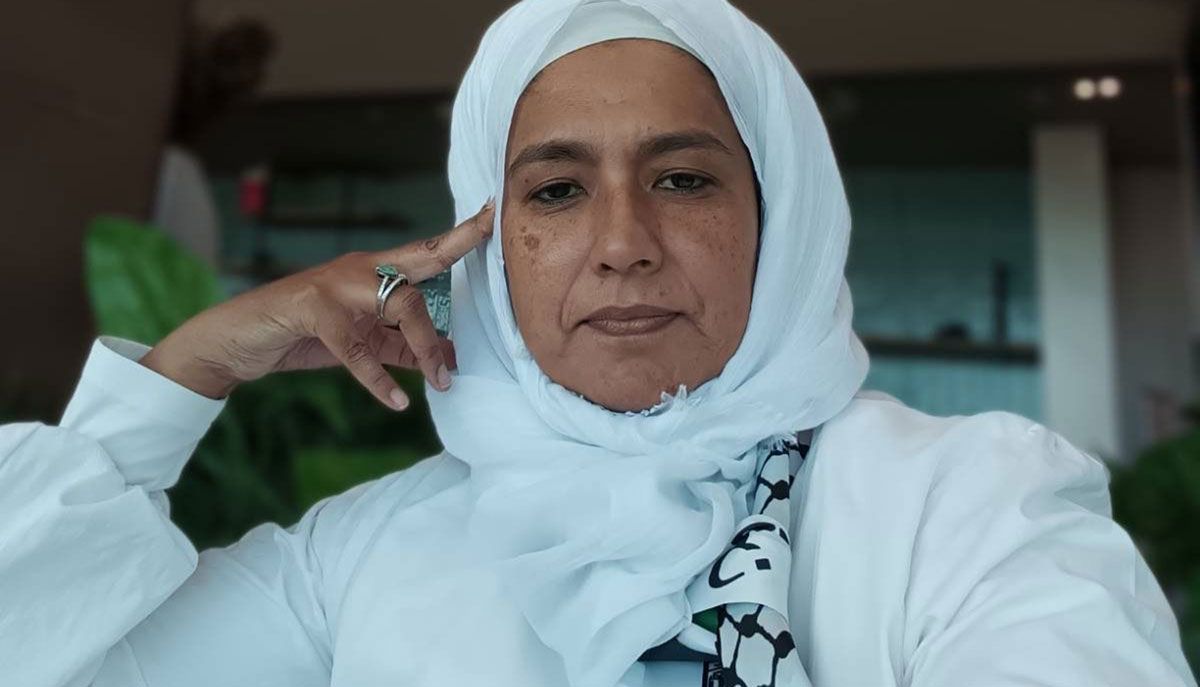
Among those leading the protest was humanitarian activist, occupational therapist and author Dr. Fatima Hendricks, who argued that the presence of Israeli academics at the conference raised serious ethical questions against the backdrop of the ongoing war in Gaza and growing international scrutiny of Israeli institutions.
The protest took place during the 76th annual ICA conference. Dr Hendricks explained:”It’s really one of the largest global gatherings for communication scholars, for practitioners, for students, for academics worldwide.”
For protesters, however, the conference’s focus on communication and inequality appeared difficult to reconcile with the participation of academics affiliated with institutions they believe are complicit in Israel’s military actions and occupation policies.
SMread: Lenacapavir could change the trajectory of South Africa’s fight against HIV
Viewing Palestine through a South African lens
For many South Africans involved in the Palestinian solidarity movement, the issue is about more than just a single conference.
Dr. Hendricks said many activists view developments in Palestine through the lens of South Africa’s own anti-apartheid struggle, drawing parallels between historic systems of racial segregation and the realities faced by Palestinians today.
“We are very clear about the occupation of Palestine through a South African lens of an anti-apartheid struggle, and we are very clear that this occupation is illegal under international law,” she said.
The demonstration comes at a time when South Africa continues to play a prominent role internationally through its case against Israel at the International Court of Justice, where Pretoria has accused Israel of violating the Genocide Convention.
For many participants, this is a very personal situation. Dr. Hendricks pointed to reports of Palestinians injured during recent demonstrations and military operations, arguing that the ongoing violence makes international academic engagement with Israeli institutions impossible to separate from broader questions of justice and accountability.
The debate over academic complicity
At the heart of the protest was the argument that universities cannot be viewed in isolation from the systems they support.
Dr. Hendricks highlighted several Israeli institutions that activists argue are closely linked to military infrastructure, weapons development and state policies in the occupied Palestinian territories.
Among those mentioned were Ben-Gurion University, the University of Haifa and the Hebrew University of Jerusalem.
According to activists, these institutions maintain partnerships with defence industries and military programmes, raising concerns about the relationship between academic research and state violence.
“The Hebrew University, where some academics are from, openly work with leading weapons manufacturers such as Israel Aerospace Industries,” Dr. Hendricks said.
These relationships place universities within a wider military-industrial framework, making calls for neutrality increasingly difficult to sustain.
Communication and media under scrutiny
The ICA conference focuses on communication, media and global inequalities. Those subjects are key to understanding the ongoing conflict in Palestine.
“This conference is about communication and media,” Dr. Hendricks said. “And we know how communication and media is being used to justify genocide and are actually instruments of genocide.”
There are broader concerns among activists about the role of media narratives, public discourse and institutional messaging in shaping global responses to conflict.
The debate is not only about military actions on the ground but also about how those actions are framed, justified and communicated to international audiences.
SMread: Ramaphosa vows crackdown on employers of undocumented workers
The banality of evil
During the discussion, Dr. Hendricks invoked the work of political philosopher Hannah Arendt, particularly her concept of the “banality of evil”.
The idea suggests that systems of oppression are often maintained not only by those who actively perpetrate harm but also by ordinary individuals and institutions that fail to question or challenge injustice.
“Hannah Arendt speaks about the banality of evil and how ordinary people engage in these systems of oppression by suspending their moral judgment,” Dr. Hendricks said.
She argued that academic institutions and conference organisers have a responsibility to examine whether claims of neutrality remain defensible when institutions face allegations of complicity in human rights violations.
For activists, silence itself can become a form of participation.
SMread: Ghannouchi sentenced to life in Tunisia terror case
Protest leads to negotiations
The demonstration was followed by discussions between activists and conference leadership.
According to Dr. Hendricks, protesters formally objected to the participation of Israeli academics without any public acknowledgement of their institutional affiliations or positions regarding the occupation.
“We stated very categorically our objection to the Israeli participation without any qualification as to them stating their positionality and distancing themselves from the institutions complicit in the occupation,” she said.
The discussions reportedly resulted in an agreement to draft a Cape Town declaration and create opportunities for activists to engage directly with conference participants.
While Dr. Hendricks appreciated the engagement, she said a lot of work remains.
“There is much work still to do in the relationships between leadership and attendees in understanding how complicit large organisations are with Israel,” she noted.
SMread: Raising readers in an age of screens
Renewed calls for an academic boycott
The controversy has once again placed the issue of academic boycotts at the centre of international debate.
Supporters argue that academic boycotts are a legitimate non-violent strategy, pointing to their effectiveness during the struggle against apartheid South Africa. Critics maintain that academic engagement should remain open regardless of political disputes.
As protests, campaigns and solidarity actions continue across the country, activists insist that universities and international organisations can no longer avoid questions about accountability and complicity.
The demonstration outside the ICA conference may have ended, but the debate over the role of academic institutions in times of conflict is likely to continue long after delegates leave Cape Town.
To hear more on this subject, watch the video below:
Image via HERRI.
