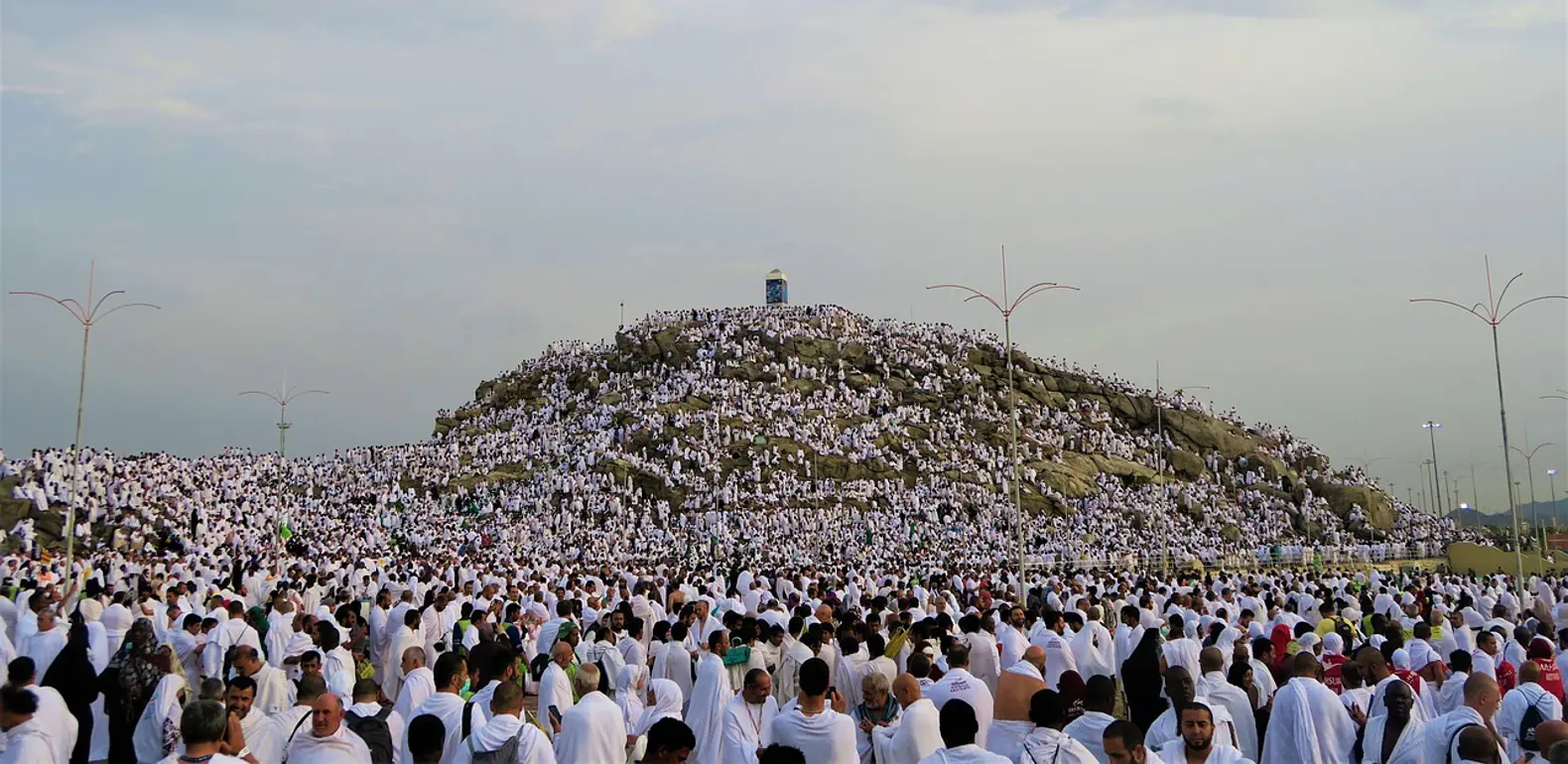
As millions gather on the plains of Arafah during Hajj, a different kind of stillness settles across Muslim communities around the world. Homes become quieter, and duas become longer. Even for those watching from afar, there is an emotional weight to the day that feels overwhelming in a good sense.
For many, it is not only the visuals of Arafah that are significant, but the reminder that humanity, despite its divisions and distractions, can still stand united in humility before Allah.
SMread: Aboard the Vincovolo: how a voyage of hope ended in an Israeli jail
The plains that strip away all status
The plains of Arafah hold a rare kind of equality. Pilgrims stand side by side dressed in simplicity, without the usual markers of status, wealth, or achievement. At that moment, titles mean nothing.
What remains is who we are in the eyes of the Almighty.
People arrive carrying different lives, different burdens, and different regrets, yet the purpose becomes the same. Seeking forgiveness. Seeking closeness to Allah. Seeking peace within themselves.
There is something profoundly human about that. In a world constantly built around comparison and performance, Arafah shows us the exact opposite. It shows people how to pause, reflect, and remember how temporary everything truly is.
SMread: Trump Links Iran Deal to Abraham Accords
Arafah is a journey for everyone, present or not.
While Hajj is a physical pilgrimage, Arafah often feels like an emotional and spiritual journey even for those not present there.
Across South Africa and beyond, Muslims spend the day fasting, making dua, listening to reminders, and reconnecting with parts of their faith that daily life sometimes pushes aside. For some, it becomes a moment of healing. For others, a moment of accountability.
The beauty of Arafah is that it reaches beyond its physical location. Its lessons are not limited to those standing on the plains. The mercy associated with the day spills into ordinary homes, ordinary conversations, and ordinary people who are just trying their best.
The need for stillness
Modern life doesn’t allow people to sit with themselves honestly. There’s always another notification, another responsibility, another distraction waiting to pull attention elsewhere.
Arafah pauses that cycle.
It creates space for silence and reflection in a way few other moments do. It reminds people that spirituality is found in sincerity. In whispered duas. In tears nobody else sees. In the simple act of turning back towards Allah.
Maybe that is why the Day of Arafah continues to resonate so deeply year after year. It brings people back to the essentials of faith, reminding them that beneath the noise of life, the human heart is still searching for mercy, meaning, and connection. And that is truly all that matters.
To hear more reflections and experience the live crossover from the plains of Arafah featuring Moulana Yunus Kawanga and Moulana Vuyo Ayoob Mokoena, watch the video below.
Image credit: Muslim Hands
