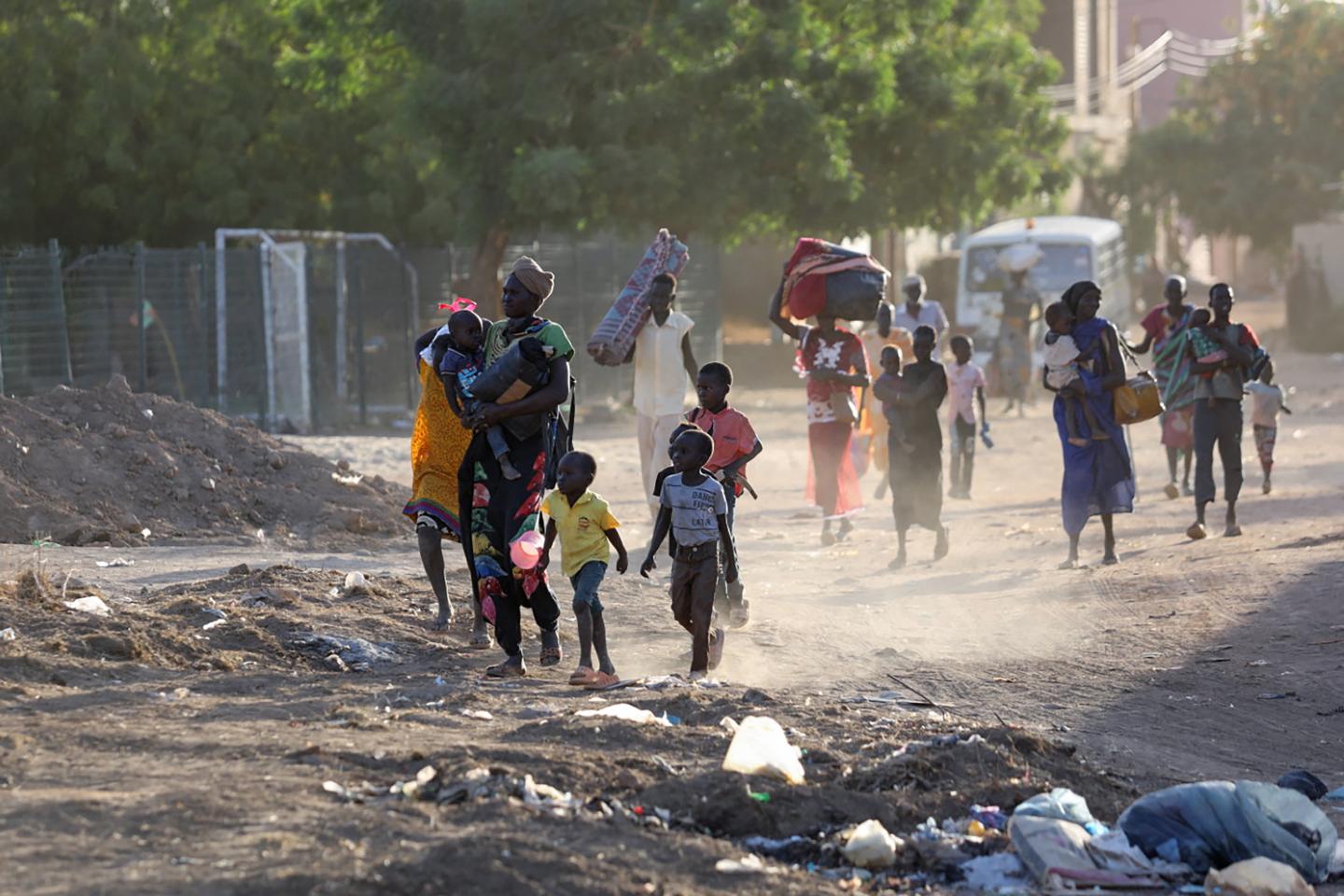
The United Nations has issued a stark warning that the risk of genocide in Sudan is “very high” amid escalating, ethnically motivated violence, particularly in the Darfur and Kordofan regions. Top UN officials are urging immediate international action to prevent further atrocities in a conflict that has already created the world’s largest displacement crisis.
The devastating civil war, which began in April 2023, pits the Sudanese Armed Forces (SAF) against the paramilitary Rapid Support Forces (RSF). The conflict has resulted in tens of thousands of deaths and has forcibly displaced over 13 million people, with four million fleeing to neighbouring countries.
UN High Commissioner for Human Rights, Volker Türk, described the situation as having “disastrous consequences,” with widespread reports of civilian casualties, sexual violence, abductions, and looting.
Virginia Gamba, the UN’s acting special advisor on the prevention of genocide, told the UN Human Rights Council that both sides have committed serious human rights violations. She expressed specific concern over “continued and targeted attacks against certain ethnic groups,” highlighting that the RSF and its allied militias are conducting ethnically motivated assaults against the Zaghawa, Masalit, and Fur communities. This targeted violence underscores the assessment that the Sudan genocide risk remains alarmingly high.
SMread: Meaningful Engagement Key to G20 Success, Say Activists
A Crisis of Humanity
The conflict has spiralled into what UN officials are calling a “crisis of humanity itself.” The fighting has not only caused immense direct harm but has also crippled the nation’s infrastructure and led to the weaponisation of humanitarian aid. A UN fact-finding mission reported that both the SAF, through bureaucratic obstruction, and the RSF, by looting convoys, are deliberately manipulating the flow of essential supplies.
This has led to a catastrophic humanitarian situation where civilians are trapped in besieged cities like El Fasher in North Darfur, Al Debibat in South Kordofan, and El Obeid in North Kordofan. The recent RSF offensive on El Fasher, which followed months of mobilising fighters and allegedly recruiting children, mirrors a previous attack on a displacement camp that resulted in hundreds of civilian deaths and widespread sexual violence.
Mona Rishmawi, a member of the UN fact-finding mission, stated, “While bombs and bullets dominate the headlines in Sudan, a quieter but perhaps even more brutal war is being waged on the bodies of women, girls and marginalised communities.”
As the international community grapples with the escalating violence, the focus is shifting towards the upcoming G20 summit in 2025. Civil society organisations are intensifying their advocacy, calling for meaningful engagement from world leaders to address the crisis. Key demands include:
- Imposing targeted sanctions on individuals and entities responsible for war crimes and obstructing humanitarian aid.
- Establishing a robust arms embargo to halt the flow of weapons to all warring parties.
- Supporting accountability mechanisms, including the International Criminal Court and the UN’s fact-finding mission, to investigate and prosecute atrocities.
- Pressuring external actors to cease their military and financial support for the belligerents.
The call from human rights groups is clear: the G20 cannot afford to remain indifferent. They urge leaders to leverage their collective economic and political influence to broker a lasting ceasefire, ensure unhindered humanitarian access, and hold perpetrators accountable, thereby addressing the grave Sudan genocide risk.
The “unbound horrors unfolding in Sudan,” as described by Türk, demand a decisive and unified global response to protect civilians and prevent a repeat of past atrocities. The escalating conflict, which has seen a UN peacekeeper killed in a spillover attack near the border, further highlights the urgency for international intervention before the risk of a Sudan genocide becomes a reality.
Image: On 19 April 2023, children and families flee their neighbourhoods amid fighting in Khartoum, Sudan. Credit: UNICEF/UN0831619/AFP
