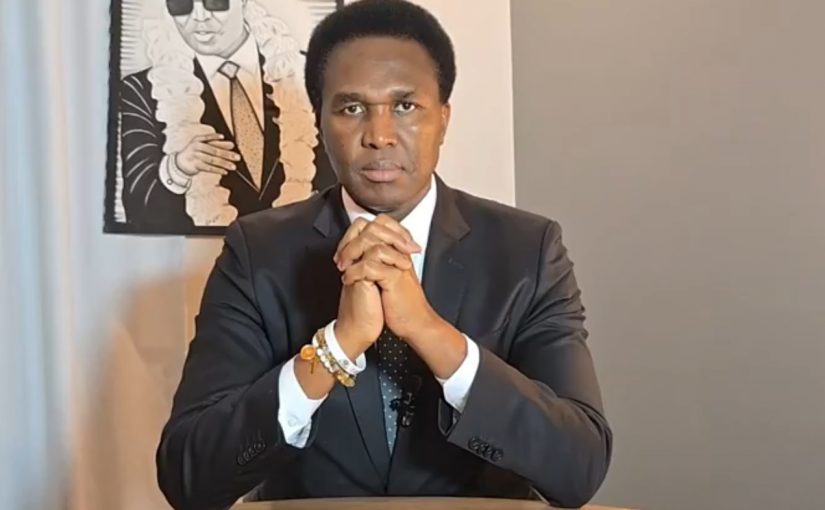
Mozambican opposition leader Venâncio Mondlane has been formally charged with inciting terrorism, disobedience and other serious crimes by the country’s attorney-general. The charges follow months of deadly post-election unrest after the disputed October 2024 general elections.
Critics, including prominent governance experts, argue the move is a politically motivated effort by the ruling Frelimo party to eliminate a formidable opponent ahead of the 2029 elections. Professor Adriano Nuvunga, Director at the Centre for Democracy and Development, described the situation as a “clear weaponisation of the law of the judiciary for political gains.”
The charges come after widespread and violent protests erupted last year over allegations of massive electoral fraud. The demonstrations, which Mondlane led, resulted in a brutal crackdown that left hundreds dead and many more injured. Mondlane and his supporters maintain that he was the rightful winner of the presidential election, not the incumbent, President Daniel Chapo.
In an interview with Salaamedia, Nuvunga stated that the legal action is designed to achieve multiple political objectives. “This is preparing the ground to prevent Venâncio Mondlane from, number one, from registering his political party,” he said. “Number two, they aim at preventing him from standing for the 2029 elections.” Mondlane has confirmed the charges and stated he is assembling a legal team to respond.
SMread: Big business looms large in ANC succession race
A fragile democracy under strain
The charges against Mondlane have intensified fears for Mozambique’s already delicate political stability. Nuvunga contends this is not a new tactic for the Frelimo government, which he says has a history of using state institutions to weaken its rivals.
“The Mozambique’s three decades of democracy has been underpinned by weaponisation of the law, by instrumentalization of governance to silence opponents, to marginalise, and to weaken opponents,” he explained.
While the government had previously initiated what it called a peace and reconciliation process, Nuvunga dismissed it as a manipulative tactic to secure power, noting that Mondlane, the “main contender,” was deliberately excluded from the dialogue. “It was a manipulation aimed at securing power. Once power is secured… now they are using the instruments of governance, the judiciary, to decisively target their main opponent,” he asserted.
The underlying causes of the unrest, according to Nuvunga, are deeply rooted in societal issues that the government has failed to address. He points to “skyrocketing poverty, skyrocketing inequality, [and] growing perceptions of state corruption” as the real fuel for public anger. Mondlane, in this context, became “an expression of that disenfranchisement, of that disillusionment.”
Nuvunga warns that targeting Mondlane does not solve the fundamental problems. “The problem is not Venâncio. The problem is the corrupt Frelimo governance that is not enabling the use of Mozambique’s wealth to tackle poverty, to tackle exclusion, to tackle marginalization.”
This continued political manoeuvring, which he again labels a weaponisation of state power, places the nation’s stability at risk, with potential ripple effects across the southern African region. The legal process is expected to be a tense, protracted affair, likely lingering until the next election cycle.
Image via Aim news
