Image Source: PBS
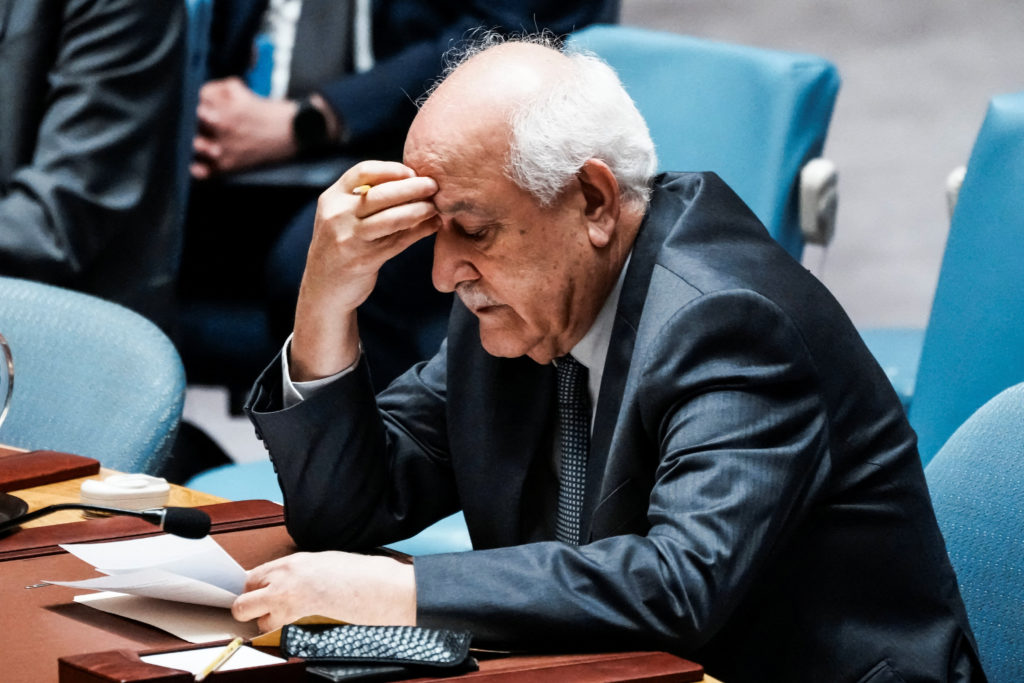
World – It came as no surprise when the United States vetoed, yet again, a United Nations Security Council resolution this week that called for an immediate and permanent ceasefire in Gaza, the lifting of aid restrictions, and the release of hostages.
The proposal received overwhelming support from other council members but was halted by Washington’s lone veto.
The decision comes amid a worsening humanitarian catastrophe in Gaza, where famine has been confirmed, and global pressure has mounted on Israel and its allies to end hostilities and the killing of innocent Palestinian civilians. Israeli-American political activist Professor Jeff Halper said the veto was entirely predictable.
“Of course, it was expected. The American representative to the UN [began her explanation of] the negative vote with a statement saying [that] this is no surprise.”
Halper explained that Washington’s reasoning followed a familiar pattern. According to him, the US accused the UN of adopting the so-called “Hamas narrative” whenever resolutions highlighted humanitarian concerns or criticised Israeli actions.
“They accuse the UN of adopting a Hamas narrative. But of course, this is all just spin. The intent was, of course, to get practically to a ceasefire, humanitarian aid, and end the fighting.”
Credibility of the UN Questioned
The repeated use of the veto has raised concerns over the legitimacy of the UN Security Council. For many observers, the council appears increasingly powerless when a single vote can block the will of the international community.
Halper argued that the structure of the Security Council itself was flawed, as its permanent members held power disproportionate to today’s geopolitical realities.
“No one takes the UN seriously in terms of an actual actor in international affairs… as long as they’re the ones that have veto power, the Security Council is neutralised. It’s simply a symbolic body.”
Palestinians Sidelined in Global Politics
While humanitarian aid and ceasefires dominate international debate, Halper insisted that the underlying Palestinian political struggle was being overlooked.
He said the focus had shifted away from Palestinian rights, with their plight reduced to a humanitarian crisis rather than a political cause.
“The Palestinians are not the issue. The Palestinian struggle, the Palestinian narrative, and Palestinian rights are not what we’re talking about here. The Palestinians are being used in a very cynical way within a bigger context.”
He added that the US strategy was closely tied to its relationships with Israel and key Arab states. In this environment, Palestinians remained marginalised and lacked meaningful backing from regional powers.
“As long as the Arab states are not going to stand behind Palestine firmly… the Palestinians remain a kind of a humanitarian issue that really isn’t very political.”
