Image Source: Daily Maverick
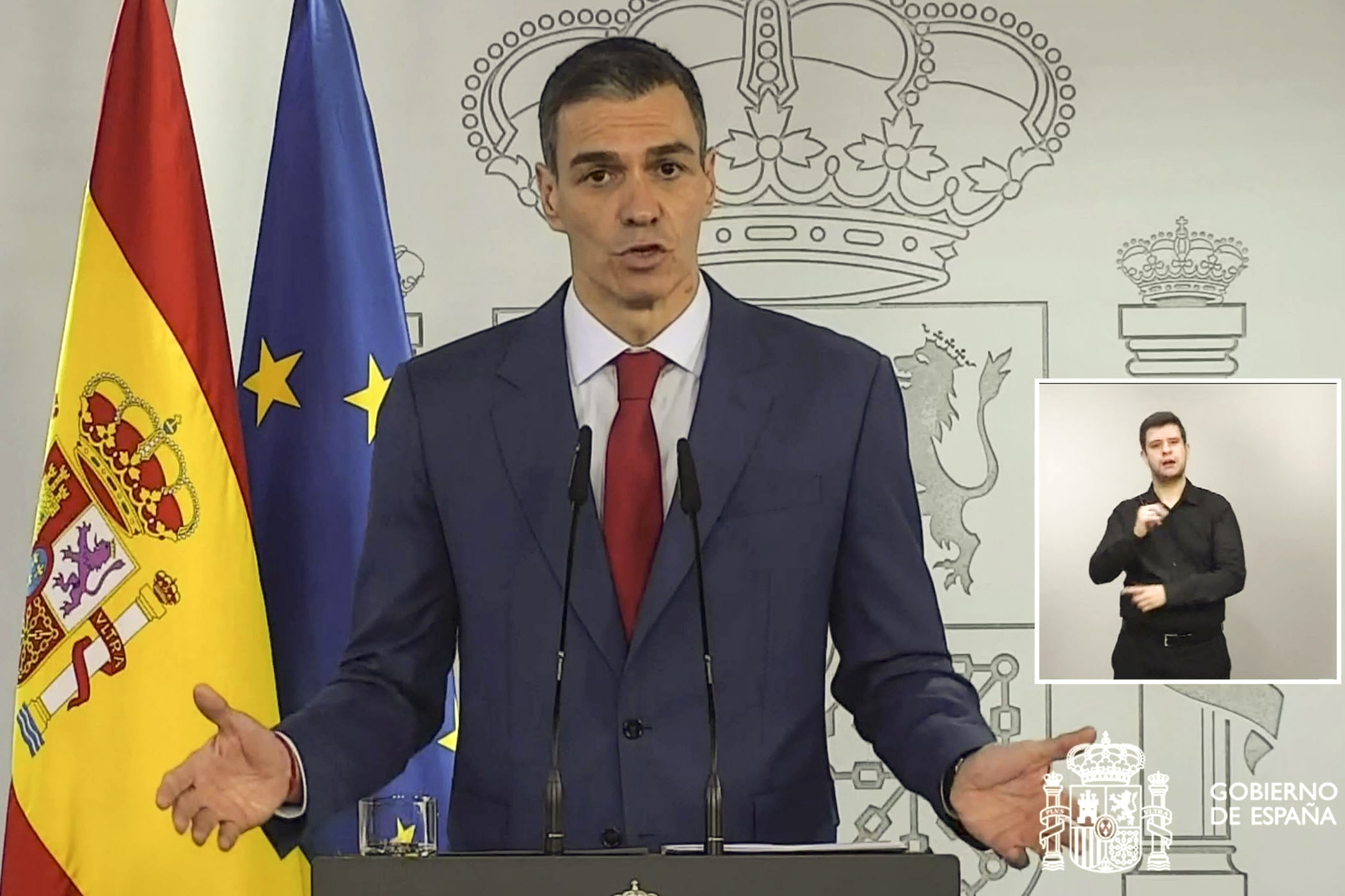
World – Spanish activist and researcher Marta Garrich believes that Spanish Prime Minister Pedro Sanchez’s televised address was a principled defence of international law, one that clearly defends a legality that protects everyone, particularly vulnerable populations.
Delivered from Madrid amid growing tensions following joint US-Israeli strikes on Iran, the address saw Sanchez draw on lessons from Iraq, Ukraine and Gaza.
Garrich noted that the appearance was carefully constructed to reach multiple audiences at once, from European allies to Spain’s own opposition, and that its central message was unambiguous.
“This is about defending international legality that protects us all, and in particular vulnerable populations, which is the societies at large. So that’s the first thing, and he says I think the lesson that we can draw from history all along is that bombs have never led to good outcomes.”
The Shadow of Iraq
Garrich pointed to the weight of historical memory in Sanchez’s framing. The reference to Iraq carries a particular resonance in Spain.
In 2003, then-Prime Minister Aznar threw the country’s full support behind President George W. Bush’s invasion, sparking massive public protests under the slogan “no to war.” That stance ultimately cost his party its parliamentary majority in the 2004 general elections.
With 77% of Spaniards viewing Trump’s presidency unfavourably, Sanchez’s address was crafted to remind the public of Spain’s historic anti-war position and its continued relevance today.
“Our response is very clear, and it can be summarised in four words — no a la guerra, so no to war. And again referencing yesterday’s televised appearance of Pedro Sanchez, he said very clearly our response is very clear, and it can be summarised — no to war.”
Spain’s Place in NATO
While France, Germany and the UK have signalled military readiness, Garrich argued that Spain is carving out a distinct ideological role within the alliance.
The country’s left-led coalition government has consistently prioritised social spending over defence and has pushed back against Trump’s demand that NATO members raise defence expenditure to 5% of GDP.
That domestic context gives Sanchez’s position its sharpest edge. With a housing crisis and strained public services as the backdrop, he frames the conflict as a straightforward choice between arming for war and caring for people at home.
“What we’re not going to do is line out the pockets of a few who make money building missiles instead of building hospitals. I think it’s a calculated risk, but I do think that where Spanish public opinion is, is on the side of our coalition government.”
