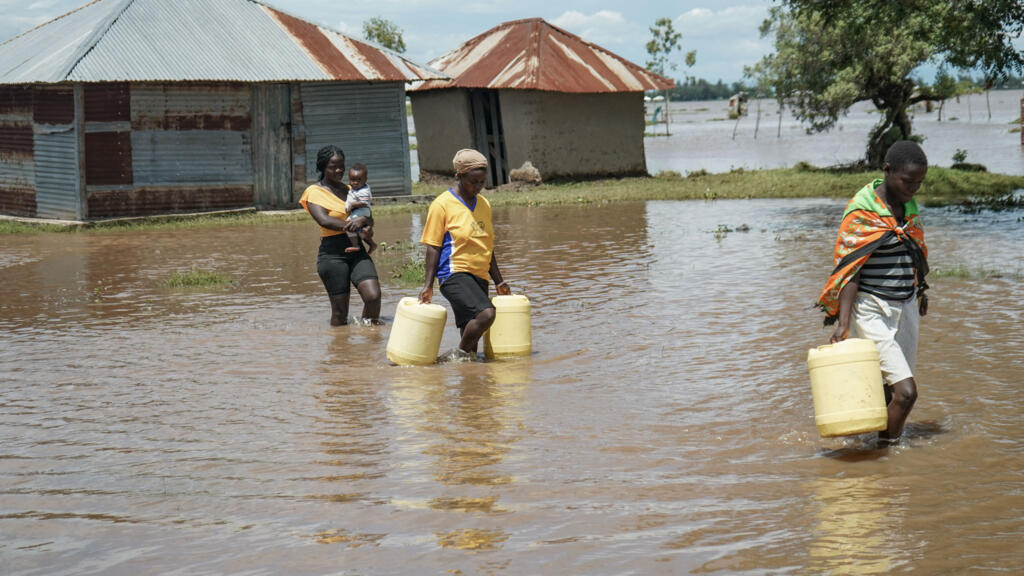
The floods in Kenya are not just a weather event. They are a pattern repeating itself with devastating precision. Torrential rains have left more than 80 people dead and thousands displaced, turning homes into debris and farmland into loss. What looks like a sudden disaster is, in truth, a slow failure unfolding over years.
For nearly two decades, East Africa has cycled through heavy rains and floods that arrive with increasing intensity. This is not unfamiliar terrain. It is a known crisis, one that continues to expose how unprepared systems remain.
Entire communities are left without shelter, food, or stability, while the destruction of over a thousand hectares of farmland deepens an already fragile food system.
SMread: Parks Tau for Jo’burg mayor?
The fault lines beneath the flooding
In cities like Nairobi, the damage is very unsettling. Urban spaces, often seen as more developed, are instead showing the cracks in planning and infrastructure.
Drainage systems fail. Informal settlements flood first and worst. The geography of vulnerability has been inherited, shaped by colonial spatial planning and left largely unchanged in the post-colonial state.
Placing Kenya within a global crisis
Orapeleng Matshediso, a Research Associate at the University of Johannesburg based at the Institute for Pan African Thought and Conversation, situates this crisis within a broader climate reality.
Africa contributes less than 4 percent to global greenhouse gas emissions, yet carries a disproportionate burden of climate disasters. The imbalance is stark when set against major emitters like the United States, China, and India.
Responsibility, then, cannot be local alone. It is global, even if the consequences are not evenly shared.
SMread: “Either with us or against us”: Field Marshal sectarianism in the Zionist war on Iran
The lack of urgency within the political landscape
Frameworks do exist. The African Union has outlined a Climate Change and Resilient Development Strategy for 2022 to 2032, building on commitments made under the Paris Agreement.
But policy without action just becomes performance. In moments like this, the absence of coordinated, visible response raises difficult questions about political will, both nationally and across the continent.
Where are the leaders?
One should question where all of the leaders are. In the early days of the flooding, delays and deflections showed us that there is a much deeper issue.
Crisis demands presence. It demands direction. When that is missing, the damage extends beyond infrastructure into public trust.
SMread: No fuel crisis, says government
A warning closer to home
What is unfolding in Kenya is not isolated. It is a warning. For countries like South Africa, the lesson is not just about reacting to disaster, but anticipating it.
Climate improvement has to be built into specific places, shaped by the realities of each community, and backed by decisive political commitment. Because when the rains come again, as they will, the difference will not be the storm. It will be whether anything beneath it has even changed.
Image: Residents walk through a flooded area in West Nyakach, Kisumu County, on 22 March, 2026. AFP – BRIAN ONGORO
