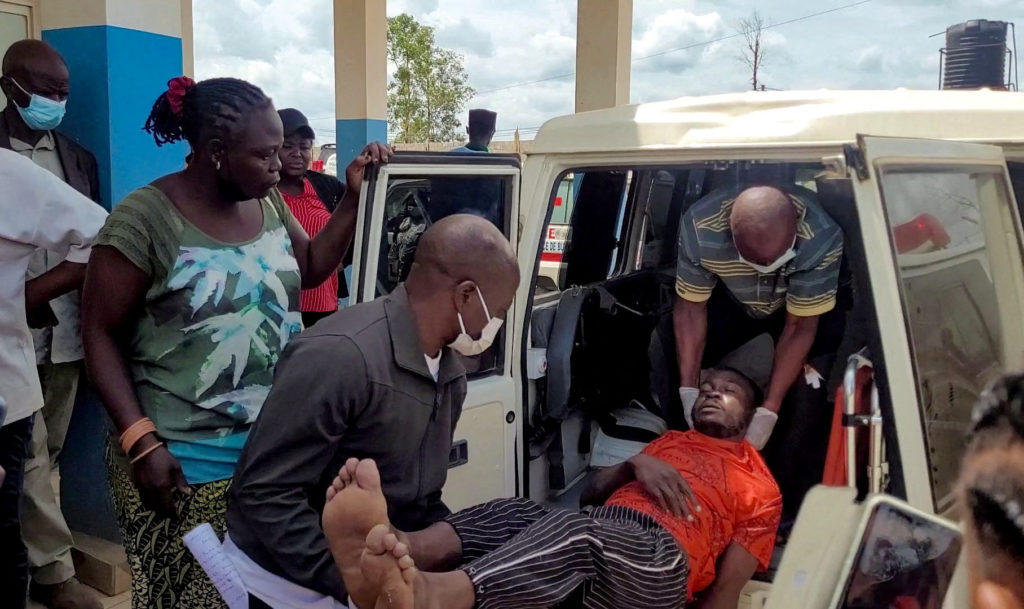
Image Source: PBS
Africa – The World Health Organisation (WHO) declared the Ebola outbreak caused by the Bundibugyo virus in the Democratic Republic of the Congo and Uganda a public health emergency of international concern (PHEIC) on Sunday.
The declaration stops short of classifying the outbreak as a pandemic emergency but warns that neighbouring countries face a high risk of further spread.
The outbreak was first flagged on 5 May 2026, after a cluster of severe illnesses among healthcare workers in Bunia Health Zone, northeastern DRC.
Initial samples tested negative for the Ebola virus, but genetic fingerprinting later confirmed Bundibugyo virus, one of four orthoebolaviruses that cause Ebola disease in people. DRC and Uganda both officially declared outbreaks on the same day.
The Centre for Disease Control (CDC) reported 10 confirmed cases and 336 suspected cases, including 88 deaths in DRC, with two confirmed cases, including one death, recorded in Uganda among travellers from DRC and no further spread reported.
Patients presented with classic Ebola symptoms, including fever, vomiting, severe weakness, and nosebleeds, with two-thirds of DRC cases recorded in female patients.
Response Hampered by Insecurity and Humanitarian Crisis
There is no approved vaccine for the Bundibugyo virus. The CDC put historical death rates at between 25 and 50 percent, with treatment limited to supportive care. Population movement, healthcare-associated deaths, and a dense network of informal health facilities in eastern DRC raised concerns about containment.
“Ongoing insecurity, humanitarian crisis, high population mobility, the urban or semi-urban nature of the current hotspot and the large network of informal healthcare facilities further compound the risk of spread, as was witnessed during the large Ebola virus disease epidemic in North Kivu and Ituri provinces in 2018-19,” WHO said.
Africa CDC Raises Continental Alarm
A day before the PHEIC declaration, Africa CDC alerted the continent to the growing risk of regional spread. The agency subsequently convened a high-level meeting of more than 130 participants, including UN agencies, donor partners, and pharmaceutical companies, and recommended the immediate activation of the continental Incident Management Support Team.
“I commend the Governments of the DRC and Uganda for their continued efforts to contain these outbreaks. I also express my support for South Sudan, which is geographically close to Ituri province, in advancing its preparedness measures,” Africa CDC Director-General said.
WHO urged all countries not to close borders or restrict trade, warning that such measures push movement to unmonitored crossings and worsen the risk of spread.
