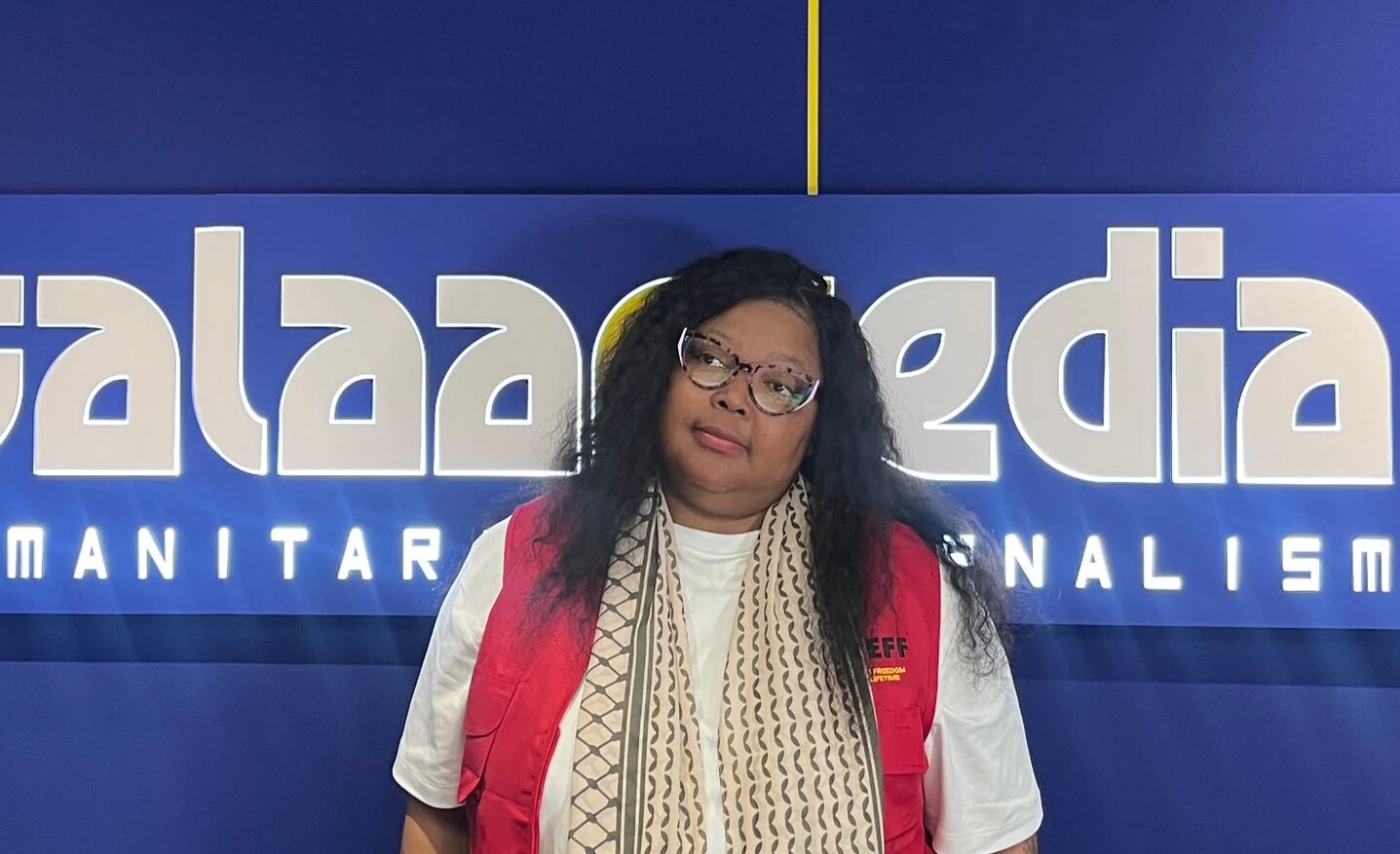
Every Tuesday, Ahmed Kajee sits down with mayoral candidates to explore their visions for South Africa’s municipalities. Here is his conversation with Dr Tlaleng Mofokeng, the Economic Freedom Fighters’ mayoral candidate in Johannesburg, edited for length and clarity.
Let’s start with your overall vision for Johannesburg. Why should somebody vote for you?
The proposition is quite simple. The Economic Freedom Fighters is asking people to choose themselves this coming 4th of November. By that, we mean centring your own dignity as a resident of Johannesburg and choosing a political party that is going to centre your needs. Through my mayorship, I want people to understand that we can create a Johannesburg that is thriving.
The city’s resources have to be managed better for the well-being of everyone in it. We want to move away from a space where Johannesburg is only felt by its residents through regulation and administration and instead build a partnership between the city and its people.
At the moment, many of us are bonding over the problems we face. I drove here on the M1 in complete darkness for kilometres. We are bonding over the lack of water, unsafe streets and the fact that our children have no recreational spaces.
What the EFF wants to do is centre not only a conducive environment for business but also the rights of residents to participate socially, politically, economically and culturally.
In a nutshell, I’m asking Johannesburg residents to vote for me because they are voting for dignity and betting on themselves.
You come from a health and policy background. What qualifies you to run a complex metro like Johannesburg?
I’ve managed complex systems throughout my career. In my twenties, as a young medical doctor, I ran four mining clinics in the west of Johannesburg. That involved managing workers and the health systems required to run those facilities.
I’ve also worked in policymaking and later spent the past 10 years working in multilateral spaces at the United Nations, where I had to collaborate and coordinate with 193 member states.
I don’t think that is a small task. I’ve also managed my own medical practices in different parts of Johannesburg and worked as an activist and advocate for human rights.
Johannesburg has everything to gain from the experience that I bring. Running a city is about managing resources and bringing people together. My experience as a negotiator and diplomat can benefit Johannesburg because the city needs someone who can bring different stakeholders around the table.
Johannesburg faces major challenges involving water, electricity, potholes and failing infrastructure. How would you fix these issues?
Nobody can argue that people need consistent access to water, sanitation and electricity. If we want to transform Johannesburg’s economy, businesses and entrepreneurs need to be able to operate without constantly dealing with service delivery failures. But we also need to look beyond big business. The informal sector and informal economy are important players in the city’s economy.
Take places like Bree Taxi Rank, for example. We don’t only need to provide water and electricity to those areas. We need to think about how those spaces form part of broader development. Bree is unsafe and there are areas without proper lighting, but that is a microcosm of what is happening across Johannesburg.
Even class can no longer protect residents. People in middle-class areas and suburbs are also experiencing electricity failures and dark streets.
Local government is where the rubber meets the tar. We need to understand problems at a very local level.
But practically, how would you improve service delivery?
We need to start thinking differently about how Johannesburg uses its resources. A major part of turning the city around will be ending corruption. There are already resources allocated to programmes, but communities are not seeing the results because of corruption and poor management.
We need consequence management. Administrators and managers who are not doing their jobs must be held accountable.
One of the things we have normalised is starting a project without knowing when it will be completed. We need clear timelines and ways of measuring performance. Transparency must become a practice embedded in the city’s programmes.
There are also businesses that are unwilling to invest in the city because of corruption. Ending corruption will unlock funds that are already budgeted and allocated for programmes but are not producing results.
How would you improve the relationship between residents and the municipality?
Trust has been stripped away from residents for a long time. People are frustrated by billing problems and by being forced to move from one government office to another to access services. For me, dignity matters because residents should not spend so much time proving their circumstances to different municipal entities.
For example, if an elderly person has already been identified as indigent and qualifies for assistance, why should that person still have to queue and beg the municipality not to cut off their electricity?
One tangible thing I would introduce in the first 100 days is a one-stop shop that would make it easier for residents to access municipal services.
If you were mayor tomorrow, how would you ensure that infrastructure maintenance is properly funded and completed?
The city already has money allocated for operational costs, maintenance, projects and programmes. The question we need to ask is why money that has already been allocated for these services is not reaching them.
If streetlights are not working because infrastructure is being vandalised or copper is being stolen, then we need better coordination with law enforcement and public safety.
If managers are failing to perform their duties, they must be held accountable.
If there are planned outages or maintenance, residents must be told honestly what is happening. People should be able to trust what the city is telling them.
The solution is more than simply switching the lights back on. We have to understand the reasons behind infrastructure failures and make sure that the relevant departments and stakeholders are working together.
Where advocacy is required, where activism is required and where a fight on behalf of Johannesburg is required, I am happy and willing to do that. That’s how we will turn this city around.
SMread: Is Joburg’s ‘rotten egg’ smell exposing a toxic gap in SA’s air-quality laws?
