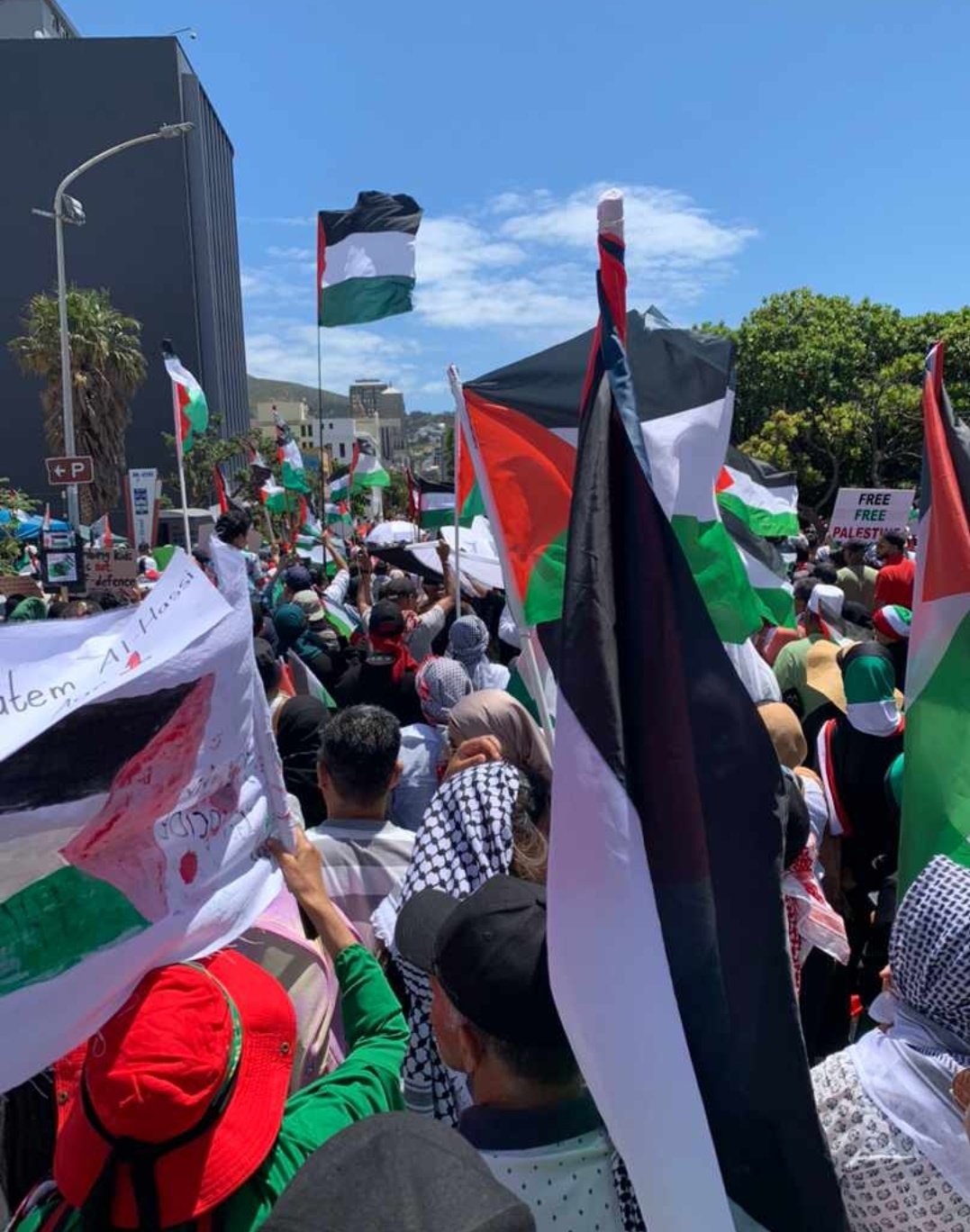
Image Source: Salaaemedia
Cape Town – Weekly vigils at St. George’s Cathedral in Cape Town continue to serve as an influential display of solidarity with the Palestinian people as Israel’s genocide and ethnic cleansing of Gaza stretches into its second year.
Known for its historic role in the anti-apartheid struggle, the Cathedral has become a hub for peace and justice advocacy, hosting these Palestinian solidarity vigils for over 50 weeks. The protests are a call to action, raising awareness about the ongoing violence in Gaza, where countless civilians, including women and children, have been killed by Israeli forces.
Reverend Michael Weeder, Former Dean at the Cathedral, stressed the importance of the site, explaining how its central position makes it a natural space for public gatherings and collective expressions of solidarity.
He emphasised that the Cathedral has always served as a refuge for those seeking justice, and its legacy as a place for resistance and moral leadership continues to inspire movements like the ongoing Palestinian solidarity vigils.
“Its centrality is right next to both the provincial and national Parliament. It’s right on the tourist route, with a lot of tourists ambling past there, so it is strategically convenient for anybody who wishes to express solidarity with our siblings in Palestine. It creates a very gracious space to be part of history on the steps of Parliament.”
In addition to the small but dedicated group of protestors, Reverend Weeder gave special recognition to the women leading the movement. Despite the harsh weather and the often small turnout, it is the women, he said, who bring creativity and energy to sustain the vigils.
Their leadership and determination have kept the cause alive, ensuring that the message of peace and justice remains constantly on the steps of St. George’s Cathedral.
SMread| Gauteng Water Restrictions in the Pipeline
No Religion Supports the Zionist Genocide
The vigils offer a space for people from diverse faiths and backgrounds to unite in opposition to the atrocities being inflicted on Palestinians. Central to the message is the belief that no religion condones the killing of innocent people, despite the Zionist justifications that attempt to frame these acts as necessary or divinely sanctioned.
Reverend Weeder expressed deep condemnation for the ongoing violence, questioning the morality of those who justify it in the name of God. He emphasised that no God—whether worshipped in Christianity, Islam, or Judaism—supports the killing of children and innocents.
“If our God allows us to perform and respond and relate in a way that is unkind, that is without compassion, then it takes us to what Jesus says about Satan. He says Satan is the father of lies, the deceiver.”
“And I think that is when you also make God in your own image. It’s idolatry, where God looks like you, speaks your language, and is of your culture. God becomes the enemy of your enemy. It’s important for us to draw a line in the sand that this is deception—it is evil.”
“In the geopolitical imagination of Zionists, they say, “from the Euphrates to the Sea … It’s claimed as part of the promised Holy Land. They make claims in the name of Yahweh, in the name of a God they don’t even believe in. A lot of them are very secular. The Zionist quest is often contested by more pious Hasidic Jews.”
