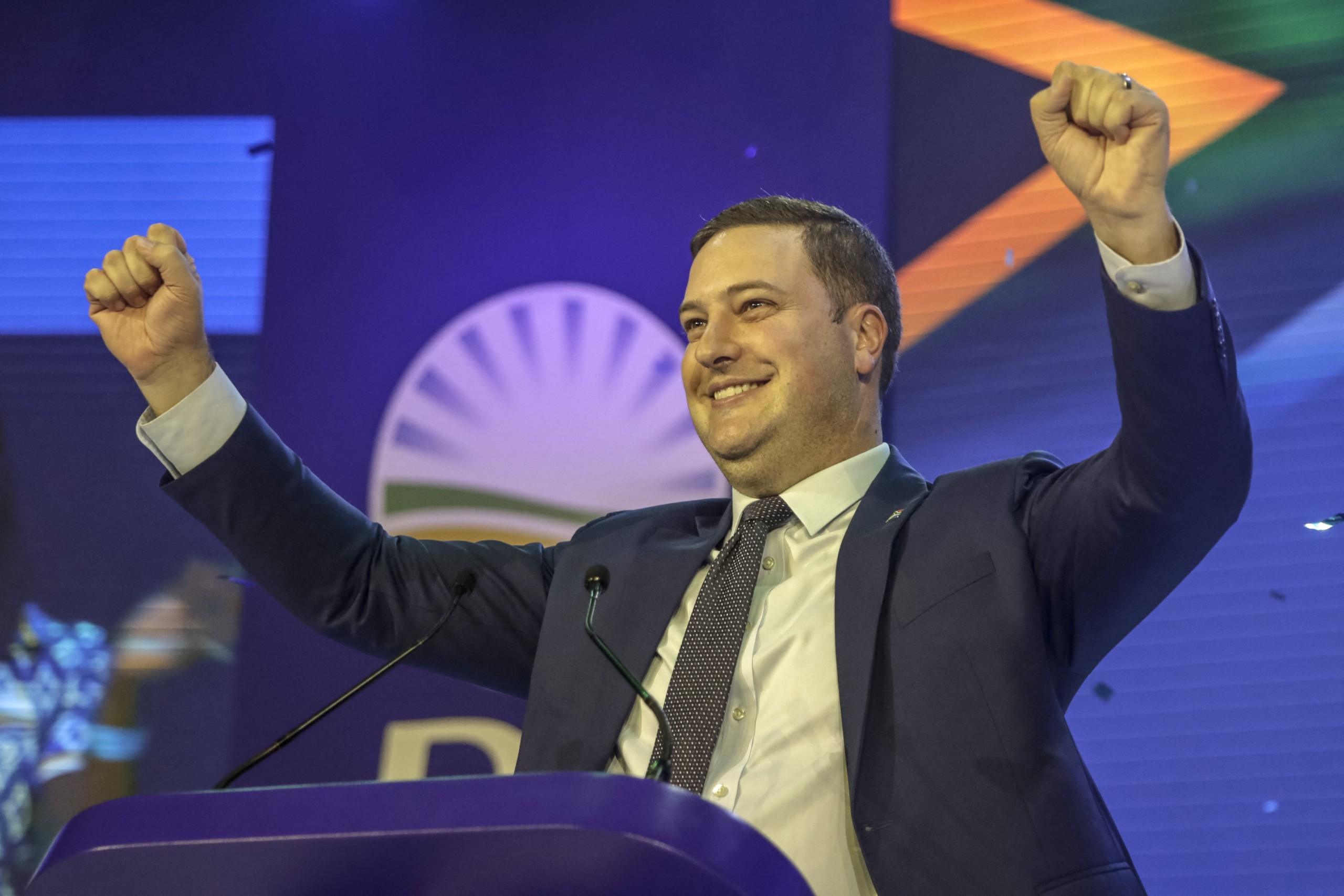
In the lead-up to South Africa’s 2026 local elections, the Democratic Alliance has shifted leadership in a way that raises more questions than it answers.
Jordan Hill-Lewis steps in as federal leader, replacing John Steenhuisen, in a contest that many observers argue was settled long before ballots were cast. With elections just months away, the timing is a strategic positioning ahead of 2029, framed as renewal but rooted in continuity.
The weight of the moment
Local elections in South Africa have never been just about municipalities. They are rehearsal stages for national power. For the DA, 2026 is less about incremental gains and more about proving it can govern beyond its existing strongholds. The party needs to expand its appeal across a broader electorate while maintaining the confidence of those who have historically backed it.
That tension sits at the centre of this leadership shift.
SMread: No real democracy in Djibouti, says analyst, as Guelleh claims sixth consecutive win
Stakeholders behind the curtain
The DA has long positioned itself as a party of governance and efficiency. But its internal decisions, particularly at leadership level, continue to reflect the influence of its primary stakeholders. Big business remains a central force, not always visible, but deeply embedded in how outcomes unfold.
The leadership transition appears less like an open democratic contest and more like a managed process designed to ensure stability. The early withdrawal of Steenhuisen signalled this clearly.
Even alternative voices, including figures never gained real traction. Not because they lacked perspective, but because the internal balance of power was already set.
SMread: “Put an Army of Social Workers” — forum member calls for root cause response to gang crisis
Two centres, one party
Hill-Lewis brings a different kind of leadership profile. As Mayor of Cape Town, he governs the DA’s most successful metro, yet he does so outside Parliament. That creates an unusual dynamic.
Power is now split. One centre sits in municipal governance, the other in national political structures. This duality could either strengthen the party’s reach or complicate its coherence. Much will depend on how authority is negotiated internally.
The inclusivity question
The DA continues to walk a careful line on race and transformation. Leadership appointments, including figures like Solly Msimanga, suggest an effort to project diversity. But perception remains a challenge.
Critics argue that the party’s stance on policies such as Black Economic Empowerment and land reform undermines its claim to being fully inclusive. Representation at the top does not always translate into policy shifts. And voters are increasingly aware of that gap.
SMread: How residents in a Gauteng municipality responded to service delivery collapse
Between reform and reassurance
The DA’s challenge is not just electoral. It is ideological. The party must present itself as reformist enough to attract new voters, while remaining predictable enough to retain its base and reassure its funders.
That balancing act shapes everything from leadership choices to policy positioning. It is why transitions like this feel controlled rather than contested.
What comes next
Hill-Lewis steps into leadership at a moment that demands both clarity and adaptability. The DA must prove it can deliver governance beyond the Western Cape, navigate its role within the Government of National Unity, and redefine how it connects with a changing electorate.
The question is not whether the party can win votes. It is whether it can shift perception.
Because in South African politics, control without credibility does not hold for long.
For more on this, listen to the conversation below:
