Image Source: BBC
World – Negotiations between the United States and Iran broke down on Sunday after nearly 21 hours of talks in Islamabad, leaving a ceasefire that had halted weeks of devastating conflict in serious jeopardy. Both countries accused the other of responsibility for the failure, as a war that has claimed thousands of lives and pushed global oil prices sharply higher entered its seventh week with no end in sight.
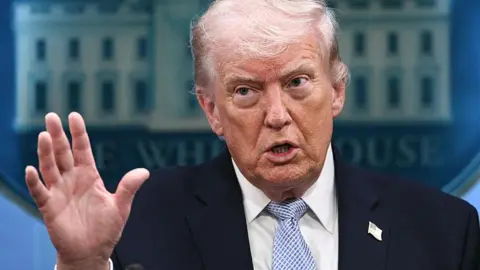
Despite making the reopening of the Strait of Hormuz a key point in negotiations, United States President Donald Trump ordered a naval blockade of the waterway after talks broke down, escalating a crisis with sweeping consequences for global trade and energy markets.
Trump, posting on Truth Social, accused Iran of reneging on a commitment to reopen the strait and said the single insurmountable obstacle was Tehran’s refusal to abandon its nuclear programme.
“Iran is unwilling to give up its nuclear ambitions. All of those points don’t matter compared to allowing Nuclear Power to be in the hands of such volatile, difficult, unpredictable people,” Trump wrote.
Iran Hits Back, Accuses US of Bad Faith
Iranian Foreign Minister Seyed Abbas Araghchi and Iranian parliament speaker Mohammad-Bagher Ghalibaf, both members of the Tehran delegation, rejected Trump’s characterisation of the talks and accused Washington of undermining an agreement that had been within reach.
Araghchi said Iran entered the talks in good faith at the highest diplomatic level in nearly five decades, but that the US shifted its position at a critical moment.
“In intensive talks at highest level in 47 years, Iran engaged with US in good faith to end war, but when just inches away from ‘Islamabad MoU’, we encountered maximalism, shifting goalposts, and blockade,” he wrote on X.
Ghalibaf, posting a threaded statement on X, said the American side had failed to earn Iran’s trust despite forward-looking proposals from the Iranian delegation. He added that Tehran regarded every channel, including diplomacy, as a tool in defence of Iranian rights alongside its military campaign.
“America has understood our logic and principles, and now it’s time for it to decide whether it can earn our trust or not. We will not for a moment cease our efforts to consolidate the achievements of the forty days of Iran’s national defense,” he wrote.
IRGC Navy Warns US Over Blockade
Trump’s blockade order drew an immediate response from Iran’s Islamic Revolutionary Guard Corps Navy, which drew a sharp distinction between civilian and military vessels attempting to transit the strait. The statement signalled that Tehran intends to contest the blockade and would treat any US naval approach as a ceasefire violation.
“Strait of Hormuz is open for passage of non-military vessels in accordance with specific regulations,” the IRGC Navy said, “but military vessels attempting to approach the Strait under any pretext will be considered in violation of the ceasefire and will be dealt with harshly.”
