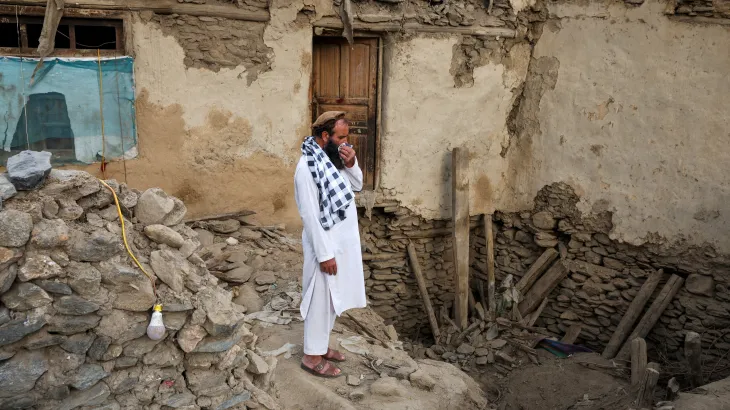
A powerful 6.0-magnitude earthquake struck eastern Afghanistan near the Pakistan border just before midnight on Sunday, killing more than 900 people and injuring thousands. The Taliban administration has made an urgent appeal for international assistance as the nation grapples with the devastating aftermath, a situation made worse by pre-existing aid cuts and a severe economic crisis.
The earthquake’s epicentre was located in a remote, mountainous region of Kunar province, a fact that has severely hampered rescue efforts. The shallow depth of the tremor, just six to ten kilometres below the surface, contributed to its destructive power, levelling entire villages built of mud and stone.
Official figures vary, with Afghanistan’s National Disaster Management Authority reporting 900 deaths and 3 000 injuries, while the Afghan Red Crescent Society places the toll higher at 1 124 killed and over 3 200 injured. Authorities expect these numbers to climb as rescue teams work to access the most isolated areas.
The earthquake has left communities without food, shelter, or safe drinking water.
SMread: Healthcare access rights under threat
Rescue efforts hampered by terrain and aid shortages
Rescue operations are facing significant challenges. Heavy rains have increased the risk of landslides, making many roads impassable for teams trying to reach the hardest-hit areas in Kunar and Nangarhar provinces. Military helicopters have been deployed to ferry the wounded to hospitals, with the defence ministry reporting 40 flights carrying 420 wounded and dead.
The disaster strikes at a time when Afghanistan is already in the throes of a severe humanitarian crisis. Since the Taliban took power in 2021, much of the international financial support that propped up government spending has been withdrawn. Humanitarian aid has also shrunk dramatically, from $3.8 billion in 2022 to just $767 million this year, according to Reuters. These cuts have led to the closure of hundreds of health clinics.
The Taliban has directly appealed for foreign help. “We need it because here lots of people lost their lives and houses,” said Sharafat Zaman, a spokesperson for the health ministry. While the United Kingdom has pledged £1 million in emergency funding and countries like China and India have offered assistance, the response from the international community has been limited.
The Afghanistan earthquake crisis highlights the vulnerability of a nation already struggling with poverty, drought, and the recent forced return of hundreds of thousands of refugees from neighbouring countries.
Humanitarian agencies on the ground warn that their resources are stretched thin. “It’s not just the funding shortfalls, it’s the compounding of shock after shock in the country, which is stretching already very thin resources,” Thamindri De Silva, National Director of World Vision Afghanistan, told CNN.
The immediate needs include body bags, medical supplies, food, and shelter. Experts have urged for the disbursement of frozen Afghan government funds to international organisations to manage the relief efforts.
Image: Al Jazeera
