Image Source: The South African
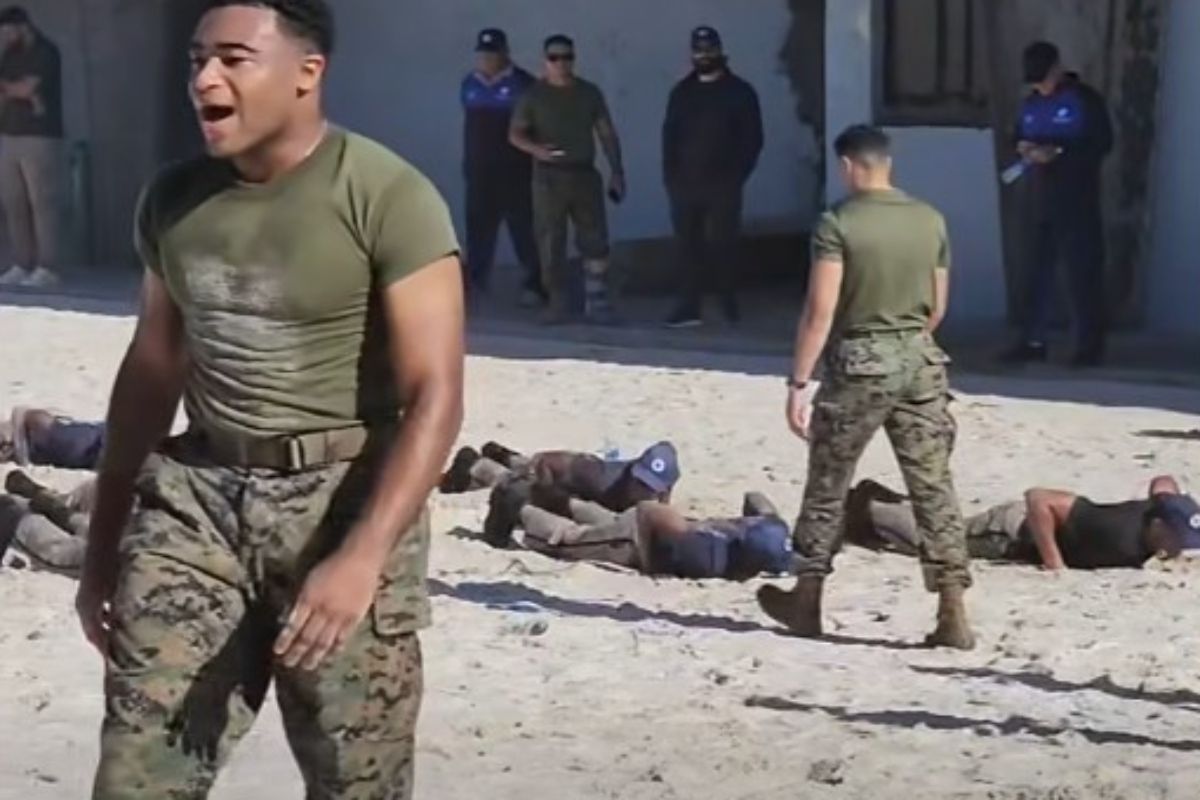
Cape Town – PAGAD Spokesperson, Adv. Fairouz Nagia has questioned the presence of United States Marines in Cape Town, raising serious concerns about sovereignty, oversight and the appropriateness of foreign military involvement in local policing following a joint exercise with Metro Police cadets at Muizenberg Beach.
The organisation, People Against Gangsterism and Drugs, has come out strongly against the drill, which the City of Cape Town sought to downplay. Mayoral committee member for safety and security, Alderman JP Smith, described it as an opportunity for cadets to experience a Marine-style fitness drill, saying the engagement was informal, limited and carried no cost to the municipality.
“The engagement between the City’s Public Safety Training College and Marines based at the US Consulate in Cape Town was a fitness exercise and an opportunity for officers to experience Marine-style fitness drills. The City has, in recent years, as part of its expansion of the PSTC, started placing a stronger emphasis on the physical fitness of enforcement services, with ongoing assessments of all levels of staff,” Smith said.
PAGAD rejected that framing. Nagia argued that even informal engagement with a foreign military body carries consequences the City has failed to account for, questioning the fundamental mismatch between urban policing and military objectives.
“When you train, you train for something. What are they training for? When you look at the functions of the police versus the US Marines — especially on the level at which they are engaging — it’s totally mismatched.”
No Oversight, No Answers
According to Nagia, the exercise proceeded without national approval or parliamentary oversight, raising questions about whether the City had the authority to enter into such an arrangement. South Africa operates as a unitary state, she noted, with policing a national function subject to national oversight.
“We do not know what the fine print is. We do not know where this kind of arrangement will lead to. We already know that the ambassador of the US has already taken the liberty to try to dictate our policies around BEE, for example. We know that they’re extremely interventionist. Any kind of interaction with a body like the US has not had any positive consequences for countries. It is always — where are the strings that are attached?”
Nagia also pushed back against the argument that international partnerships should be welcomed, given the severity of gang violence on the Cape Flats, acknowledging the value of cross-pollination but questioning the suitability of this particular partner.
Nagia pointed to the US military’s human rights record as a key reason for caution, arguing that South Africa could not afford to import methodologies from a body with a documented history of abuse. She warned that engaging with such a partner risked undermining the country’s constitutional framework and the rights of its citizens.
“Can we risk engaging with a body that has potentially had such — actually written, recorded — human rights violations across the board? We’re talking about rape. We’re talking about physical abuse. We’re talking about torture.”
Watch the Full Interview Here.
